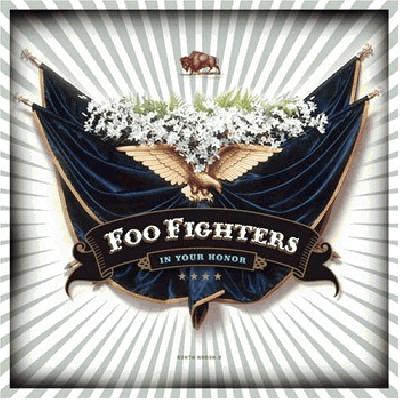
Review Summary: All the songs we used to sing, and everything was good.
Double albums are... hard to properly pull off, to say the least. See, even "normal", industry-sized records with a standard length of (roughly around) eight-twelve tracks can feel tiring and drain-circling if every song just doesn't *click* to at least some degree... which makes the prospect of a double album that much more laborious, for artist and audience alike. Suffice it to say, the quality of an artist's material really, really matters when they're trying to tackle something as ambitious as a double album - if the album's not packed with some *choice* f*ckin' tunes, then your audience is barely gonna have the patience to sit through the first CD. Dips in quality tend to be *very* frequent with double albums. For every one Sign O' The Times - a masterpiece record chockablock full of excellent, unwavering tunes - you'll get five Everyday Lives (Coldplay) and Scorpions (Drake), albums that circle the drain and overstay their welcome so egregiously that you can't help but wonder "why did this *have* to be twice as long?" It's a hard sell, to be sure, and preposterously ambitious if you're a band/artist inexperienced with pumping out time-consuming material. So how did the Foo Fighters - certainly an unpretentious, simple and straightforward band - handle this on their fifth record?
Well, they basically made two albums in one. Now, that may seem like a no-brainer - after all, one could consider a "double album" as just two albums sandwiched into one case, isn't it in the name already? - but double albums are rarely "two albums in one". Secretly, double albums are just twenty-ish
tracks' worth of the same material instead of ten. This is why a lot of double albums tend to fall flat in the long run - they're forty minutes' worth of material extended to eighty, and too much of the same thing in a single session is a guaranteed pace-breaker and interest-killer all in one, especially given how common it is for the energy to start flagging at the crucial halfway mark for most double records. But
In Your Honor is a two-faced Janus of a double album: the first disc is full of the standard-protocol, post-grungey rock tunes we've come to expect from the Foo Fighters, and the second disc is a stripped-down, introspective foray into softer, moodier acoustic songs. A simple idea, but a brilliant one. In one decisive move, the troubling question of "how do we maintain audience interest?" has been completely and totally subverted due to the simple notion that both discs provide a completely different experience. Because of this,
In Your Honor stops *feeling* like a cumbersome, overbearing double album and instead becomes something much more digestible. You look at the two CDs of
In Your Honor and think: "oh, this is the rock side of the album, and this is the acoustic side". Conceptually-speaking,
In Your Honor is a stroke of simplistic brilliance.
Of course, none of this would matter if the tracks weren't any good.
In Your Honor is more than happy to please, however - the first four songs on the rock side of the record are some of the Foo Fighters' best, a momentarily-unbroken chain of hard-hitting, headbanging material that thrives in its simplicity. The enormous open space and distorted atmosphere of the bombastic "In Your Honor" dovetails perfectly into "No Way Back", a
killer track bolstered by its swerving guitar, the punchy, rollicking drums, and Grohl's anthemic, reverb-heavy shouts of spitfire lines like "
lately, I've been livin' in my head - the rest of me is dead, I'm dyin' for truth!" There's something disgustingly infectious about "Best of You", its belting, catchy, madness-mantra hook managing to be a slamdunk-earworm without ever getting repetitive in spite of its stuttering, looping nature, and "DOA" is an underrated banger - Hawkins' drums are by far and away the highlight of "DOA", the man laying down a bouncy, punchy, tom-heavy backbeat that perfectly compliments the chunky guitar and bass rhythms that strut through the verses with a shocking amount of swagger. Some of the best material the Foo Fighters have put out is present here - the dichotomy between the eruptive grunge chorus and the dark, descending verses of "Free Me" is a killer combination rife with engaging tension throughout, and "End Over End" has some terrific buildup, starting with a curiously moody vibe amplified by its oddly-layered chords and Grohl's cleaner, lower delivery throughout the verses that rises higher and higher in intensity before bursting into a soaring prechorus and a snappy refrain.
And on the other side of the moon, the acoustic side of
In Your Honor is not only surprisingly solid, the material feels genuine and legitimate. Dave Grohl's coarse voice adds an interesting layer of warmth to the down-tempo tracks, swapping his anthemic, belting style for something surprisingly sweet. "Miracle" is an excellent acoustic-pop track - it's pleasantly cheesy and inspirational, with the folky acoustic guitar and Grohl's poppy vocal melody backed by a steady, low-hanging drum beat, feather-light piano, and rich strings. All of these elements work beautifully in tandem, never vying for attention nor fading into the background. The warm instrumentation of "What If I Do?" washes over the listener like a pleasant summer evening, accentuated by Grohl's mellow voice and, much like "Miracle", subtle strings & piano. "Virginia Moon" is a shocking departure from the norm, featuring a stripped-down
bossa nova beat complete with jazzy, laidback acoustics, a humming upright bass, icy piano embellishments, and an exceptional backing vocal by Norah Jones (a personal favorite), whose whispery, soft voice makes for an unexpectedly wonderful companion to Grohl's richer, bristly tone. In spite of how baffling the very concept of the Foo Fighters trying bossa nova sounds on paper, "Virginia Moon" just magically works in execution - it's a cozy, comforting pop duet that feels like sinking into a warm midnight bath, and it might be the crown jewel of the second disc. The sullen, synthpad-accentuated "Over and Out", the finger-strummed, strangely minimalist "Razor", and the weirdly ambient, textured "Still" add a morose moodiness to the second disc that, while a departure from the high-energy anthems of the first disc, bring to the table an emotional maturity that we hadn't quite heard from the Foo Fighters ever since the glassy-eyed, masterful "Everlong".
In Your Honor is very good, and its strongest moments are easily some of the best in the Foo Fighters' career. It's a shame, then, that the striking, strong highlights of
In Your Honor make its dips in quality that much more notable. While there isn't a single "bad" song on
In Your Honor, there's more than a few *forgettable* songs. The rock side of the album is stronger than the acoustic side, but not every song is a winner - "Resolve" is a meandering, weak rocker with a chorus that doesn't really want to be sung, and "The Last Song" is frankly a little obnoxious, with a hook that goes absolutely nowhere and never evolves beyond its trite, repetitive melody. The biggest issue present with
In Your Honor is how roundabout and aimless its weaker tracks tend to be - even a promisingly-melancholy track like "Friend of a Friend", written as a tribute to Kurt Cobain, feels like it has no idea where to go, so Grohl just huddles around the verse and hopes for the best. Perhaps the strangest, most disappointing problem with
In Your Honor is how some tracks have excellent *parts*, but wind up *not* being excellent as a whole. "The Deepest Blues are Black" has, by far and away, one of the best choruses the Foo Fighters ever penned, explosive and rousing and rife with emotion... so it's a shame that the verses feel like aimless noodling, critically hindering the song's overall tone. "Hell" is two minutes of wonderful, chaotic energy with a soaring, bombastic performance from Grohl, one of the best he's ever delivered... and yet, it's only
two minutes. "Hell" feels like an incomplete demo, and its blink-and-you'll-miss-it placement on the record is so strange and almost arbitrary - were it a longer, more fleshed-out track, it'd be one of the Foos' best cuts bar to none, but that doesn't change the material reality of the situation, does it?
In Your Honor suffers more from a lack of attention to detail than anything else - its worst songs needed more. More stage presence, more musical ideas, less filler and less needless padding.
But even with its muted flaws,
In Your Honor was exactly the kick in the balls the Foo Fighters needed. Albums like the middling-as-hell "One By One" were no way to keep the Foo Fighters alive, even if it had turned a profit - it's hard not to agree with the Foo Fighters that they felt like they "had to break new ground with their music". And while I wouldn't exactly call
In Your Honor groundbreaking, I would call it reaffirming. Even if there are some stumbles along the way,
In Your Honor is a brightly-paced hour and a half of sound, substantial material that miraculously doesn't *feel* like an hour and a half. At its worst, the album is merely lukewarm and inoffensive; at its best,
In Your Honor is a rollicking, post-grunge/acoustic-pop banger with some of the most essential tracks the Foo Fighters have ever put out. A return to form, and a damn fine one at that.
RECOMMENDED TRACKS (DISC 1):
In Your Honor
No Way Back
D.O.A.
End Over End
RECOMMENDED TRACKS (DISC 2):
Miracle
What If I Do?
Virginia Moon
Razor