|
| |
|
|
|
Review Summary: Nursery Cryme represents a giant leap. It’s the first Genesis album with the classic line up. “Nursery Cryme” is the third studio album of Genesis and was released in 1971. The line up on the album is Tony Banks, Phil Collins, Peter Gabriel, Steve Hackett and Mike Rutherford.
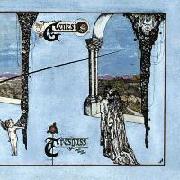
Genesis started life as a progressive rock band before a series of membership changes brought about a transformation in their sound, into one of the most successful pop/rock bands of the 80’s and 90’s. After recording some amateur demos at home studios, they released their first album “From Genesis To Revelation” in 1969. The album was unsuccessful and the band split for a while. In 1970 the second album was released, “Trespass”. On that album the band’s style is already more mature and with a different vein. Shortly after the album’s release, Genesis underwent some changes and recorded “Nursery Cryme”, which featured elaborate musicality, inspired lyrics and horror tales.
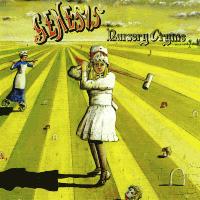
So, by 1971 Genesis had all the pieces in place. Following the departure of Anthony Phillips and John Mayhew they’d finally found musicians who had the chops to keep up their grandiose visions. Hackett and Collins brought with them the instrumental skills that the band so badly needed. The progressive nature of the compositions began to enter full flight. The band contributed with three musical masterpieces, the epics, “The Musical Box”, “The Return Of The Giant Hogweed” and “The Fountain Of Salmacis”. This album is the second most guitar heavy on Genesis’ career, as all Hackett’s tricks are on prominent display at just the right times, and Gabriel finally discovered his incredible sense of absurdity. His lyrics are more intricate and entertaining than ever before. The absurdity even reaches the album’s cover.
If Genesis established themselves as progressive rockers on “Trespass”, “Nursery Cryme” is where their signature was really unveiled. True English eccentrics, they created a fanciful world that emphasized the band’s instrumental prowess as much as Gabriel’s theatricality. It doesn’t mean that all “Nursery Cryme” work perfectly well. There are times when the whimsy is overwhelming, just as there are periods when there’s too much instrumental indulgence. Yet, there’s a charm to this indulgence, since the band is letting itself run wild. Even if they’ve yet to find the furthest reaches of their imagination, part of the charm is hearing them test out their limits, something that does result in the three genuine masterpieces already mentioned by me. If some other tracks aren’t as compelling or structured, it doesn’t matter because these are tracks that showed what Genesis could do, as pinnacles of what the band could achieve.
About the tracks, “The Musical Box” shows that Hackett is the star here. His guitar parts are amazing, fast enough to satisfy one’s need to hear shredding, but also impeccably constructed and written. “The Musical Box” is about as good as it gets in Genesis, with the exception of some other songs that Genesis made on “Foxtrot” and “Selling England By The Pound”. “For Absent Friends” is short and represents Collin’s first ever lead vocal performance in Genesis. It’s an acoustic ballad with nice lyrics, a good guitar duet and great double vocal work. “The Return Of The Giant Hogweed” is a bizarre fable. It showcases the swirling rhythms that are the trademark of the group, and ends with one of the heaviest sections ever. This is a return to the grandiose song structure and creepy storytelling lyrics. “Seven Stones” is a short song with nice Mellotron, as well as tasteful guitar playing by Hackett, and let’s not forget the twelve string guitars. “Harold The Barrel” sounds like a medieval British folksy song, but only slightly. The music is really hilarious, maniacally slamming from one up-tempo theme to another while we hear Gabriel singing the story. “Harlequin” is another short folksy piece with nice vocal harmonies. It’s a beautiful song while not possessing any distinct melody or distinct hooks. “The Fountain Of Salmacis” is a lovely Greek myth about the Hermaphrodite set to music of the nymph Salmacis. The lyrics are pure poetry, while the music, with sweeping Mellotron, and percussive bass, imparts a fittingly epic feel and brings to the album a majestic close. It’s one of their most powerful songs and one of my favourites too.
Conclusion: “Nursery Cryme” is the biggest breakthrough in Genesis’ career, where many of the positive aspects of the band are shown in full for the first time. It saw the addition of Hackett and Collins and it would be this line up that would fortify the early success of Genesis, that remains intact for another four years and that catapulted the group to the stardom and making of it in one of the best and most influential progressive rock bands of all time. Despite all the differences between “Trespass” and “Nursery Cryme”, especially in the line up of the group, “Nursery Cryme” picked up where “Trespass” left off. In the typical progressive rock fashion, the album lyrically is made with fantasy based lyrics and long epic musical pieces broken only at times with short yet catchy tunes. This is truly the first time we hear Genesis start to blend their innovative progressive rock style that would later appear into their next studio albums.
Music was my first love.
John Miles (Rebel)
| other reviews of this album |
|
Album Rating: 4.5
It's time to return to the classic prog albums ot the 70's era. This time I chose the album, where practically all begun for Genesis, one of the best and most influential classic prog albums ever.
It's not necessary to say much more things about it, because pratically all things were already said before. So, enjoy and check it or check it again, if it's the case. This is a good way to spend our free time in this pandemic days.
| | | Album Rating: 4.5
doesnt get more classic than this e, second fave Genesis, behind selling, music box, may be the best prog piece ever
| | | Album Rating: 4.5
Somehow, I can agree. But, maybe I prefer Supper's Ready as their best piece.
Thanks for the comment pal.
| | | Album Rating: 4.5
suppers ready I think is the same provenance, I always lean toward music box though
or the Live version of Hogweed, fun as hell
| | | Album Rating: 4.5
I agree. All are amazing tracks.
| | | Album Rating: 3.0
Agreed, Musical Box is one of their best songs. I've also always liked Seven Stones here and Harrold the Barrel
| | | Album Rating: 4.5
Yeah, all are great tracks.
Thanks for your comment.
| | | Album Rating: 4.0
Need to check this one. All its LP artwork is fantastic, a joy to the eye.
Bom trabalho, amigo. pos
| | | Album Rating: 4.5
Yeah, the art work is amazing. I always loved the absurdity and the perversity that we can feel on it.
Obrigado amigo.
| | | Album Rating: 4.5
I am glad to see another review made by you about an album of the classic era. Nice review. Have a pos.
| | | Album Rating: 4.5
1,2,3, test
| | | Album Rating: 4.5
Ah, it works, yesterday, it didn't. The only grip I note about this album; It doesn't age so well, but it contains fantastic and timeless songs such as ''Musical Box'', ''Giant Hogweed'' and ''Fountain of Salmacis''.
| | | Album Rating: 4.5
@ Intruder
Thanks pal. It's always a pleasure to see you on my reviews.
| | | Album Rating: 4.5
@ Jethro
I'm glad it works today. Lol.
I completely agree with you my friend and that is the reason why I don't give it a 5.0. But, as you mentioned, ''Musical Box'', ''Giant Hogweed'' and ''Fountain of Salmacis'' are amazing masterpieces, three of my favourite Genesis tracks ever.
It's really nice to see you again comment on Sputnik. Cheers bro.
| | | Album Rating: 4.5
The best way to provoke an apparition of mine is to see a Genesis review of yours at the front page ;)
Cheers buddy! Will read later.
| | | Album Rating: 4.5
Ok pal. I hope see you in the next months because I decided that my next reviews, till the end of the year, will be about more classic stuff of the 70's.
| | |
Lovely job worker e210013. Pos’d.
Musical Box is faultless
| | | Album Rating: 4.5
Thanks zak, I appreciate.
| | | Album Rating: 4.5
Thanks for the comment Mary.
| | |
| |