Swiss industrial rock band the
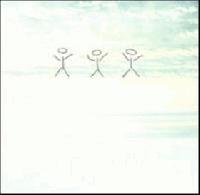
Young Gods have had a rather interesting trajectory up to this point; their debut was rather indebted to
Swans in some places (their name is even derived from the EP
Young God and its title song), then their next album,
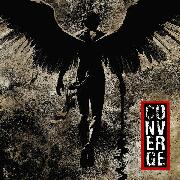
L’eau Rouge, showed prominent cabaret influences of all things in some places. Then they moved to America and made
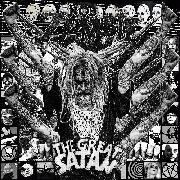
T.V. Sky, which was more straightforward industrial rock than their previous works, which leads us to
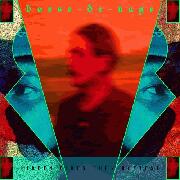
Only Heaven, which was released through Interscope, a move which I’ve seen attributed to the recent success of
Nine Inch Nails.
The album opens with the thirty-second synth solo “Outside”, which isn’t really anything other than a mood setter, though the opening salvo that is “Strangel” more than makes up for it. The drums are live while the guitars are sampled, which from my experience is somewhat unusual for industrial rock because it’s usually the other way around. Urs Hiestand’s syncopated drumming is quite satisfying; the snare and crash cymbal always hit on the offbeat at the end of each measure, but it complements the song’s rhythm and the looped guitars quite nicely. Frontman Franz Treichler’s voice, together with the live drumming, firmly establishes this album as being more on the rock end of the spectrum than the industrial (when it’s not being ambient, that is); it’s gravelly in that hard rock sort of way, and also very French.
“Speed of Night” begins with a cascade of synth noises and what sounds like the sampled opening of the single “Envoyé”. Most of the following song sounds like it should be an ambient interlude; there’s electronic samples fading in and out throughout, and there’s a light phaser effect applied to Treichler’s voice but this is also a background to an insistent bass drum rhythm that suddenly cuts out halfway through in favour of ambiance. Perhaps that might be suspenseful to some; it certainly was for me when I listened to it for the first time, I wasn’t sure if the song would pick up again. Hiestand reasserts himself, sure enough, though the song ends like it began, with inconspicuous sampler noodling.
“Donnez Les Esprits” is a mood piece which features an unusually prominent bassline and sporadic sampler interjections which combine to create an unusually dreamy atmosphere for industrial rock. This song features some of my favourite electronics; some of the samples sound like breaking waves, it’s actually quite pleasing to my ears, and it’d make for fine background music too.
The sixteen-minute centrepiece “Moon Revolutions” opens with a reversed throbbing bassline and a kinetic hi-hat rhythm which soundtracks Treichler singing about motion and flight. Like “Speed of Night”, there’s another ambient interlude, with several different tones appearing and evanescing as quickly as they appear, and occasional guitar tremolo. Hiestand eventually cuts in again, and the song only gets more dramatic from there; Treichler indulges in some chant-like vocals reminiscent of 2010s Swans, which has me wondering of the influence has switched around, and the track culminates in a percussive onslaught that I find rather redolent of late ‘90s
Neurosis.
“Kissing the Sun” continues the album’s sudden fascination with celestial objects, and some of the verses are almost a cappella. Such verses are always succeeded by guitars that slam the ears, and some of the drum beats are reversed in those moments as well, which adds to the disorientation. The rest of the song is mostly just a single guitar note punctuated by airy keyboards, but it holds my interest because of Hiestand’s drumming, it has a propulsive energy to it that’s maintained throughout.
“The Dreamhouse” is the most ambient piece yet; rhythm is minimal at first, secondary to squelching watery samples and high drones, and the result sounds somewhere in between
On Land by
Brian Eno and
Aphex Twin’s
Selected Ambient Works Vol. II. Then highly processed drums appear and the track takes on more of a rock tone. The drums and guitar drop out and the ambience resumes, but what was once a moment of peace has now become unresolved suspense. “Lointaine” is mostly a sampler loop which is imbued with a sort of nervy energy by a driving, slightly off-kilter hi-hat rhythm, and there’s also other samples that wash over the music, and Treichler’s voice also gets caught up in the swirling effects at times.
“Gardez Les Esprits” is the second shortest song at slightly over a minute, a simple keyboard loop that would almost be a bookend if it weren’t for the closer “Child in the Tree”, which is a folk ballad of all things. The song ends off with ambient tones that steadily fade away, ending the album on a surprisingly gentle note.
Only Heaven is atypical for industrial rock with its strong ambient influence, but it’s that ambient influence that I think makes the album interesting. It gives the record a nice variety, and it makes those moments where the entire band is involved feel all the more rewarding. The production’s also quite good, former Swans drummer Roli Mossimann really outdid himself with the mastering, the album barely sounds a day old.
Only Heaven is a good entry point into the Young Gods’ discography; the rhythm section’s tight throughout, the production has aged incredibly well, and it’s a nice bridge between the more accessible sound of
T.V. Sky and the increasing presence of electronics on future albums.
Favourite tracks: "Strangel", "Kissing the Sun", "Speed of Night", "Donnez Les Esprits"
Least favourite tracks: "Outside", "Gardez Les Esprits"