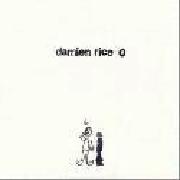
Review Summary: Far down below and singing in harmony.
The last words I had with the person I loved the most were not sad, happy, uplifting, or depressing. There was nothing exactly powerful in of themselves; they simply existed, exited two mouths in similar manners, their tones posessing nothing but a realized sense of resignation to finality. It was the resounding nothingness that spoke the most—the emptiness of concluding more than two years of dedication, of tears, of love, of hurt, adjectives, adjectives. First came relief (it’s over and I can be free of this), then came the joy (I no longer need to worry). Then came the questioning (but
why do I feel this way, and why did it end?), followed immediately by a looming awareness of unaddressed pain (did
I make it end?), which then turns into a full-on uppercut straight to the chin (I am alone), and then the blame (this was me), and then regression to a rock bottom once thought to be in the past. Talking about
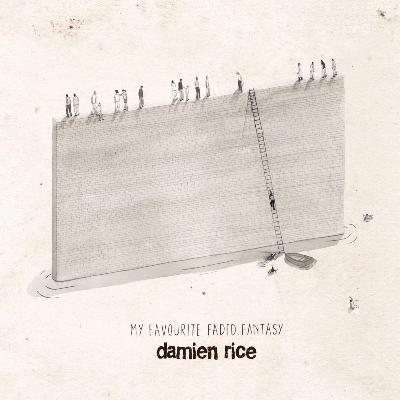
My Favorite Faded Fantasy therefore is very difficult for me, as I find myself revisiting that narrative on repeat every time the first note of the title track kicks in. My mind is transported back into a cramped college dorm room, staring into a computer screen, pretending I don’t feel like crying and convincing myself I’m going to be so much better. Pretending I don’t mind the fact she’s not there, and while I can see her eyes, they’re not truly in front of me, and
f*ck, maybe I
am “The Greatest Bastard” she’s ever known.
This is an album that portrays the journey through heartbreak in a manner more profound than most. Damien Rice is occasionally removed from the listener, his musings sounding almost apathetic in “It Takes a Lot to Know a Man,” the singing taking somewhat of a backseat to allow the piano lead and the string arrangements to perform the majority of the legwork. The song slowly moves onward, the melancholic atmosphere being used as its central feature, creating an aura of longing that eventually explodes in a momentous crescendo containing roaring horns, a backing choir, and an electric guitar. It’s a beautiful odyssey towards a climax that feels larger than life, bursting from the speakers and echoing around whatever space the listener finds themselves in. It’s the soundtrack to a pensive mind in the wake of a separation: No quiet, no answer, but a lurking pang of comprehension—an understanding of something uncomfortable to understand.
And though those incredible, awe-inspiring compositions are definite highlights, it is when Mr. Rice is unnervingly close to the listener where the heart of the record is uncovered. There are few moments in music as achingly honest as “The Greatest Bastard.” I’ve probably spun it a hundred times on my vinyl copy, quietly muttering along to the lyrics, clinging to them like a lifeboat, persuading myself this is one of those ‘acceptance-through-catharsis’ vehicles or something along those lines. The bulk of the tune is carried solely by acoustic strumming and Damien’s voice, which wavers between resonating with power and bending underneath the unwanted truth being uttered: That you knew this person so well—their touch, their smile, their individual thoughts, the way they made your soul soar even through all the fighting and struggle—and that you can’t shake off the fact you were a disappointment, their biggest mistake. Though I’d desire this to be the salvation aforementioned, all I’ve been left with for years is that single phrase in the refrain that summarizes the loss of a hand to hold in an agonizingly straightforward, gorgeous method:
“I never meant to let you down.”
For me, perhaps this release is less of a rescue from a storm and more of a shoulder to lean on. It’s that sort of relief many often attribute to music characterized as despairing, hopeless, or what have you. One does not automatically have to discover an escape from emotional trouble; all that’s needed, sometimes, is to have someone next to you all the way down there. Being at the depths becomes less remote when another voice can speak nearby and empathize with whatever story you have, your individual regrets merging together to share the baggage. In writing this, I’m aware
My Favorite Faded Fantasy does manage to end on a somewhat optimistic note. At the very least, the final recognition of “Long Long Way” sounds close to acceptance. However, I would be lying if I claimed I finished that process of ‘moving on’ quite yet. Most days, I still feel the jagged edges of that ultimate rock bottom, still see that laptop screen, still see those eyes. I’d be equally dishonest if having Damien down here didn’t help a slight amount, if for no other purpose than to have another damaged entity along for my ride, the two of us singing along to that gut-punching chorus of “Color Me In,” each of us having the poetic phrases memorized down to each inflection. Mr. Rice is undoubtedly a master at merging restrained, acoustic sections with string additions—delicate or frighteningly authoritative at his command a la the bombastic “The Box.” Above all else, he is a man reeling from heartbreak, trying his best to cope. And when the needle is brought down on the record, he’s sitting right here next to me.