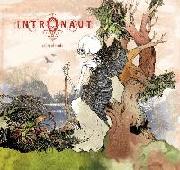
Review Summary: M4M JOI ASMR
Technicality vs. emotion. Music theory masturbation vs. songwriting. Polyamorous sodomy vs. monogamous missionary. These are all subjects which the internet at large has flogged so hard that even my indomitable sadomasochism in the face of high quality discussion-bait has fallen to the wayside. Then Intronaut release
Fluid Existential Inversions, marking the first time that they've ever sounded like a band that have pigeonholed themselves into being representative of /r/progressivemetal's not-so-discerning taste in sterile wankery, and I just can't f
ucking help myself. So here we are.
Intronaut's slow crawl out from the primordial ooze which birthed them has been a wildly entertaining evolution to follow.
Void and
Prehistoricisms saw the band on some technical reptile brain sh
it that sent me down a rabbit hole of hanging out in swamps and eating frogs until my parents found me and put me on a steady diet of Eagles LPs until I was once again placid and chronically depressed. By the time I was allowed my own PC again, Intronaut had released my favourite one-two punch of their career.
Valley of Smoke was ridiculous in its ambition, yet its execution was so singular and effective that it couldn't be denied. This was followed by
Habitual Levitations, Intronaut's most interesting experiment. Behind the much-discussed lack of neolithic yelps and screams, the record contains the most effective clean vocals Intronaut have ever utilised, and what I consider to be the most well-rounded compositional work of their career thus far.
The Devin Townsend of Last Things felt like the biggest cash grab of the bunch, and a wee bit too complacent for my liking, but the production delights like a well-orchestrated tickle of the taint, and every song is f
uckable. It was another satisfactory chapter in a ridiculously consistent career, especially when compared with their less dependable progressive sludge contemporaries.
Some of the more perceptive reviewers within the industry have fallen back on a classic statement to summarize this new release of Intronaut's, stating that
Fluid Existential Inversions is like a mixture of everything that came before it with a little bit of new stuff mixed in. Well, yeah, I suppose that's kinda where this album sits, but the little bit of new stuff in this case is choppier songwriting, production that has buried Joe Lester's iconic bass playing and unearthed the dodgy vocals, an increase in progressive tendencies at the cost of cohesion, a lyrical journey which genuinely peaks at the phrase “this simulation sucks,” and a drummer who is undoubtedly a better person than that last vile c
unt whose experimentation with adding loved ones into his polyrhythms saw him rightfully dismissed, but is also a far less tasteful player. Rudinger's tech death drumming tendencies and Intronaut's proclivity for mellow jazz excursions clash somewhat. In this light, dynamics are squandered not just through production, but performance, with many of the album's more nuanced and clean sections demanding more subtle beats than the ones provided.
That being said, Alex Rudinger is an insane drummer and he puts in a hell of a good innings throughout this album.
Cubensis' winding bridge showcases some wild tom-foolery, nudging the composition forward in a way that feels vital, urgent, and natural, and he has no trouble in finding the groove during the band's mathy, heavy riffing. Perhaps he just needs some more time to master the wide-ranging skillset that this oft-imitated, never-replicated band demand. It doesn't help that the drum sound in general suffers from progmetalitis- a disease characterised by stripping a drumkit of all of its natural presence and replacing it with a sterile, cinematic recreation of what a drumkit almost sounds like, with this particular strain of the disease bearing a kick that sounds like a wet cloth being slapped.
The vitriol above comes from a frustration with
Fluid Existential Inversions that is made all the more pertinent by the record's more notable qualities. Everything that makes Intronaut a great band is still present in some way or another. The guitar tones are better than they've ever been, there are some mind-blowing sections of musicianship that display a level of synergy that will paint smiles on even the most stubborn of fans, and you can never quite predict where a song is going to go next (although if you guess jazzy breakdown and/or polyrhythmic f
uckery your odds are pretty good). Unfortunately, as good as
Fluid Existential Inversions is, it's also pretty safely the last album I'd recommend to anybody looking to get into Intronaut.