Review Summary: "Gotta find my destiny before it gets too late"
Paul Morley, a great music journalist writing in NME, once described the music of Joy Division as "private music forced out into the open". While that certainly rung through of their debut Unknown Pleasures, the band took that up a notch or two on Closer. Their debut showed the band distance themselves from the punk rock scene, where they were named Warsaw, into a band that relied on the tight rhythms of punk and the general attitudes, but were far more sparse, atmospheric, and introverted than many. And it was a great album, but suffered from inconsistent songwriting and strictly formulaic music; yes, my review intentionally exaggerated their formulas, but it's not entirely wrong. And in one year, the band went all-in on reforming their sound and making a totally unique and irreplaceable album-one that would take a life.
Between June of '79 and March of '80, Ian Curtis began to deteriorate mentally and physically. Unknown Pleasures was well-received and firmly established the band in the post-punk scene, but they still remained a cult band. Ian's philosophy was never the brightest, and it doesn't take a degree in music to realize that Unknown Pleasures detailed a depressed and paranoid life. But he became worse; his depression turned more severe, his epilepsy became more of a nuisance that began severely impacting live performances, and his outlook on life became bleaker and bleaker. The world of music was changing outside him, but he really didn't care. His marriage was falling apart as he grew even more apathetic and detached. The songwriting process for Closer wasn't particularly difficult, but Ian noted that the songs were writing themselves, and there was little revision or care about the lyrics. On May 18, 1980, Ian was gone-hanging in his kitchen with The Idiot spinning on the record player. Closer had been recorded nearly 2 months prior to his suicide, but it wouldn't come out until July of that year.
Closer is a tricky album because it's nearly impossible to understand and analyze without looking at the context. It's clearly an album, but it's something more than just a collection of 9 songs. It's more like a structure of funeral hymns, or Curtis's epitaph. It's a soundtrack for the devolution of the psyche, which wasn't an entirely new concept by 1980; deconstruction has been a theme on classics like Tago Mago and The Modern Dance. But Closer is unique, as it details Curtis's devolution, and the closing Decades serves as his last words in a sense. The thrilling opener "Atrocity Exhibition" establishes an oppressive, claustrophobic and jerky atmosphere, and given how phenomenal and haunting that song is, it seems like it would be very difficult given there's not a lot of space to build off of. The tribal drums, horrific lyrics, deadpan delivery, crunching guitar, and the reoccuring waves of noise near the end of the song are shocking on first listen. "This is the way, step inside" is the perfect slogan for this album, and that song is such an effective opener but it gives some sense of what the rest of the album will be about.
The first five songs are either driven by guitars (the shrieking riffs of "Passover") or synths (the jerky "Isolation", perfectly detailing how depression feels), and they all explore various themes of depression. The opener covers paranoia and claustrophobia, and how life seems like an atrocity exhibition-a ridiculously cool term, by the way, which came from a collection of experimental novels published in 1970. As said before, "Isolation" covers depression and the feelings that nothing is ever enough, and lines like "Mother I tried please believe me,
I'm doing the best that I can" are as raw as you can get. Trust me, I've been there. "Passover" and "Colony" both relate to Ian's obsession with religious imagery, covering Biblical stories and the general questions of why God is making him suffer through his depression and other complications. Religion, or spirituality, and mental health are interesting, and religious imagery and fixation are actually fairly common. "A Means to an End" is likely about his failing marriage and the ending of a relationship, whether intentional or out of misfortune, reminding me of Reed's Berlin to an extent. And of course, putting trust in death.
With no disrespect intended towards any of these songs-all great, many amazing-the album's second half is where the real treasure lies. That was poorly worded. Ian's suicide note is the treasure? No, I don't endorse that. The final four songs are where Ian's devolution and deconstruction are really showcased. As in, he's accepted his fate and his outlook becomes bleaker and bleaker, and by the end of "The Eternal", anybody could see it coming. That dark, haunting, and bleak atmosphere becomes even more dominant and claustrophobic, representing how Ian felt as this album is basically as his. "Heart and Soul" and "Twenty Four Hours" are still largely driven by Sumner's guitar work, incredible as always, but synths and the sparse and dreary production really kick into effect. The lyrics grow darker as Curtis became more miserable. The last verse of "Twenty Four Hours", one of the most charming and mesmerizing pieces of music, reads:
"Now that I've realized how it's all gone wrong,
Gottas find some therapy, this treatment takes too long.
Deep in the heart of where sympathy held sway,
Gotta find my destiny, before it gets too late"
A line which should be as well-circulated as "this is the way, step inside", but oh well. While his vocals continue to be deadpan and he refuses to use his ability to sing, the backing music becomes even more chaotic as he begins to realize that he doesn't have time left. Twenty four hours left in his lifetime? The final two songs finish the album in the only way possible-an exit. The guitars take a step back, as Hook's bass lines grow slower, the drums become even more sparse, and everything feels significantly colder. No wonder it's a great album for staying up at 2 AM in the mid-winter, thinking of everything wrong in your life and what you cannot change! Curtis talks throughout most of this album-the closest he comes to actually singing is on "Isolation"-and while his vocals are deadpan either way, you can still sense his misery and pain in these slower and colder tracks. His lyricism is as haunting as it is beautiful, and on "The Eternal", he sounds like he's covering a funeral, but a more realistic interpretation is that he's bottled up and has no other choices. For those fortunate enough to have never battled mental illness before, bottling up emotions is never a good thing and leads to suicide. When he says, "No words could explain, no actions determine/Just watching the trees and the leaves as they fall", he digs into the deepest and most uncompromising parts of the human psyche as impacted by any mental illness-not just depression or anxiety.
And it comes to a close on "Decades", one of the band's ultimate songs and one of the most brutally depressing songs of all time. To all those sporting Unknown Pleasures t-shirts and claiming to be a "weird" teen with a "weird" taste in music, have you ever ***ing listened to "Decades", or any of this album's B-Side? Christ, I wish they sold more t-shirts in the model of this album cover. Anyways-"Decades" is as sparse as "The Eternal", but this reads exactly like a suicide note. Ian's vocals grow more mysterious and full of sorrow, moreso than any other previous song, and his mind is on autopilot. This digs even deeper into the psyche than the previous song, and represents the end. The synths dance like church organs in a rhythmic manner, and it doesn't sound like anything can be more bleak than this. But also, "Decades" represents mental illness as an internal war and also reflects on what could've been, like looking at a life decades after the death. In this case, "The Eternal" could be the funeral while "Decades" tragically looks at all of life's opportunities, only to question "where have they been" on repeat like a lost dog looking for his owner. It's ***ing haunting, and this album is terrifying for anyone who's either going through a mental illness, or who has gone through one in the past. Whether it's mild depression or schizophrenia, it digs into the most horrifying parts of the psyche. Once again, it's private music forced out into the open.
Closer is probably the most emotionally hollowing and exhausting album there is. I mean, harsh noise wall is probably exhausting and painful, but in terms of which albums can expose the most private and grueling experiences someone can go through, there are really none that sound like Closer. This is a major advancement from their debut, and while there aren't many radical changes, it sounds like a completely different album. It's focused, it's concise, it doesn't have subpar tracks like "Candidate" and "I Remember Nothing", and it amplifies the depression to read like a funeral hymn for Curtis. Because that's what it is. There's no other way to look around it, at least for me. And the production is what makes this as bleak as it sounds. Sure, their debut sounded cold, dark, and bleak, but it was still largely attached to punk. This sounds less musically raw, but in terms of making the synths dance like spirits around a grave, in terms of making Curtis's vocals sound like he was already dead (not just on the inside), in terms of making Morris's drumming sound skeletal and pounding, in terms of distorting Sumner's guitar into a weapon of war, in terms of making the entire album sound like a perfect date for a walk in the graveyard, etc. The band didn't like the production that much, but it's undeniable that the album would be far less powerful if Hannett and co. didn't alter it as far as they did. There was nothing that sounded like this before 1980-the closest would probably be The Doors-and there's still little that's approached the album's horrifying grace 39 years later.
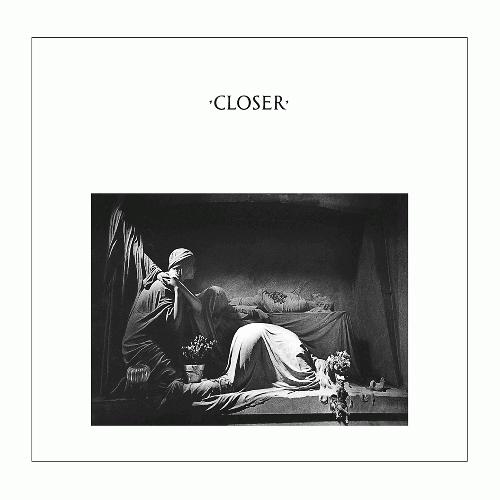
Obviously Ian's suicide impacted the perception and success of this album, likewise with Kurt Cobain and Nirvana in the '90s. But it's impossible to separate the context from the music here. It's a challenging listen that demands attention to all the sonic details, and even if you don't go through every 33⅓ book about the band, it still helps to know where Ian was coming from. This is far more experimental and difficult than Unknown Pleasures, which still wasn't exactly the most pop-friendly thing in the market, but the desolation and the scorched-earth-policy of this production makes it extremely bleak and confusing. It took me a while to come to terms with the album, but when it clicked, it clicked hard. It's not something you listen to when you're happy, and if you're suicidal, you probably should be calling the hotline instead of spinning this, but I digress. This album speaks for itself. Awesome album cover, by the way. I would definitely sport that more than the radio waves of Unknown Pleasures.
The band's best album. The best album of 1980. One of the very best of the decade, and finally, probably the greatest post-punk album in terms of how massive this is, and how seminal it is.