Review Summary: A rocky start for a future star
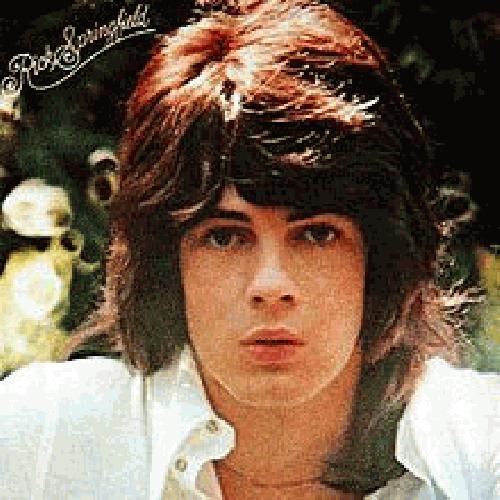
Rick Springfield’s solo debut happened in 1972 and went practically unnoticed in the music world. Moreover, until 1981 he enjoyed only local popularity, despite his hard work, the release of four albums, and participation in the Australian band
Zoot, which dabbled in pop-rock and so-called bubblegum pop.
Rick himself and his output, at least in the early stages, cannot be described using such common expressions as “the star has risen,” “exploded in the charts,” or “fresh sound.” Instead, we see steady workmanship where possible and the careful treading of a novice when exploring unfamiliar territory. We see a pursuit of trends, however fickle their success might be, though not entirely devoid of a certain originality that offered a glimpse of his true talent.
All these traits are applicable to the majority of the musician’s output and his first LP – an uneven attempt to introduce himself as a full-fledged musical unit, independent yet at the same time mindful of the ideas of his contemporaries.
The album sounds as though it is comprised of cuts in various states of development – from infant to fully formed – that occasionally hint at Springfield’s future artistic path. The LP is in constant fluctuation, moving from simplicity to pretentiousness, from originality to imitation, and from ballads to light-headed circus overtures. It seems as if the musician is sampling different genres, but without yet possessing a fully developed palette. Some songs are clearly influenced by the aforementioned bubblegum pop, which hurts the album by tightly tying it to its specific time period and air-headed fashion. Rick’s detours into baroque pop are curious, but an attentive listener can easily spot the mischievous glint of
Elton John’s glasses. A touch of rock ‘n’ roll in the form of
Come On Everybody, with its gospel-like backing vocals, is fine and bouncy; however, it cannot save the album from the youthful exuberance typical of solo debuts, when a musician wants to demonstrate everything at once.
Nevertheless, this turbulent vessel is bracketed on both sides by the best songs on the album. The airy
Mother Can You Carry Me recalls the space themes on
David Bowie’s
Space Oddity, though with a more grounded Major Tom. The surprisingly rugged yet elegant blues-rock cut
The Ballad of Annie Goodbody feels like a prophetic wave to his 2018 self (
The Snake King). Such complete and polished tracks are one of a kind on the album, but they place a suggestive ellipsis rather than a final period at the end.
And so, a beginning in all senses of the word has been laid, leaving Springfield’s next release to act as an error correction that would take his output to a new level. All we need to state is that a new musical presence had arrived – even if, for now, it was just one among many.