Review Summary: The album is unceremoniously sweet, regardless of some missteps.
Over the course of four albums released, The Cult demonstrated an admirable ability to change within the constraints of the rock genre. The post-punk album
Dreamtime and
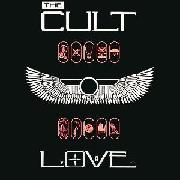
Love laid a rather confident groundwork for a band that possessed two powerful weapons at its disposal: the strong vocals of Ian Astbury (you may also note his fascination with the Native American culture) and the formidable guitar work of Billy Duffy.
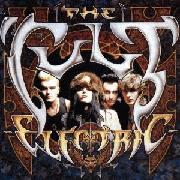
Electric took a surprising turn toward hard rock a la
AC/DC, managing in the meantime to surpass most of the Australians’ 1980s output.
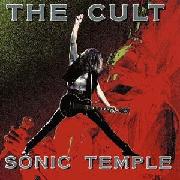
Sonic Temple shifted its focus to a more epic style of rock music inspired by
Led Zeppelin. And despite the dominance of big hair and synthesizers in rock music at the time, The Cult was able to attract the attention of a fickle audience with its revival of classic rock, all without succumbing to obvious outside influences. Thus, it would not be exaggeration to state that many rock fans waited with impatience and hope for the next LP, titled
Ceremony.
Except that, behind the confident façade of The Cult, problems were snowballing. Success can go to the head of even the most close-knit bands, and The Cult was no exception. Add to that the fact that relationships between its two leaders – Astbury and Duffy (which were always strained, though it had a positive impact on their output) – worsened to the point where neither could be in the same room during the album’s recording. If we also toss in the “usual” problems with alcohol, narcotics, or partying (take your pick) and the departure of a founding bassist, you certainly do not get a recipe for a record that could stand on the same level as
Love,
Electric, and
Sonic Temple. Nevertheless, the final result turned out to be much better than expected.
On
Ceremony, the two-man core decided not to introduce drastic changes to their sound, instead following an evolutionary approach and further developing the path chosen on
Sonic Temple. In terms of its general feel, the album can be compared to the epic
Physical Graffiti by the mighty
Led Zeppelin: each track is a grand-scale sound tapestry woven out of spectacular guitar lines, commanding vocals, and orchestral arrangements highlighting the overall drama – all efforts focused on making you feel the scope. And, surprisingly, the band tends to hit the spot more often than not. Despite the fact that the average song length on the album is five and a half minutes,
Ceremony is capable of grabbing the listener and not letting go until the end, which is a feat in itself. A strong trifecta opening the LP – the title track, the dynamic single
Wild Hearted Son, and the aggressive
Earth Mofo – create a sense of another triumph. However, unfortunately, subsequent misses do tend to undermine a colossus that at first seemed untouchable.
A grander scale inevitably leads to overreaching, repeated instances of creative overindulgence, and a loss of critical self-control. Because of this, the otherwise excellent track
White overstays its welcome by a minute or so. Or consider
Full Tilt, which on one hand rocks hard, but on the other is based on a generic riff. Or
Bangkok Rain and
Wonderland, which, while decent cuts, sound like B-side material that accidentally found its way onto the album. Nevertheless, do not think these tracks are bad. On the contrary, The Cult manages to shake things up and add an element or two that prevents many of the songs from feeling middling: for instance,
Full Tilt is redeemed by its energetic performance, and the solos in the second half of
Heart of Soul are so strong that the memory of its bewilderingly generic first half quickly evaporates.
Even though
Ceremony is objectively weaker than the preceding albums, The Cult released an LP that deserves repeated listens. It is not a definitive failure; rather, it is a victim of two battling egos, the ill-timed departure of band members, and a lack of outside control. This time, The Cult missed a step, but they maintained their overall course.