Review Summary: Surviving the 80s, Part Seven
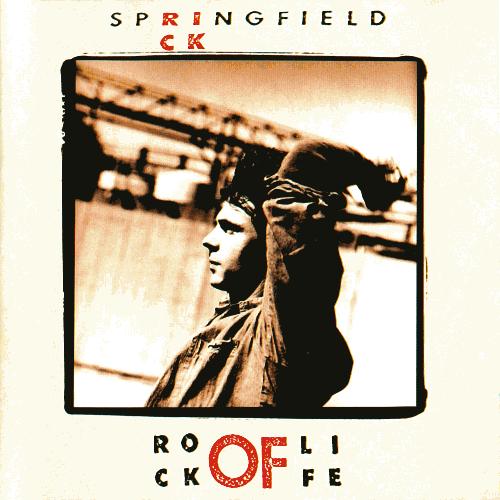
The last album by Rick Springfield in the 80s signifies a sunset in the second period of his music career. Rick would make a return to this area of his professional interests after more than a decade, attempting a successful reboot with
Karma. Unfortunately, this sunset can refer to not only the finale but also its contents.
After unleashing upon the audience a series of similar but commercially successful pop albums with their sterile sound production – which only tried to put on the power pop suit – Springfield decided to step into the same stale waters again. What lured him there after the rather interesting and practically pop-metal
Living in Oz and the gracefully electrified
Tao?
At first, it would seem he tries to daringly jump into the waves of previous success, swim there a little, and take his award once on solid ground. This can serve as the only explanation for the quickly inflated and immediately burst sound balloons such as
Rock of Life,
One Reason (To Believe) , and
Tear It All Down. A great portion of the LP is filled with feeble strains at the good old days of his songwriting, while other components attempt to change it, dash forward, and break the general stale soundscape. However, even these energetic tracks, like
World Start Turning and
Tear It All Down, are saturated with the very reason that, it would seem, prevented further experiments or failed to let him end the period on a higher note.
Exhaustion. It fills the entire album, nailing the uneven track list to the ground, even though some of the songs are rather good: the abovementioned and potentially hit
World Start Turning, the conventional but sincere
Soul to Soul, the earnest and bluesy
Woman, and
Hold On to Your Dream, which recalls the great
Cheap Trick. In the last quarter of the LP, the situation starts to change as if Rick suddenly comes to his senses and decides to shake it up, presenting probably the best track on the album (
Dream in Colour), followed by two quite perky numbers. Then the LP suddenly ends, leaving a not-too-simple and rather diluted impression.
Comparing this to the undeservingly shelved
Beautiful Feelings, it becomes clear the former should have been delayed, giving him time to come back to the recorded material in a better artistic shape – enough to rework and definitely re-record the majority of the songs. No wonder that following the release of
Rock of Life, the singer took a long break to devote his time to his family and acting career. As such, this standard opus added nothing to Rick Springfield’s professional score, nor did it deduct anything. One can easily skip this release while browsing through the musician’s discography, though it still has many interesting and ear-catching moments.
Overall, the 80s were commercially successful for the artist, but less successful in creative terms. Mostly sticking to current musical tastes, Springfield found himself in the charts while at the same time becoming practically indistinguishable from his contemporaries. As is often the case, time puts the results of passing leanings and true artistic passion in their proper place. Out of seven albums released in the 1980s, three can be considered worthy of attention from those who appreciate quality pop rock, regardless of the year you’re going to be listening to it. Given that not many musicians who started under the stimulating care of the 70s managed to produce something worthwhile in the electronic grip of the 80s, Rick’s struggle with the current – and, in the end, with himself – commands nothing but respect.