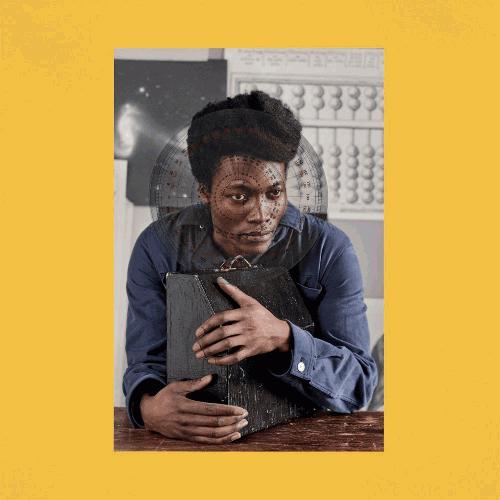
Review Summary: The jungle calls for its prey.
Benjamin Clementine is one of the few artists successfully combining beautiful melodies and unconventional musical structures with some truly mind-bending avant-garde undertones. He has a neck for left-field and off-the-wall, but simultaneously engrossing and beautiful tunes. In spite of that, his debut album,
At Least for Now, was a little disorganised, which didn’t help the fact that many people were simply unprepared for Benjamin’s inherently odd approach to music. But
I Tell a Fly sees Benjamin finally fully embrace that potentially ingenious and wholly original sound.
“Farewell Sonata”, the album's opener, perfectly encapsulates just what kind of lavish, yet idiosyncratic music is the album home to. The song kicks off with pretty and simple piano, but half-way through starts to incorporate the most unexpected instruments and stylistic changes, from creeping harpsichord (I assume) to abrasive drums. It suddenly becomes a surrealist’s dream soundtrack. And this kind of innovative peculiarity is the album full of.
The music is absolutely aware of its uniqueness, but wastes no time with leading its listeners into it gently and letting them adjust to the new, exciting and engulfing beauty of what’s to come. On the contrary, the album simply expects you to understand right from the get-go that it is not like anything else and you have nothing else left, other than to expect the unexpected. If you can’t handle the outlandish, in-your-face eccentricity in the instrumental shifts, then you will be puzzled throughout the entire album. But there is also simplicity hidden underneath, although Benjamin makes sure that even if the music doesn’t sound off-kilter enough, his powerful, shredding vocals will.
The beforehand released singles “God Save the Jungle” and “Phantom of Aleppoville” are just as striking and magnificent in the context of the album, as when they first, standalone time took every one of their listeners by surprise. And just like those songs, everything on here is brilliantly constructed to sound as confusing and mysterious, but skinning with its gorgeous melancholy.
The resplendent “Better Sorry than Asafe”, the enigmatic “Paris Cor Blimey”, the theatrical “By the Ports of Europe”, the noir and sombre “Quintessence”; these are all just some of the album’s infinite highlights, each presenting a musical beauty and a beast and soaked in Benjamin’s magnetic vocal splendour. It’s a monolithic, romantic, Delphic beauty of baffling proportions. It is nearly impossible to point out a low and it is improbable that there is one. Benjamin Clementine came through with a slap of tenderness and a hit of gorgeousness. Kudos, good sir.