Review Summary: ‘You’re the epitome of all the shit in me’ – or at least you were, now its only rock and roll. Do you like it?
Corey Taylor’s bedroom closet must be pretty clean by now after clearing out two albums worth of gold and bones, and not to mention a brand new Slipknot album along the way. Stone Sour’s previous double concept record grappled with plenty of symbolism while upholding a certain narrative throughout the affair, preferring to focus on the fictional demons within a story, juxtaposed massively by the very real cathartic hell that writing and performing
.5: The Gray Chapter must have been over recent years for Taylor’s more popular ’95 Iowa metal outfit. Paul Gray’s death, the departure of Joey Jordison from Slipknot due to transverse myelitis, and Jim Root’s firing from Stone Sour, all have clearly played their own individual parts influencing Taylor’s mindset over the last few years, and if anything was likely to have been taken from all of this, it was simply a greater perspective of life’s unpredictability.
This all makes Stone Sour’s newest record,
Hydrograd, not entirely surprising in regards to its central themes and overall tone, as it becomes incredibly clear right from the start that Taylor is simply looking to let off some steam here, and make something enjoyable for a change. It’s a far less serious effort with a singular ultimatum; it’s only rock and roll, and they like it. If you were at all doubtful about any of this, a short glance at the album’s tracklist is more than likely to firmly cement this theory in place; there are plenty of near-goofy song titles to be seen, and any chance you had of taking things too seriously is shattered within seconds. You’re here to have fun, and to welcome you into the album, ‘YSIF’ greets you with a dramatic drum roll, and a cheery “hello, you bastards”.
The departure of Jim Root has also been something strongly debated leading up to Stone Sour’s latest release, with much question being thrown towards the quality of
Hydrograd’s guitar work in his absence. Sure, Josh Rand is more than capable, but it was often the switching back and forth between the two that highlighted some of
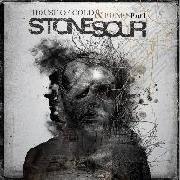
House of Gold and Bones Part I and
II’s strongest moments. While Root’s recognisable style and elegant approach to lead guitar does briefly feel lost, it’s
almost sufficiently replaced with newcomer Christian Martucci, who fills Root’s shoes enough for the purposes of the record. Rand and Martucci are more than capable when it comes to the bouncier, groovy heavy riffage seen in ‘Taipai Person/Allah Tea’ and ‘Fabuless’, while also providing excellent lead guitar work on tracks such as ‘Hydrograd’ and ‘Whiplash Pants’. In fact, much of the instrumentation on the record feels more than competent enough to enjoy; Roy Mayorga again fills his role sufficiently on drums and nothing feels particularly lacking, but the departure of Rachel Bolan
is missed, and much of Johny Chow’s bass work is simply lost in the mix and forgettable.
As for Taylor himself, it’s pretty clear he’s having a good time making this. Despite some of the
Hydrograd’s material featuring some slightly bizarre lyrical content, Taylor’s performance doesn’t disappoint at all as he launches himself completely into the album; signature Corey Taylor growls are in full abundance on the album’s heavier material, such as ‘Whiplash Pants’ and ‘Knievel Has Landed’. These are contrasted with tracks such as ‘Song #3’ and ‘St Marie’, your run-of-the-mill radio friendly ballads, and while they’re nothing spectacular, they’re enjoyable enough. They pale, however, in comparison to the far superior ‘The Witness Trees’, a track that takes full advantage of Taylor’s clean range and proficiency, easily making it one of the best songs on the record.
As an overall package,
Hydrograd delivers exactly what it intended to. This isn’t a repeat of the magnum opus
House of Gold and Bones Part I and
II proved itself to be, in fact it’s far from it. Stylistically
House of Gold and Bones delved into darker themes and is easily the superior (double) record, but
Hydrograd aims for newer territory, somewhere perhaps in between
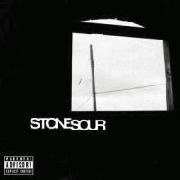
Stone Sour and
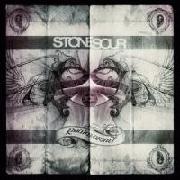
Audio Secrecy, and while it sometimes lacks in substance, it at least offers enough enjoyable material to make up for it. It’s not a perfect record by any means, suffering from some weaker ballads with not much too show for themselves, and feels a little overlong at times at 15 tracks, but it’s also by no means a poor record either, and is well written enough to more than warrant a few repeated listens. Sure, it’s likely to be one of Stone Sour’s more forgettable releases a few years down the line, but that doesn’t change how much of a blast it was at the time, and it certainly
is a blast to listen to.
It’s just rock and roll, so long as you like it.