Review Summary: Warning: This review contains excessive amounts of personal reflection and emotional honesty on the part of the reviewer.
I came out as gay in high school, around the age of sixteen. While my straight friends and classmates had plenty of opportunities to experiment with sex and dating, my romantic options were considerably diminished, so I spent most of my adolescence falling in love with straight boys who were never going to reciprocate my feelings. When I went away to college (in a city much bigger than the one in which I grew up), I made friends with many more queer people than I had ever known before. As I went through school and got my first job, I learned a lot about sex and relationships, and I met my first (and current) boyfriend. But I also realized that most of my queer friends had also fallen behind our straight neighbors, and not just in regard to dating. The field in which I work likes to compartmentalize people according to their age and life milestones: go to college, obtain a steady job with advancement opportunities, get married, buy a house, have and raise children, and finally retire, all at predictable ages. But myriad oppressive aspects of queer life--decades of employment and housing discrimination, the loss of elders to the AIDS crisis, inability to marry, inability to adopt children--prevented, and still prevent, queer people from accessing the same milestones. So I’ve surrounded myself with twenty-somethings who have never had a long-term relationship, thirty-somethings who still rent and have roommates, and forty-something couples who have yet to tie the knot.
I also made friends with trans people and gradually came to the realization that I was genderqueer, opening up a whole new batch of setbacks to what cis straight people consider a normal life. Even for those of us who don’t medically transition (which could be described as a second puberty), we adopt new names, pronouns, and appearances, and we need to devote time and effort to help everyone from our friends and loved ones to the federal government adjust to our true identities. It’s a process that I’ve only barely started with a small handful of my friends; in fact, many of the users on this site know more about the real me than most of my Facebook friends. None of this is to say that queer and trans people grow up wrong, late, or not at all; rather, that cis-/heteronormative society is not very amenable to the ways that we grow up, and that can often feel like we’re still in the process of doing so.
I mention all this because it’s necessary to understand why, when I first heard Ben Hopkins sing, “When you are queer, you are always nineteen” on “LOL,” that lyric reverberated within me in a way that few other pieces of writing have. It pierces straight to the heart of that feeling of being in between several ages at once that took me two paragraphs to describe--but it’s far from the only moment on
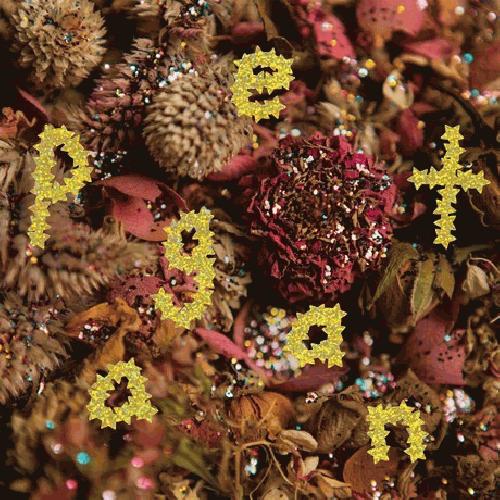
Pageant, the sophomore album from queer punk duo PWR BTTM, that conveys such a feeling. “My teenage angst will be with my well into my thirties,” Liv Bruce sings on “Answer My Text,” a song that tackles the uncertainties and frustrations of a burgeoning relationship with both an angry curse (“Answer my text, you d
ick!”) and a cheesy metaphor (“Maybe your heart’s on silent mode tonight.”) “Big Beautiful Day” takes an energetic anthem with a standard “be yourself” theme and riddles it with expletives. On the title track, Hopkins exudes the kind of world-weariness indicative of an old soul, but without any of the wisdom that usually accompanies it, struggling to understand his complicated body image issues through an imagined conversation between brain and body, yet ultimately coming up with only confusion and frustration. This is not emotional maturity combined with youthful exuberance. This is Hopkins and Bruce failing to fit neatly into the mindset that ostensibly corresponds with their age (or any other age, for that matter) and instead attacking their various insecurities with whatever emotional tools they have at their disposal, from confidence (“Sissy”) to melancholy (“Won’t”) to humor (“Now Now”) to pensiveness (“Kids’ Table”).
Such a disjointed approach could easily make for a mess of an album--and it kind of does, but certainly not in the sense of sloppy musicianship or lazy composition. On the contrary, PWR BTTM have significantly honed their songwriting since
Ugly Cherries. Fundamentally, their sound is still the same garage punk style that defined that album, but they’ve recruited an army of horns, strings, flutes, and vocalists (including Ben Hopkins’ mother, operatic soprano Chris Hopkins) to enhance that sound. And they utilize those new elements expertly, crafting the music to convey both directly and subtly the emotions that complement each song’s lyrical themes. The aforementioned “nineteen” lyric from “LOL” is delivered in gorgeous vocal harmonies, making it all the more poignant and heartbreaking. The superficially playful “Now Now” approaches the topic of self-hatred by turning a phrase (“I’m gonna beat myself up for beating myself up”) and then beating the play on words into the ground, but the warm arrangement of horns and strings undergirds the song’s subtle emotional complexity and keeps the joke from undermining the seriousness of the issue. “New Trick,” a song in which Bruce teaches an imaginary stranger to use their correct pronouns, seems polite and patient on the surface, gently encouraging the stranger that they’re “gonna be so good at it”--until the distorted guitar cuts in halfway through the chorus, revealing the song’s true, passive-aggressive core. The sparse yet beautiful guitar work on “Styrofoam” somehow matches both the surreal imagery that Bruce’s lyrics conjure and the very real struggles of gender dysphoria that they represent.
Pageant may be messy, but only inasmuch as it perfectly reflects and embodies the messiness of Hopkins and Bruce’s lived experiences.
Yet as much as Hopkins and Bruce talk about their own lives,
Pageant is far from self-indulgent. That much is clear from lead single “Big Beautiful Day,” in which PWR BTTM advise their audience to raise a middle finger to their oppressors by being themselves. On its own, it’s an encouraging message, albeit a tad cheesy. In the context of the rest of
Pageant, it’s a synthesis of all the album’s themes, every lyric about body image and messy relationships and rude, hateful people, into a single thesis statement, directed toward every confused queer kid who might be listening: We see you. We have been there. We are still there, with you, struggling with the same problems. And we will get through them together.