Review Summary: Not a phenomenon.
A band’s identity is very important, because if you can’t depend on the group to have a core sound, then it really takes away from the overall experience you get while listening. It’s better for a band to find a core sound and not be afraid to tweak it. I feel that Thousand Foot Krutch became aware of this, because the only track from their 18-song debut that blended rock, nu metal, funk rock, and pop punk and was fairly jarring, that has lasted the test of time is “Puppet”, and with its drop B-tuned riffing and rhythmic vocal tone, this is not a surprise at all. After
Set It Off came out, Thousand Foot Krutch knew very well that for a successful career to follow, they’d need to establish a core sound. Vocalist Trevor McNevan stated “A lot of people had to adapt to
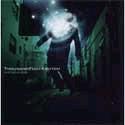
Phenomenon. Our tastes had changed a little. We were able to talk about something a little bit more serious this time”. Now, this is a darker and [in a sense] heavier affair than the previous outing, and considering the band was touring with Three Days Grace a fair bit at this point, I would say we could infer tastes changing meant that Trevor was moving a little bit away from the funk/hip-hop of his earlier days to a more streamlined alt-metal sound, though still with nu influences. All of that to say, I consider this album the start of the “TFK canon”, so to speak, because it laid the groundwork for the band that would come in the future (along with “Puppet” but I’m not reviewing an 18 song album for one track). Nonetheless, it’s time to see if the record holds up.
Let me make something very clear: TFK, at this point in time, were not interested in immersing you in the album and truly making you feel it emotionally, the opposite of an album like Breaking Benjamin’s
Saturate or
Chevelle’s Wonder What’s Next (both albums dropped in 2002, right around the time this one came out). That sounds harsh, but it’s just the truth. And frankly, this does hurt the album, because you don’t feel like you’re taking a journey, but rather getting short rock songs thrown in your face with one ballad for good measure. This is a band that was largely interested in crafting “throw-up-your-fist and fight the oppression” songs, and there’s not much room for self-introspection. And being that my favorite band is the most immersive band in the scene and my second favorite is pretty darn close, why is this a band that I like so much? Because TFK can deliver and, occasionally, deliver well, making me wish that they would get a bit more serious at times. Furthermore, this album seems to strictly adhere to the “one ballad just because we have to” rule, with drummer Steve Augustine stating that he only likes the song because “it gives me a break live”. And it’s a pretty boring, clearly intended for radio appeal ballad that is very skippable.
The title track and “Step To Me” are both heavy, anthemic rock songs that pack sing-a-long choruses, pounding Drop D riffs, and an in-your-face vocal performance. Both of these are great tunes that really present the beginning of the album well. And the lyrics aren’t near as cheesy as they get later on, trust me, even qualifying as fully thoughtful on the latter track. “Last Words” finds the band utilizing more of the bass guitar for a heavier, darker number that is largely about appreciating the value of life and denying the appeal of suicide, and with the detuned guitars and the memorable howls towards the end, this may be the strongest song of the album. “Rawkfist” is of course the token TFK song and has been since release, and my thoughts are divided here. Is the track fun live? Yes, absolutely. Is it entertaining the first few listens? Yes. But is there any merit after that? No, there really isn’t. The guitar riffs don’t have staying power, the lyrics are extremely cheesy and get annoying and repetitive, and it’s as if the band is just trying too hard to get on ESPN. Put simply, it’s not organic, and really potent music is always organic. Similarly, “Faith, Love, and Happiness” is a boring, forced number that just seems to go on forever despite it’s barely 3-minute runtime. I don’t mind angst (there’s plenty of it earlier in the album) when it feels real, but here it really doesn’t. Trevor is open about his Christian faith, as is the rest of the band, and echoes “these people, please love them” in “Last Words”, yet almost seems to wish to be outcasted in “Faith, Love, and Happiness”. I don’t feel that this is genuine, I feel he just wants to be “edgy”. “I Climb” is probably the darkest track on the record and seems to focus on an abusive relationship while successfully playing around with quiet/loud dynamics and the balance between the darkness and the light. It’s very similar to “Shook” from the fan edition of 2009’s Welcome To The Masquerade. “New Design” hits hard as it addresses the feeling of someone who refuses to find his/her identity in self-destructive behavior and instead turn to a positive force. Christians will interpret this as God, but aside from reference to the “Lord”, the song isn’t written so it forces God down your throat (ahem FOR TODAY). The riffing is very Linkin Park-esque as well, and at times it does get just a little bit too close. Again though, you have to approach this band with the right mindset in order to enjoy it: they aren’t interested in being fully original as much as they are paying tribute to their influences, and the riffs aren’t necessarily bad. (rest assured though this will still detract from the score). The screams in the bridge aren’t too bad, but the song does have a really jarring ending. “Break The Silence” closes the album with the most memorable drum performance all record and discusses just how powerful the Holy Spirit can be (for non-believers, this is easily applicable to a healthy relationship with a girlfriend or something of that nature).
People will predictably jump on me for the Linkin Park comment, so let me qualify that statement. I understand that the band largely pioneered the scene, but there have been plenty of bands to come after them to have a similar style (RED, for example) but be able to make it their own rather than directly rip them off. RED’s guitar riffs, while simply, are deeply emotive and blend very well with the symphonics and vocals swirling around them, but TFK isn’t quite able to replicate that here, instead opting for the simplest and catchiest route. This isn’t a bad album, but it isn’t near to the power of the next record.