Pearl Jam are a wildly talented band. Few will deny that fact. Even through numerous line-up changes, and constantly shifting music scenes, Pearl Jam have persevered time and time again, managing to breathe new life into their music. However, throughout a good portion of the band’s history, the creative reins were held solely by vocalist/guitarist Eddie Vedder. By late 1996- early 1997, the band was due to start serious work on their follow-up to
No Code. After several weeks of tense discussion, Pearl Jam had reinvented themselves yet again. They set forth with the creation of
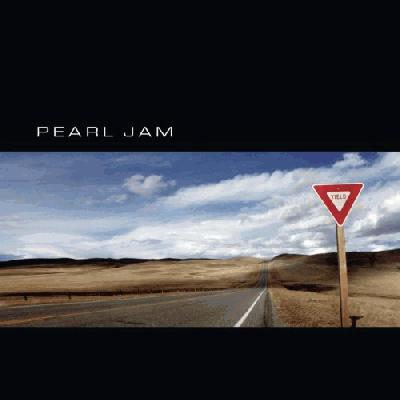
Yield, their fifth studio album, and the first to feature a democratic field of influences from each of the band’s members.
Yield was the embodiment of Pearl Jam’s departure from control with a new found cooperation. The album is loosely conceptually based on Daniel Quinn’s social science novel
Ishmael. As the book’s plot proposes a different view of “programming” for the human lifestyle, so too, do
Yield’s songs.
Yield is the album that I believe to be the pinnacle of Pearl Jam’s talents and abilities as songwriters. Each and every song conveys a serious message (a familiar policy to Pearl Jam’s music), while reaching ever deeper into remotely untapped emotions, the likes of which grunge-rockers wouldn’t have dared to tamper with only a few years earlier.
Yield is a reservoir of unique, creative, and musically advantageous ideas. In this reviewer’s humble opinion, Pearl Jam have neither reached this level of overall depth and maturity on any of their releases subsequent to
Yield, nor will they in the future. It was the bridging point in their career. The point where Pearl Jam ceased to just be another product of the “Seattle Explosion“ and became the molding caste for the legends they were to become.
Yield is their masterpiece; it’s as simple as that.
The first song, “Brain of J” captures the typically tumultuous and angst-ridden feel of previous Pearl Jam albums. Great lyrics stating
The whole world will be different soon/Our world will be relieved sum up the band’s mood on this album rather suitably. “Brain of J” is the perfect fusion of the old, hard rocking Pearl Jam, and the newer, intellectual Pearl Jam. A great beginning to a fantastic album. “Faithful” cools things down. Whereas “Brain of J” was a song based around anger, “Faithful” is a song rooted in peace and, quite obviously, faith. Uplifting lyrics, some of Vedder’s best singing, and fantastic instrumentation (particularly from guitarist Mike McCready) make this one of the stand-out track on
Yield. Meaning that it could be considered one of the stand-out tracks on Pearl Jam’s career. “No Way” is a very progressive song for Pearl Jam. On this song, it’s easy to see the new boundaries the band is pushing. Fever dream lyrics mesh well with the great music. Once the chorus comes in, you can here the actual incarnation of the band’s goal of cooperation: backing vocals. While it may seem like a relatively simple concept, this was a totally new feature for Pearl Jam to be testing the waters of. “No Way” breaks down with a fantastic bridge into a very stoic guitar solo, and then back to the chorus once again. Grunge purists may not like this song, but it represents some of the greatest ideas that Pearl Jam ever conveyed in musical form.
“Given to Fly” is a fantastic song. The main guitar riff in the song may draw heavy comparisons to
Led Zeppelin’s “Going to California,” as it is based off of that very song. “Given to Fly” once again showcases Pearl Jam’s progressively morphing sound with their fathomless lyrical talent. It’s one of the most well-constructed songs on this album, and a perfect fit for where it falls into. “Wishlist” is a lax, smooth song, with some of the deepest lyrical triumphs
Yield has to offer. Eddie Vedder sings:
I wish I was a neutron bomb, for once I could go off
I wish I was a sacrifice but somehow still lived on
I wish I was a sentimental ornament you hung on
The Christmas tree, I wish I was the star that went on top
I wish I was the evidence, I wish I was the grounds
For 50 million hands upraised and open toward the sky
Aside from the brilliant wordplay, “Wishlist” is musical proof that Pearl Jam can write soft, tranquil ballads just as well as they write hard rocking grunge. “Pilate” is a curiosity. The first of several oddities that
Yield offers up. It’s a relatively simple song, influenced by a character in a book that bassist Jeff Ament drew similarities too. Simple lyrics stating
Like Pilate I have a dog (loves, kisses, hugs), are not the well-thought out masterpieces that preceded it, but are still excellently performed. Another curiosity (that is widely considered to be one of Pearl Jam’s greatest songs) is next. “Do The Evolution” features a different vocal style for Eddie Vedder to explore. His throaty growl escapes with a scream-induced snarl from his vocal chords, as hard instrumentation compliments him. Vedder sings:
I'm ahead, I'm a man
I'm the first mammal to wear pants, yeah
I'm at peace with my lust
I can kill 'cause in God I trust, yeah
It's evolution, baby
These seemingly “out there” lyrics go on to convey a good point that seems to draw attention to man’s belief in “manifest destiny” (or that we, and only we, should be the dominant species on this planet, held in regard above all else). “Do the Evolution” retains the depth of previous
Yield songs, but manages to mix things up by being a much tougher song. It’s an excellent incentive for Pearl Jam veterans.
The next track, is an untitled filler, known simply by the moniker “red dot.” It’s a simple little skit that’s a disjointed lead in to the next real song, “MFC.” “MFC” stands for “mini fast cars.” While vacationing in Rome, Vedder became inspired to write a song about the tiny automobiles he saw being driven throughout the city. It’s another oddity that
Yield dishes up (we seem to be getting a lot of those). It’s a very good song, particularly in terms of the musicianship. McCready’s excellent guitar lines and Jack Irons’ relentless pounding of the skins is very evident on this song (and believe me, that’s a very good thing). “Low Light” is a return to (relative) normalcy. It’s a straightforward, simple song. Very lighthearted, yet packed with emotion, “Low Light” is exactly the type of change
Yield needed to go through. Yet another example of the album’s spot-on pacing.
“In Hiding” is the beginning of
Yield’s close. Perfect synergy between the great vocals and fantastic music make this another one of the stand-out tracks from the album. “In Hiding” is an excellent late inning gem. The next song, “Push Me, Pull Me” has an intro that contains a sample of “Happy When I’m Crying,” a song composed by Jack Irons (which was eventually released on the band’s 1997 Christmas Fan Club single). “Push Me, Pull Me” is a wild soundscape incorporating everything from synthesizer-esque effects to a factory whistle. It’s a concise little song, that’s among the most avant-garde tracks on the album. We find ourselves at the end of the album. In keeping with typical Pearl Jam album structure,
Yield ends with a particularly long song. By comparison to it’s predecessors, the 7:45 “All Those Yesterdays” is something of an epic. The song shifts through several different style and temple changes, from experimental progressive rock; to harder, edgier music, recalling Pearl Jam’s past; to a simple little guitar-based melody with some hand-clapping thrown in for emphasis. It’s by far the best note upon which Pearl Jam could have ended
Yield.
After giving
Yield some serious thought, many people will come to one very simple, very obvious fact: Pearl Jam, are indeed, wildly talented.
Yield takes everything that was good about Pearl Jam, and adds to it with startling complexity. While it isn’t quite perfect (a little too much filler, some inaudible vocals/music, etc.),
Yield is still one hell of an album. I could never recommend it for someone looking to explore Pearl Jam for the first time, but to a casual fan seeking the peak of the band’s artistic vision,
Yield is always the first thing I mention. Check this one out. You won’t regret it.