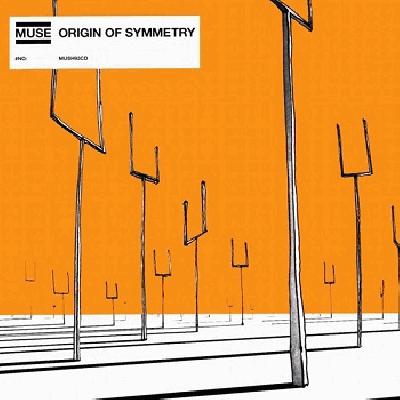
Review Summary: 15 years on, Muse's masterstroke retains its cutting edge.
The start of 2000 brought somewhat of a crisis for Matthew Bellamy and Co. Their debut LP
Showbiz was only a moderate success on the charts, and critics were quick to dismiss it as a hackneyed attempt at recreating Radiohead's sound. After touring outside Britain with big names such as
Red Hot Chili Peppers, the young band discovered a newfound energy and inspiration, and went back into the studio to create another record. And they were better for it, as
Origin of Symmetry sees Muse expand their musical territory to create a diverse rock album that, quite frankly, rocks.
Origin of Symmetry features a much more experimental side of the band, as they meddle with progressive rock, space rock and even Baroque rock. There still are flavors of alt. metal and grunge, courtesy of Muse's influences like
Nirvana and
Rage Against the Machine, but this record is executed with finesse and integrity that gifts the album a stellar cohesion of different styles.
Origin of Symmetry plays like a grandiose rock opera in space, and shows the band at the peak of their talents and ingenuity. Opener
New Born starts the album off with a bumbling piano and bass melody, an explosive guitar riff, a maniacal solo and Matt's abstract lyrics about butt squeezes and destroying the spineless. Melodramatic? Yes. Kickass? Hell yes, just like the rest of the album -
New Born does an excellent job of foreshadowing what's to come. You get bombastic riffs that cut through like buzzsaws (Micro Cuts), you get eerie, epic numbers (Space Dementia) and catchy metal-infused bangers (Hyper Music). All these factors indicate that the album's strongest virtues are its inventive songwriting and indelible ferocity and enthusiasm, felt even in the mellow tinkerings of
Screenager.
The only thing this record lacks is bad tracks, with the strongest highs being represented by its epic, longer tracks, namely, the aforementioned
New Born,
Space Dementia and
Citizen Erased. The other two are quite possibly the greatest tracks in Muse's canon, the former being a ghastly space rock outfit featuring beautiful piano solos. Matt's lyricism rarely takes the spotlight, yet his vocals are a marvelous instrument unto themselves. His falsetto is particularly effective in
Space Dementia, where each band member brings his A-game before a cathartic ocean of sound erupts in the song's climax. Meanwhile,
Citizen Erased is an alternative rock masterpiece, featuring a monstrous two-note guitar riff, a razor-sharp guitar solo and mellow breaks in the middle and the conclusion. It is without a doubt the crown jewel, not only of the album, but of Muse's entire discography.
The record is indeed peppered with the traditional ingredients of a rock album; arena-sized choruses, mathematical solos, terrific basslines and drumwork as well as Matt's screeching vocals harmonies, best represented by
Bliss and
Plug in Baby; excellent yet relatively simple tracks. However, the experimental side of the record is equally enthralling.
Screenager is an eerie, odd number, in which Dominic Howard is reputed to have used the balafon and even animal bones for its recording. It is a beautiful, more ambient song with acoustic guitar strumming and a mystical atmosphere permeating it. Elsewhere, the Latin-American guitar escapades in
Darkshines, coupled with Matt's guttural screams and gothic piano make it an easy album highlight.
Feeling Good is a marvelous blues-rock cover of legendary jazz artist Nina Simone's original song, whereas
Plug in Baby features a notoriously awesome riff that made Matt Bellamy the famous, adventurous guitar player he is now.
It's the little details like this that make the album such a captivating and intrepid record. It is a cohesive anthology of rock's capabilities, and the polar opposite of a 'sophomore slump'. Haunting tracks like
Screenager thrive with louder, more dynamic tracks like
Megalomania, without sounding out of place.
Origin of Symmetry's avant-garde songwriting and nuclear-powered atmosphere and instrumentation will always portray the record as a classic. Each track possesses a breezy accessibility yet a godly Midas touch that separates the record from its brethren.
Origin of Symmetry will always be the benchmark of Muse's catalogue, and no matter how many misfires they create in the future, Matt Bellamy and Co. can look back and be proud of the record they constructed here. Although their subsequent release,
Absolution, comes close, I personally think
Origin of Symmetry is an album they won't be able to surpass anytime soon, for better or for worse.
Recommended Tracks:-
Citizen Erased
Space Dementia
New Born
Hypermusic
Darkshines