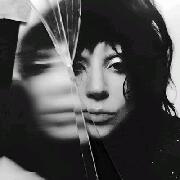
Review Summary: She might live for the applause, but Joanne proves that Lady Gaga truly lives for her art as well.
Back in 2009, videos started surfacing of Lady Gaga playing stripped-down versions of her smash hit “Poker Face.” Unlike the dance-pop original, these incarnations were loaded with piano embellishments and playful vocals; there was a mixture of blues and jazz influences in the piano playing, and Gaga displayed both charisma and control in her singing. The reason I bring this up is because I’ve often had those videos in the back of my mind when listening to each of Lady Gaga’s subsequent records. While she definitely has the vocal prowess and confidence to stand toe-to-toe with pop music’s biggest stars, Gaga always struck me as someone who could be elevating herself further than simply making dance-pop and electropop music. Well… times are changing. Following 2013’s
Artpop, Lady Gaga has been gradually changing her image to something more reflective and low-key,
especially with the jazz-based collaboration she did with Tony Bennett in 2014. That, and the piano-based performances are more prominent again. So what is the next step for Ms. Gaga? Making a soft rock album that emphasizes her singing and evolves her artistry.
Lady Gaga has often walked a thin line between sincerity and vapidity, but
Joanne is firmly planted in the former. There are still a few traces of her older works, such as the dance-rock lead single “Perfect Illusion,” but everything is much more earnest and honest here. Instead of being another synth-driven collection of pop bangers,
Joanne opts for more variety and genre- hopping than usual; now there’s a decent grouping of country, pop, funk, blues, and rock influences. Yet at only 39 minutes, the record remains coherent and concise all the same. The entirety of
Joanne is basically a reinvention of Lady Gaga as a more down-to-earth singer-songwriter, which is immediately made clear by quieter cuts like the country ballad “Million Reasons” or the organic acoustic instrumentation of the title track. The latter has a rich symphonic backdrop that further highlights the singer’s move into more subtle territory, even if it’s directly followed by such a rowdy rock smash like “John Wayne.” At the end of the day, the slower and softer tracks are the most interesting and well-written ones here; in fact, the closer “Angel Down” is perhaps one of Gaga’s best songs yet. The way the dreary piano blends with her powerful vibrato is just lovely. In fact, the end of the album is wonderful in general; we've also got the swingin' pop number "Come to Mama" which has a full brass section and bright saxophone backing Lady Gaga's vocals. This is immediately followed by the duet with Florence Welch "Hey Girl," in which Gaga and Welch compliment each other perfectly over a slow retro-80s synthpop beat; the song is a nice sentiment about girl power, and the back-and-forth vocal performances between the two singers keep things interesting.
Unfortunately, this all illustrates why songs like “Perfect Illusion” and “Dancin’ in Circles” are such weak tracks. Given Lady Gaga’s new style, it’s hard to imagine why the former was selected as the lead single; it’s such an average piece of dance-pop, with predictable motifs and obnoxiously loud production. In other words, it’s completely out-of-place here. Even with other high-energy rock numbers like “Diamond Heart” and “John Wayne” on the tracklist of
Joanne, “Perfect Illusion” just doesn’t work very well. “Dancin’ in Circles,” while being vaguely inspired by reggae music in its guitar work, is just blandly written and ends up being an overly obvious ode to masturbation. These songs present the main problem with
Joanne: Lady Gaga hasn’t
fully committed to her new style and image yet. I’d rather have a soft rock album that feels complete from beginning to end than a pastiche of disparate styles that feels inconsistent. But then again, this is a transitional period for Lady Gaga; plus, a few experiments really do pay off. “A-Yo” is an absolute blast, and the mix of southern rock, funk, and country, seems so surreal coming from Lady Gaga of all artists. There’s also “Sinner’s Prayer,” which takes the southern vibe even further with a slick blues rock number and ends up being a highlight of the album.
It all comes down to that word “transitional.” This is, for all intents and purposes, a transformation of image and sound; in that regard, Lady Gaga is evolving very well. She and her collaborators have sculpted a unique piece of work that’s both adventurous and brimming with personality. If she can plant both of her feet in this stylistic shift and shed the remnants of her original style, she might become one of the finest singer-songwriters we’ve got in modern pop. Still, as for now,
Joanne most certainly delivers.