It’s a hot summer afternoon, you’re in the middle of the near endless holiday stretch that you’ll take for granted until you get a proper job, and you sneak off to your friend’s garage. The place is reasonably packed with all sorts of people you’ve seen at parties before; the air is unbearably dense with a distinct scent of body odour. You grab a seat on the floor as you were reasonably late to arrive and all the choice positions have long been snagged. Your friend’s band makes its way to the small patch of “stage” left, perspiration on their foreheads. A yelp of feedback escapes an amp as the guitarist plugs in. And then a 40 year old singer wanders in, shouts some words of encouragement to the gathered populace and the band launches into their opening number.
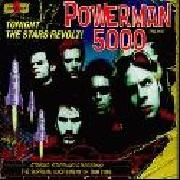
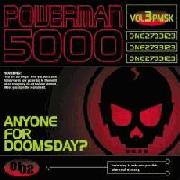
This glaring oversight manages to epitomise Powerman 5000’s 2006 release surprisingly well. It’s almost as if Spider One was an accidental mastermind of the jarring error, as he’s had quite the track record of atrocious decisions over the prior half decade. It all began with the abandonment of Anyone For Doomsday?, a record that would have cemented the band’s ascent into the household name echelon of widely understood nu metal. Two weeks prior to the street date the frontman decided the album was too creatively moribund and clipped its wings, sending the band into a frantic nosedive from which it never recovered. The follow-up dropped the space metal act the band had going, serving up a slightly preachy anti-consumerist manifesto. The blooper this time? The album came out on the largest record label on Earth. The public failed to lap it up and Powerman 5000 were homeless soon thereafter. Spider One was the lone survivor of the 2001 aborted album line-up. Nu metal was dead. It was time to shift gears, and gears were shifted, with the course being set for punk.
On paper, it might have seemed like a better idea than the ones that came before it. A youthful sounding band was assembled. Said assembled band banged out some punk rock numbers, riding the coattails of the dying gasps of pop-punk’s popularity, pulling a reasonable emulation of a friend’s band doing a garage gig. Raw is the name of the game in terms of arrangements – no discrete walls of overdubs, just two guitars, bass and drums. In fact, efforts are visibly made to make the thing sound as organic as possible. Natural sounding feedback is placed in all the right places, and the performances sound distinctly human to the point where a really awkward guitar skip has you imagining the player wincing with a smile and a shrug to you and your group of friends in attendance. The music is far from anything you’d write home about, but it rides all the right clichés and plays the part reasonably well, with the highlight being the surprisingly ballsy lead playing. The melodies and solos are played with just the right amount of sloppy attitude to occasionally make the tracks come alive a bit.
The problems begin when Spider One opens his mouth. That happens to be most of the time, as he was never the type of frontman to know when to shut up (he even manages to make some of the guitar solos be about him). You can feel a quiet, focused desperation in his performance; he really wants this thing to work out. The problem is that it’s been dead from the start. Forty-year-old guys don’t helm kids’ garage punk bands, and the delivery never quite manages to shake that misfit feel. No matter how much Spider may grunt or yell, no matter how pure his intentions may be, the very character of his voice that let him get away with near spoken word delivery in the band’s space metal era makes it outright impossible for the vocals to click with the music. Things implode the hardest when he makes a fart noise and proclaims the end of “Enemies”, and it’s nearly impossible not to laugh.
I don’t doubt that Spider was coming from an honest place, but Destroy What You Enjoy was doomed from its inception. The marriage of a reasonably characteristic voice with no range to cookie cutter punk rock just wasn’t going to work out, and the fact that the vocals fit in the most on the awkwardly enjoyable insipid closer ballad (a distinctly misfit acoustic meandering of Americana nostalgia, complete with questionable slide guitar) should be saying something. It’s also morbidly funny how the quest to escape his brother’s shadow led Spider to a punk return-to-roots, when White Zombie started out as a punk band. Nevertheless, no matter how horrible of an idea this album may have been or how schlocky the final result turned out, this is the last time Spider sounded like he gave a damn – he’s been phoning in space metal gruel ever since, whilst it was an awkward, typically misconceived drive for self-development that made “When Worlds Collide” happen in the first place. And which later started this whole downward spiral mess.