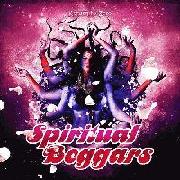
Review Summary: Transitioning between mellow and heavy, as well as the 70’s and our times, Sunrise to Sundown is an enjoyable and free-spirited amalgam of every musical trope Spiritual Beggars touched upon in the past 20 years.
Consistency is a tricky and hard thing. When your start out in a certain musical genre or develop a particular sound that defines your band, there is only few albums before you start to reach the limits of that particular sound of genre. When that happens you can do a couple of things: Don’t change the usual formula, thus exponentially risk that your music becomes stale and boring. Or do a complete musical 180 degree thus angering your fanbase whom will see the change as a complete betrayal. For more than 20 years, the Swedish hard rockers in the name of Spiritual Beggars managed the walk that tiny line of always severing its core audience as well as spicing up their songwriting with careful balance. With this not only did they haven’t released the same album twice, but they also managed to make a slow but constant reshaping of their style.
Their earliest albums were completely in the fashion of 90’s fuzz driven, guitar effect filled, desert rock with lots of jamming breakdowns and heavy Kyuss-vibes. However by the 2000’s their approach became simpler, more straight-forward, not to mention the Jon Lord-like Hammond organs of Per Wilberg started to play a much bigger role. The Beggars music started to sound more and more like their earliest influences, bands like Deep Purple, Black Sabbath or Uriah Heep, right down to the feel, delivery and texture. This trend reached its apex with 2013’s Earth Blues where every note felt like its coming from a lost, 1973 blues rock classic. With reaching full circle one might easily ask the question, where could Michael Ammot and his comrades could take the next step?
From an overall perspective Sunrise to Sundown continues on the path of the last two albums by embracing the simple, melodic and highly energetic bluesy hard rock with a dynamic interaction between the guitars and the keyboards. But it also expands on other territories and in many ways harkens back the band’s older catalogue. However you wouldn’t able to tell this from listening to the first two songs alone. The title track and “Diamond Under Pressure” are totally in the vain of Earth Blues, with their elegant and simplistic hard rock structure, not mention with the Deep Purple vibes being off the charts. This is especially true to the latter, which sounds so much like Purple’s “Woman from Tokyo” that is borders on being a straight copy might rise worries in some, that the whole album is going to be cheap retreads of already done stuff.
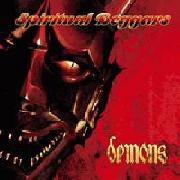
However the band quickly corrects the path with “What Doesn’t Kill You”, which hits you right in the guts with its thick, darkened and menacing riffing and uptight tempo, thus cranking up the more metal aspect of the band, which we haven’t seen since the “On Fire-Demons” years. In fact the heavier angle plays a major part on several other songs like “Hard Road” or “Still Hunter” well, where we can hear a display of more aggressive verse sections and sing able choruses with Wilberg’s organ lightening up the mood. It’s a sharp, but effective contrast that gives the songs edge, character and memorability, while also proving that Michael Ammot still has major capacity in his songwriting.
Other clear examples of this are “No Man’s Land” which begins as a simple mid-paced rocker, only to transit to an unexpectedly lighthearted piano section in the middle, “I Turn to Stone” which is mostly built upon a single continuous jazzy drum pattern before getting increasingly psychedelic and chaotic array of guitar riffs and feedback noises, “Dark Light Child” is also a great mix of the sensibilities of stoner and 70’s hard rock. Bit an equally great throwback to the Beggars’s past is “Lonely Freedom” with its hazy atmosphere, crunching buzzing main riffs and blazing leads from Ammot.
I don’t think its gonna surprise anyone that the individual band members bring their A-game to this record as well. Apollo Papathanasio’s soaring, emotionally charged, classic blues-vocals perfectly accompanies both the heavy and lighter song sections, the drumming and bass work is also top notch. Strangely this is the first time I felt that keyboardist Per Wilberg actually outshined Michael Ammot in terms of the lead performances. His breakdowns weather organ or piano-based are nothing short of pure bliss. Ammott is stronger on the rhythm section this time, but still manages to deliver some of the most elegant and vibrate guitar solos in the band’s history.
Despite the occasional retreads of familiar territories, Sunrise to Sundown is a colorful, varied and hard hitting effort that showcases the many styles and approaches of Spiritual Beggars and reinforces them as one of the best retro rock groups out here. Marking another strong entry in their catalogue, they have yet to find a way to let me down. Of course I hope that will never happen.