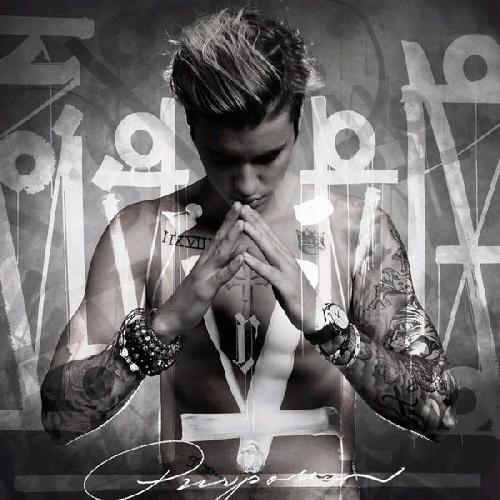
Review Summary: Although Purpose's barred by misguided choices, Bieber gives a small, but pleasant peek into what's to follow.
Justin Bieber's improved music over this past year has less to do with his wish to rectify less than innocent actions and instead to do with changes rendered by his annual growth. Not accounting for poor choices, dangerous decisions, and consequential hostility, Bieber's recent growth musically and artistically shouldn't shock considering his on display transition from adolescent to adult, now 21. It would seem that Bieber's finally beyond all his childish excursions. Recently, he's been showing greater control and clarity of vision, both personally and musically. In
Purpose, Bieber's first album in three years, he's reined back and conscientiously assessed what kind of musician he wants to be, unlocking untapped strengths; in particular, replacing shrill, off-putting belting with grown vocal color and unexpected emotion. In addition, Bieber has at last transcended his former world that simultaneously empowered and restricted him, which has allowed him to attract new and older audiences.
Opening track, “Mark My Words,” straightaway showcases Bieber's vocals with minimal instrumentation, and both well-placed and executed falsetto, moving into up-tempo “I'll Show You,” which has Bieber exuding unprecedented poignancy and conviction. Continued success on “What Do You Mean” with chill, tropical panache, and similarly catchy “Sorry,” is instantly crippled by “Love Yourself.” Exactly at this point
Purpose suffers a great loss of momentum. Apart from unoriginal lyrics, “Love Yourself”
is Ed Sheeran, from his boring, laid-back guitar to his utilization of vertical vocal layering. There's no traces of Bieber on this track, and if Bieber emulating another artist, who doesn't even match him, wasn't enough, this song's got exorbitantly misplaced horn that's so oddly indie folk and astray from everything expected of this album. If Bieber's trying to start anew, and push his
rebirth, unoriginal tracks that don't sound his own won't help. On top of all this, "Love Yourself"'s awkwardness is only emphasized by
Purpose's following jam, “Company."
After “Company,”
Purpose is dirtied with features. Similar to “Love Yourself,” Halsey's contribution seems, again, misplaced, and Bieber's soft but sort of bubbly pre-chorus belongs on Melanie Martinez's new album. Other than features, many tracks get away from Bieber lyrically. Much of this album is harmlessly personal, but “Life is Worth Living,” “Children,” and “Purpose” maximize on trite tricks. “Children” is lucky it has upbeat, interesting musicality, but lyrics on “Life is Worth Living” and “Purpose” prompted boring supplementary piano melodies, which combined with Bieber's vocals too easily fit many a Disney and Christian film.
Guiding this album with an artificial persona of a reformed, improved Bieber is
Purpose's downfall. If Bieber's remembered years from now it will be for his music, not his transformation. Instead of singing phony personal ballads and adding token features, he should focus on upbeat, catchy tracks, for Bieber has clearly shown he is particularly apt at those. Regardless, Bieber gives a small, but fairly pleasant peek into what's to follow even though
Purpose's barred by misguided choices.