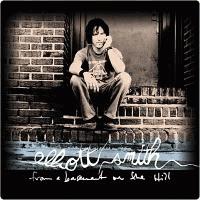
Review Summary: Elliott down in the basement...and sinking deeper still
Posthumously released albums are a grim affair, you’re never more aware that the world just keeps on turning and raking over the soil as when one of these drops. There are a host of strange rituals that take place that are only ever wheeled out for such times; music reviews start to resemble detective notes as critics race to establish how finished the album was at the time of the artist’s death, who subsequently influenced the track list and production, is there evidence of any hidden messages, etc. The near inevitable result is that these albums end up misunderstood at best and mistrusted at worst; and when the artist in question is as revered as Elliott Smith all these factors are then multiplied tenfold to an overwhelming degree. Do listeners really need to know all this information to grasp the contents of the album and when exactly, if ever, can they start to just engage with it as ‘another Elliott Smith album’?
Well it’s now been over twelve years since Smith took his life and while ‘From a Basement on the Hill’ will never fully shake the association with his suicide people have reached that stage where there’s a hunger to assess his legacy as a whole. Revisiting the album the first impression is still that this is a very different animal to his other work, though thankfully now we can judge this musical direction based on his artistic intentions rather than just obsessing over the circumstances of the release. While the album continues along the path of filling out his sound more with each passing recording, never in the past did Elliott’s music give the impression he was attempting to scuff away at the beauty of his work; for Smith this is a massive departure as up to this point he’d only ever allowed ugliness to seep through in his lyrics.
Here Elliott deploys ghostly disembodied voice samples (‘King’s Crossing’), scuzzy guitar work (‘Shooting Star’) and even the occasional uncharacteristically dirge-like vocal melody (the verse of ‘Coast to Coast’) to shake up his normal approach and bloody his nose a little. As a result musically this is destined to remain his most divisive release, and anyone off sided by the murkier sound palette is unlikely to find respite in Smith’s lyrics here either; the darkness that used to hover on the fringes is now placed front and centre. ‘A Fond Farewell’ and ‘King’s Crossing’ play out as a pair of suicide notes; the first is wrapped up in an appealing bright melody but the ‘fond farewell’ of the title is addressed to the living vessel of his own body that couldn’t make things right, rather he sees it on its last legs ‘vomiting in the kitchen sink’; the second is bleaker still, Smith switching between self-deprecating humour and all out self-loathing as he tackles his lifestyle as an addict and the mechanisations of the music industry that props him up, unleashing devastating lyric after devastating lyric. This relentless offloading continues on the unadorned acoustic ‘Memory Lane’ where Elliott sees himself as an ‘absolutely horrified’ mental patient being processed as little more than a series of interesting charts and a receptacle for pills. Along with ‘Needle in the Hay’ these three songs rank as Smith’s most harrowing but that doesn’t preclude them from also rating among his very best.
Despite all this darkness ‘From a Basement on the Hill’ still offers up glimpses of the tenderness you’d expect from Smith; ‘Twilight’ is a bitter-sweet ‘what if’ tale of meeting someone you feel a connection with only you’re ‘already somebody’s baby’, the sound of crickets and a mournful extended instrumental passage help to build the intimacy; the breathy vocals and delicate guitar lines of ‘Let’s Get Lost’ recall the style of ‘Either/Or’; and ‘Pretty (Ugly Before)’ is the closest Elliott gets here to recording a song you could imagine being played on the radio alongside a Beatles number. The transitions between these lighter moments and the pervading bleakness of the majority of the album are well judged and accusations of scrappiness would be a touch unfair considering the similarly unwieldy and sprawling nature of this album’s predecessor, 2000’s ‘Figure 8’. The inclusion of fourteen songs would tend to suggest that there's a little fat that could be trimmed here and certainly the album can drag between the similarly toned ‘Don’t Go Down’ and ‘Strung Out Again’, though nothing here sticks out as an outright poor choice for inclusion.
Even disregarding the fact this album was posthumously released it’s hard to shake the feeling that ‘From a Basement on the Hill’ would always have come across as an outlier among Smith’s canon; previous to this the beauty of his music painted him as passive and contemplative, even if his words often betrayed his ugly feelings, but here the lyrics are more straightforward in their cynicism and the sounds are starting to mirror his inner turmoil all too closely. We’re left to conclude that now we’re dealing with a man unafraid to openly vent his anger and frustration; where in the past there was an undeniable romance to Elliott’s troubled tales now he does away with any pretence stating plainly ‘I’ve seen the movie and I know what happens’. As a result ‘From a Basement on the Hill’ casts Smith as far less likeable and attractive, possibly even less sympathetic, and when you add this to the less agreeable musical approach it becomes all too easy to dismiss this work as being unrepresentative of the man. In truth, though it’s hard to make a case for this adding up to his finest collection, the album still contains some of his most fascinating and revealing songs.