Review Summary: The final part in a loose trilogy along with Opeth's Heritage and Steven Wilson’s Grace For Drowning. But don't expect music in the same vein of both albums.
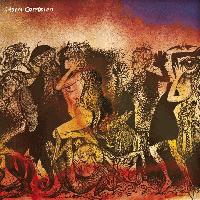
“Storm Corrosion” is the only and debut studio album of Storm Corrosion, until now, and was released in 2012. The line up on the album is Mikael Akerfeldt and Steven Wilson. The album also had the participation of Gavin Harrison, Ben Castle and The London Session Orchestra conducted by Dave Stewart.
“Storm Corrosion” is the self-titled new musical project of Wilson and Akerfeldt. Long time admirers and musical collaborators, with Wilson producing some of Opeth’s albums and Akerfeldt appearing on some of Porcupine Tree’s tracks, it was only a matter of time until both worked together on a new adventure. It all started when Akerfeldt became aware of Wilson’s work in 1990, and years later, Akerfeldt received a surprising email from Wilson about the Opeth’s album, “Still Life”, praising it. The two eventually met in London and spoke about a possible collaboration. Apparently this new project was conceived in one night in England, at Wilson’s home, probably over with some glasses of wine.
According to interviews conducted with Wilson and Akerfeldt, “Storm Corrosion” was a complete 50/50 collaborative effort in terms of songwriting. Wilson also said that on the album, Akerfeldt did most of the guitar work, while he was more concentrated on the keyboard parts and in the arrangements. However, upon the first listen it’s easier to discern more influences of Wilson on the albums’ sound and in the arrangements, than of Akerfeldt. Of course his unique style and influence can be felt. He contributes very strongly, in the album's overall sound, with his fantastic acoustic and electric guitar styles. Aside from both, the Porcupine Tree and current King Crimson’s drummer, Harrison, provides all the drum work and percussion that can be found on the album. Anyway, his work only features prominently on a couple of tracks. However, when they first discussed the project, they intended to include Mike Portnoy, which promised a more thrilling combination and a more technical and modern progressive metal sound. As they opted to a different approach, the inclusion of Harrison brought for the album a finished item much closer to the most recent releases, Wilson’s “Grace For Drowning” and Opeth’s “Heritage”. As Wilson said, “Storm Corrosion” is “the final part in the odd trilogy of these records”. He described “Storm Corrosion” as containing a lot of mellow, strange and disturbing parts.
When Wilson and Akerfeldt announced their collaborative project, it was very hard to know exactly what to expect of it. Even both coming from a progressive rock/metal background, admittedly they wanted to start doing something very different and entirely new, and work on music that wouldn’t have fit in either of their bands. So, it’s necessary to make clear that “Storm Corrosion” isn’t a metal album, and would hardly qualify as a rock album for a lot of people. While Wilson and Akerfeldt releases, “Grace For Drowning” and “Heritage” could easily be called progressive works, “Storm Corrosion” only loosely fit into that genre. “Storm Corrosion” is mostly an acoustic album, lead by soft guitars, string arrangements and background keyboards, with beautiful long winded songs that wouldn’t fit properly well on a Porcupine Tree’s work, as well as they do here, and would probably can be felt too harmless for an Opeth’s album. However, the six tracks are far from mere acoustic ballads. They have elements of progressive rock, but they don’t have the grandiose structures and tempo changes, usually associated with their bands.
“Storm Corrosion” relies more heavily on acoustic guitars, piano, moody atmospheres and strings, than it does, than on crash of drums and electric guitars. A metal aesthetic permeates throughout the album, occasionally manifesting itself in the form of trippy guitar lines and atmospheric textures, almost frightening in their intensity. Nevertheless, those moments are kept to a minimum throughout the album, offsetting the gentle beauty that is much of “Storm Corrosion”. Another thing to notice whilst listening to “Storm Corrosion” is the depth and majesty of the orchestration, at various points, giving to the music a tense and brooding atmosphere, and in other ones, a stark beauty.
Conclusion: With “Storm Corrosion”, the trilogy, if ever there was one, was completed. “Storm Corrosion” is really something with a very own character. It’s a unique effort which is different to anything that both artists have ever produced either together, or with their own respective groups. This album is prone to leave you wanting something more to chew on, and those who want something heavier, will be left starving. “Storm Corrosion” leaves us wondering what this duo will come up with next. But such is its unexpected design that predictions should be dashed, as that what comes next will be far from anything you could dream. Can we like "Storm Corrosion" or not? The truth is that Wilson and Akerfeldt proved, once more, that they are undoubtedly two of the best, most complete and respected progressive musicians in our days. “Storm Corrosion” isn’t a masterpiece but is a great and very innovative album.
Music was my first love.
John Miles (Rebel)