Review Summary: What happened in China in April and May? Whatever the government says happened.
1988 saw Riot returning stronger than ever with the release of the acclaimed album
Thundersteel. With Mark Reale being the last representative of the band's original formation, Riot expanded the metal side found in almost all of the past releases, creating an album that is still held in very high regard today and often considered an essential listen in the speed/power genre. Even though
The Privilege of Power was released in early 1990, the recording sessions for
Thundersteel's successor began far before, in late 1988. That is notable, because the new album was not going to be just more of the same.
The Privilege of Power is an ambitious album. It has a horn section (the Californian Tower of Power), influences from different genres, and it is a concept album. Even while the tracks can be safely enjoyed without having any idea of the concept, it surely adds to the identity of the album. In fact, given the theme of television's power, most of the tracks are connected by rather lengthy intros with samples of channel surfing. There is no denial that the intros can be annoying, but their presence helps the flow of an ensemble of tracks that would feel disjointed on their own. Still, the concept is far from being fully fleshed out. There is no feeling of a true conceptual writing, reason for why the concept album status is often left behind or questioned.
However that is not a problem, because the main strength of
The Privilege of Power is in how the album actually sounds. There are tracks that follow the
Thundersteel formula in their pounding speed and frenzied vocal delivery, this time more complex and longer than before. Yet, those tracks make up only half of the album. The other half is divided between a group of AOR influenced tracks and a couple of jazzy moments. While the former are a bit of a mixed bag, ranging from excellent ("Maryanne") to lukewarm ("Runaway") power ballads, the latter are undoubtedly highlights. The stellar cover of Al Di Meola's instrumental piece "Racing with the Devil on a Spanish Highway" closes the album in full circle, its intro riff appearing in the album's opener as well, and "Killer" sees the horn section duetting with Reale's guitar in a gritty rocker that also features Joe Lynn Turner as a guest vocalist.
Riot's current line-up had nothing more to prove after
Thundersteel. "Racing with the Devil..." made clear that everyone was still in terrific shape. Vocalist Tony Moore also excels at the microphone, take as examples "Black Leather and Glittering Steel", "Storming The Gates Of Hell" and "Dance of Death", and you will find a group of unsung Riot classics. Unfortunately, bad luck appeared to be a particular trait of the band, because the line-up mutated once again over the course of the years leading to 1993's
Nightbreaker, with Mark Reale almost becoming a sole survivor again. Anyway this was not the end for the
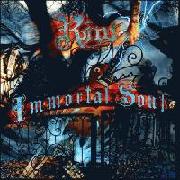
Thundersteel line-up, for the men would reunite to release
Immortal Soul in 2011.