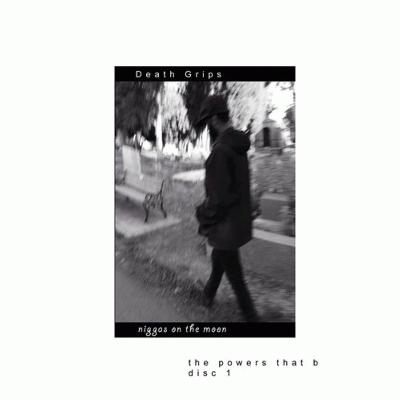
Review Summary: It's a step backwards. Don't let Björk fool you.
Borderline personality disorder, among many other mental illnesses, hurt not only the diseased person but the people around them. Mental illness, to put it lightly, can ruin lives. And it can be engrossing as f**k to watch. Just look at all of the successful Oscar-Winning “crazy person” movies. Hell, even look at the horror movies. These things make the success of the ever-mysterious Death Grips a no-brainer. Especially since we’re not just watching (listening) to this unfold, we’re a part of it, too. From canceled shows to surprise albums, to a picture of a dick on your iPod, Death Grips seldom fail to become a part of their fan’s lives. In this sense, Death Grips fans are the logical halfway point between the family dealing with their schizophrenic relative and the crowd watching it take place on a movie screen.
Given that Death Grips have followed this formula of immersion in the digital age, it’s a surprise that people are still, well, surprised. Death Grips are surprised too, which explains how this album came to be. This project is akin to the climactic breakdown of a mentally ill character in an Oscar-Winning film where the plot devices inevitably take their toll on the protagonist, and we’re assaulted by the dramatic shouted lines of every cast member. That’s exactly what this album sounds like, minus any emotional impact one would come to expect from such a scene. The glitchy sounds, chaotic production, and incomprehensible lyrics are all at their height here in Death Grips’ career, so why is it so lifeless? The answer lies in its execution: Frankly, it’s directionless. Not often do you listen to a record and wonder, “Do these guys even care anymore?” There is very little passion to be found in this album, and to be frank not even the sheer speed and velocity of many of the tracks here can make up for how dull it sounds overall. The album carries an incessant monotonous tone that it never shakes. Nearly every song sounds the same: An over-abundance of Bjork samples, hectic beats from Zach Hill, and an always impeccable flow from Ride. This combination is compelling for the first two tracks, other than that, it becomes clear that this album is painfully devoid of variety.
Sure, Zach Hill’s drumming skills are technically proficient (For this album, Björk’s voice was sampled and mapped to V-drums) and Stefan Burnett’s ability to rap over these dizzying instrumentals is admirable. NOTM is at times reminiscent of a free jazz performance, but the production is far too muddy (see Black Quarterback) to justify that comparison. The Bjork samples drown out the potentially engaging lyricism from Ride, creating an experience that is disorienting just as much as it is grating. Because of this, otherwise great songs like the explosive “Voila,” or the otherwise catchy “Billy Not Really” get lost in the mix. “Black Quarterback” is the worst offender: The sounds drown out Stefan’s lyrics (The only interesting part of the song) and make the track nothing more than a chore. To top it all off, “Have A Sad Cum” sounds like a Government Plates B-side. Despite the hectic performances, this is Death Grips at their most tedious.
The experimental use of the Björk samples are the only thing keeping this record engaging on a bottom-of-the-barrel surface level, so it makes sense that a number of people tote this as a masterpiece. She smooths out the edges at times, and provides a bit of a reward for those willing to sit through the chaos. It doesn’t help though, that the voice samples are an exercise in perseverance. “Say Hey Kid” is a breath of fresh air because of this, as Bjork is absent for what seems like the entire track. It’s catchy as hell, and the chorus is exhilarating. It features the rapid shifts between verses and choruses found in the other tracks on this album, except now, it’s upfront and effective. Borrowing from the sparseness of No Love Deep Web, it is a testament to what this album could have been.
As a whole, Niggas on the Moon is dull in nearly every respect. It suffers from the notion that it can fall back solely on Zach Hill’s break-neck performances and Stefan Burnett’s esoteric lyrics. The few good ideas are drowned by the samples that smother rather than enhance. By the time the 32 minutes are over, the gimmick has long passed.