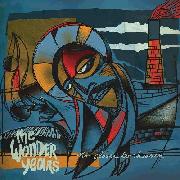
Review Summary: This is one for the history books.
Pop-punk isn’t dead. It’s in its nature not to die. Punk is rebellion, and there’s always something to be angry about. As for the pop side, people are still going to love singable hooks to latch onto in the mosh pit. So pop-punk isn’t dead. Instead, it’s a zombie, walking around with holes in its mouth, expired flesh with traces of what used to be alive, well, and far more capable than what it is now. Most artists try not to get bitten. Fall Out Boy is a pop-infected shadow of what they used to be, Green Day can’t seem to remember how to write anything close to a punk song, and blink-182 is tearing at the seams trying to keep making music. And those are just the bands that are still around.
But those were the ones you saw on MTV, during the mainstream’s descent onto the genre looking for the next big thing. The late 90′s/early 2000′s was the only time you ever heard pop-punk on the radio, but it never asked to belong there. Most people forget that the namesake was the birthright of the Descendants and the Ramones, carried on by the likes of Kid Dynamite and Lifetime through the 90′s underground, never asking for a bigger paycheck or a music video like they saw others do. The minority that remembers - The Story So Far, Fireworks, and yes, the Wonder Years - has kept pop-punk alive and kicking all this time by taking their cues from emo: when the external is dry, look inside for your energy.
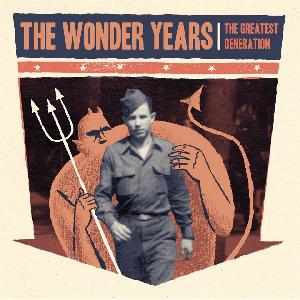
The Wonder Years prides themselves on two things: honesty and optimism. Those two convictions have always clashed in small ways, contained throughout the songs of their discography (the lightly self-deprecating “Hey Thanks,” the barely-escaped futility of “Logan Circle”), but they’ve yet to take center stage in the cohesion of an album. The Upsides focused on the optimism that they could find in everyday life, whereas Suburbia I’ve Given You All and Now I’m Nothing focused on outing their hometown in the most candid way possible. The Greatest Generation is the long-awaited head-on collision.
The title emerges out of what lyricist Dan Campbell does best: reference. On the surface, “the greatest generation” refers to a line spoken by Tom Brokow, who used it to describe those who survived the Great Depression only to go on to fight in WWII. Campbell draws the symbols and extended metaphors that characterize the album’s inner conflicts from the experiences of his grandparents’ generation. He stares at the sky, afraid “like a kid in the sixties/staring at the sky/waiting for the bomb to fall,” compares President Truman’s atomic legacy to his own shameful “***ups,” and travels back in time with his anxieties to “1929… on the verge of a great collapse today!” He even directly references grandparents when the whole world smells like his grandmother’s favorite brand of cigarettes in “We Could Die Like This” or in the slurry of anger and regret that drips from his grandfather’s unofficial eulogy, “The Devil In My Bloodstream.” Campbell is a resourceful writer, adding these elements to the lyrical motifs (conjured ghosts, pill bottles, shaking hands) that pull the album together even further. Even when Campbell is referencing his older work (”I was kind of hoping you’d stay,” he concludes on “Passing Through A Screen Door"), the album is too grounded in itself to ever feel as if it can’t support its own personal theme of trying to find the silver lining of the looming black clouds on its own.
All these feats of writing, however, could have easily fallen flatter than they did were it not for the band’s truly remarkable musicianship backing Campbell every step of the way. Objective analysis reveals this to be true time and time again. “Jesus Christ, did I *** up?” wouldn’t have hit nearly as hard if Campbell hadn’t been screaming it during the incredibly well-built bridge that climaxes around it in “Passing Through A Screen Door.” “I know how it feels to be at war with a world that never loved me” from “The Devil In My Bloodstream” seems like a predictable choice for a tattoo-worthy cliche, but that doesn’t seem to matter as much when it sounds like Campbell’s final drowning breath in the catharsis of the song’s second half, finally succumbing by the end of it. The “whoa-whoa”’s in “A Raindance in Traffic” are a pop-punk cliche, but here they legitimately sound like the onomatopoeia of explosions when they rest above the vicious cymbal crashes, towering guitars, and anchor of the bass line. More than anything else, the performances of all six members of the band make it apparent that The Wonder Years wrote this album together, and that no one could possibly care about it more than them for that reason. Passion seethes from every song, without exception.
And that’s important, considering the subject matters at play here. Campbell’s apologies and frustrations in “There, There,” have to feel like both at the same time if they’re to have an effect, and they do - if you don’t feel like screaming with him when he jumps the octave as the band doubles the volume for the second chorus, consider yourself completely devoid of emotion. The same goes for the self-loathing that occurs during the tonal shift of “The Devil In My Bloodstream,” not to mention the colossal endpiece medley of “I Just Want To Sell Out My Funeral.” In fact, the latter song may be The Wonder Years at the top of their stitchwork, combining pieces of the entire album so far to emphasize the true sentiment behind all the anxiety, rage, and confusion that characterizes the essential growing pains of becoming someone great: “I just want to know that I did all I could with what I was given.” Cohesion is not exclusive to the album’s collection of songs - it extends to the band with an efficacy its peers will be dreaming of for years to come.
The reason for those two colossal paragraphs at the beginning of this review is because this album could not exist the way it does today in any other period of time. That is to say that, with this album, the Wonder Years have not just kept pop-punk alive, but made the genre whole again. That is to say the Wonder Years have finally given us what we’ve been waiting for: an album to define this generation of pop-punk kids. That is to say no other bands have given us our cake and allowed us to take a bite of it all the same, where lyrics are not more important that musicianship or vice versa because both are stronger than ever. That is to say that there is nothing like The Greatest Generation out in the pop-punk scene currently and there may very well never be something like it again. The Wonder Years have grabbed us by the collar and bled for us and with us. They’ve offered to grow up with us and into great men, holding an extended hand to help us up. And we should take it and pull ourselves up off the floor. Because even though they know what it’s like down there, if they can reach this level of greatness, then there may be hope for us yet.