|
| |
|
|
|
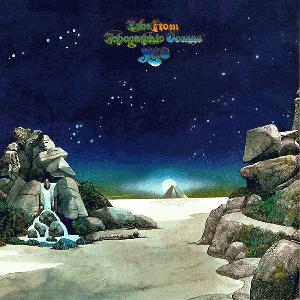
Yes
Tales from Topographic Oceans
Release Date: 1973 |
Tracklist
Review Summary: Probably the most controversial and underrated album of the 70's. “Tales From Topographic Oceans” is the sixth studio album by Yes and was released in 1973. The line up on the album is Jon Anderson, Steve Howe, Chris Squire, Rick Wakeman and Alan White.
This is their first work recorded with White on board after Bill Bruford left the band in 1972 to join King Crimson. It was also their last studio album, during four years, with Wakeman in the group until their eight studio album “Going For The One”, was released in 1977.
Many pages were written about this album. This is probably the most widely criticized musical work, rock or otherwise, of the 70’s. Even Yes fans are divided as to whether it’s a good album or not. Often, it’s considered as an example of everything that was wrong with progressive rock in the 70’s. It was generally regarded by the punk movement as one of the main reasons why the rise of punk rock was necessary. Released about 40 years ago, it was a work of pretence. Even who became a prog rock legend, Wakeman, was forced to leave the band soon after he criticized the album too.
Yes’ inspiration for the album was Paramahansa Yogananda’s book, “Autobiography Of A Yogi” that discusses four “shastric scriptures”. Anderson had been looking for a theme for a grand scale rock symphony for quite some time, and one night during the “Close To The Edge” tour, when the band was in Tokyo, he was flipping through Yogananda’s book. The book describes texts which not only care about religion and social life, but also about medicine, art, music and architecture. Surely a normal occidental man would have put down the book, forgotten about it, and just made simply his show. However, remember that we are talking about Anderson. So, this new work is an 80 minute double album around a set of themes which certainly very few, in the Western world, have heard about before.
“Tales From Topographic Oceans” became a four movement album and Anderson and Howe were the main architects of it, reportedly outlining the album in one all night session. In the end, all band members including their new drummer White, made stellar and quite identifiable contributions on it. Each movement is an ambitious, multi-faceted endeavor characterized by distinct and impactful themes, both musical and lyrical. Yet, the differences among the four movements serve to create an even grander and uniform work as a whole.
The first movement, “The Revealing Science Of God”, represents the creation and beginning of all the good things which bring happiness to our lives, like love. It seems lamentable that these wonderful forces seem to have been lost by the human race through their own negligence, resulting in all sorts of unwanted calamities. The music is simply gorgeous, filled to the brim with ecstatic melodies.
The second movement, “The Remembering”, alternates between Anderson’s singing touching on various memories we all had somehow, and Wakeman carrying us away from these images and thoughts of our past to others, on a trip through the peaceful recesses of our mind via his keyboards.
The third movement, “The Ancient”, is a reference to other civilizations from a distant past, and so, near the beginning, Anderson quite cleverly chants the word for sun in several different languages. I think this movement is trying to say that all of these people from the past have probably all the answers to our important and not so important existential questions that trouble our society even today. It’s a very experimental and introspective movement.
The fourth movement, “Ritual”, basically says that when we love, we can return to the state of goodness in which we were in the dawn of creation. It’s less experimental and introspective than its predecessor but it’s still grandiloquent. This is conveyed excellently from the beginning to the end of the track, with the reprisal of some of the musical themes which appeared in the first movement. And now, the journey of “Tales From Topographic Oceans” has ended.
Conclusion: Considered obscure in lyrics, music and arrangements, “Tales From Topographic Oceans” is an extremely accurate snapshot of where the band was spiritually and musically in 1973. If the CD format had been present then, it certainly had been one continuous piece of music, rather than four separate movements befitting the space constraints of vinyl. The effectiveness of “Tales From Topographic Oceans” has been debated many times over since it was originally released. Even today, it stands as an important turning point in progressive rock music and Yes’ history. Their subsequent album “Relayer” probably wouldn’t have been the album it was if not for “Tales From Topographic Oceans”. It may be a little harder to listen to then “Close To The Edge” and a little more down beat then “Relayer”. However, love or hate it, it still remains an inevitable and unavoidable work in the history of progressive rock music.
Music was my first love.
John Miles (Rebel)
| other reviews of this album |
|
Album Rating: 5.0
Here is my third review in this site.I would like to know your opinion about it.
By the way. I changed both my previous reviews. I think they're better now. However, if you have time and patience, I also would like to see your comments about the changes as opposed to the original versions.
| | |
A classic is an exceptional album. This isn't exceptional at all. It's bloated and self-important; at points that it should stop, it just keeps going and going and going. Close to the Edge has barely a bad note on it; it seems that they were saved up in a bucket and added to this record.
Anderson kind of lost it here with his mystical mumbo-jumbo. He needed an editor or two to rein him in. I don't know what kind of power that Eddy Offord had within the band as its producer, but he should have taken an ax to about half of it and reworked it into a listenable single LP, as there are some good riffs in here that get drowned out by the dreck.
| | | Album Rating: 5.0
As I wrot before, this is a very controversial album. We can love or hate it.
I respect your point of view. However you can't deny that we are in presence of one of the most discussed albums of all times.
Personally, I love the album.
| | |
I neither love it nor hate it. It just reflects what happens when bands get ambitious enough to make a double album, but don't have enough material to fill it.
And I would dispute the characterization that this reflects the band as a whole at the time. This was mostly Anderson going off the rails with Howe serving as his enabler, while Wakeman was objecting to it from the start.
| | |
"one of the most discussed albums of all times."
This isn't ever brought up outside of prog circles so I think you are really overstating the importance of this record.
| | |
Exactly. Ever heard of Metal Machine Music?
| | | Album Rating: 3.5
This review is waaaay better than the others, congratulations!, I really enjoyed reading. You still reviewed it in a track by track format but you managed to describe the sound and flow of the album as well so it isn't a big problem. Have a pos
| | | Album Rating: 5.0
Ok. Screm!, you are right. The album was most discussed but only in prog circles. I'm sorry, but I'm essentially a prog head, so I was only talking in that perspective.
In relatio to you Pch101, I know that you are also right. As I mentioned in my review it was essentially an Anderson's bet.
However, I must say that I know this album since my 17 years old, and it was one of my first purchases in the distant year of 1975. As you can see I'm already a senior in relation to this album. Probably because of that, it was one of my first approaches to the music, I continue to love the album and consider "Tales" one of great prog works of the 70's.
| | |
nice album is awesome
| | |
Review is very well done otherwise. But yeah, I mean this isn't even Yes's most talked about album (that would probably go to Fragile or maybe Close to the Edge) so your insistance on that part just seems kind of strange
| | | Album Rating: 5.0
SCREAM!. When I insist on that part is only because it was one of the most controversial prog albums in the 70's. It caused the departure of Wakeman of the group after his critics about it, and as it was mentioned in the review, and it was also said that it was an example because the punk movement appeared.
Meanwhile, I also know that "Fragile" and "Close To The Edge" were probably most talked albums.
However, "Tales From Topographic Oceans" isn't even my favourite Yes album. I prefer "Close To The Edge", "Relayer" and "Yessongs".
| | |
To be fair, when those who don't care for prog rock complain about the genre, this album does seem to be one of their examples. But the opposite isn't true: I don't see those who do like prog rock spending much time worrying about it, whether or not they like it.
Of course, the Sex Pistols were quite vocal about their loathing of ELP. That's the prog band that seems to draw the most ire.
| | | Album Rating: 3.5
Review is great man, pos.
Always wanted the album cover as a poster cos it's so damn purdy.
| | | Album Rating: 4.1
Well ELP is a group that started out with a solid debut album, and slowly declined in consistency afterwards. Every album after the s/t was never completely as good as the s/t. Tarkus had the title track, BSS had Karn Evil 9, Trilogy had Hoedown and Living Sin. I'd say the only completely great ELP album besides the s/t is Pictures at an Exhibition. Besides, they were better live than in the studio.
Getting to this album, it's better than what some people make it out to be. It's, however, not even in the same league as the three albums that came before it and Relayer.
| | |
That is a nice album cover
| | |
I would assume that DIY objections to ELP were inspired by the classical influences and the emphasis on keyboards. Hard to relate to that if you're English working class, unemployed and generally pissed off.
| | |
Nice review . . . I only like about half of this one, so 2.5/5.0. This is what gets me ; I think Yes could have edited this down to one disc like CttE, or Relayer, (with a 20 minute song on one side and two songs on the other) and it would have been a brilliant album--but that's just me, judging from the ratings.
| | | Album Rating: 4.5
transcendent :D
lol nah but seriously good shit its just a chore to jam the whole thing start to finish but when the mood queefs i hit it hard
| | | Album Rating: 4.5 | Sound Off
Nice review! This certainly is a brilliant and overlooked work both within the band's discog and the genre in general. Over the years, I've come to consider it much more as an "experiment in structure", if you'd like, rather than as a demonstration of pretention. I think its appreciation lies in the way of listening to it; it appears to make a whole lot more sense to me when regarded as a huge flow of ideas rather than as a conventional, albeit quite lenghty album.
| | | Album Rating: 4.0
I'm never in the mood for this level of prog anymore, always just stick to ctte, fragile and the yes album
Good review, some sentences read awkwardly though
| | | |
|
| |