Review Summary: Raspy, juvenile, and for better or worse, unadulterated Brian Wilson
1977 saw Brian Wilson as a recluse of sorts, and reasonably so. Plagued with severe mental illness, numerous addictions, and an insane psychiatrist overseeing his every move, Wilson contributed minimally to the Beach Boys’ records throughout the 1970s. In a painfully ironic turn of events, the same band members that stifled his creativity ten years prior called upon him to revive their commercial appeal. Wilson’s response was delivered in 1976, with the uninspired, commercially nostalgic
15 Big Ones. The album was a short-lived commercial success, reaching a peak chart position of eight in the States, a number unheard of in the years preceding. The following year, Brian began to work on his first true solo venture, tentatively titled
Brian Loves You. The rest of the Boys, shocked by the reception of
15 Big Ones, were eager to ride the proverbial wave of Brian’s newly revived creativity. Naturally, they latched on to his solo venture, and 1977’s commercial flop
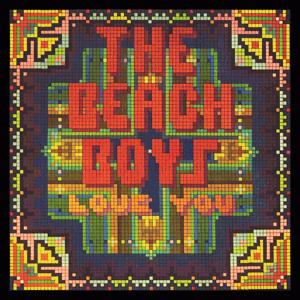
Love You was born.
This is not to say that the album is a collaborative effort; on the contrary, it is still largely a Brian Wilson solo LP. Wilson’s archetypical complex compositions are still present, but his overwhelming use of the Moog synthesizer does much to muddy things up.
Love You was a clear indication that no longer was Brian Wilson the oracle of modern music that he was eleven years prior. Hauntingly indicative of his mental state, he now seemed to be a follower of already established, fleeting trends. It’s clear that he wished to recreate the timeless melodies and intricately layered instrumentation of
Pet Sounds, and the sheer merit of this sentiment is admirable, even though its intent was not fully realized. In place of this intended masterpiece is instead a raw, unapologetic, and downright strange bag of songs, filled to the brim and likely to burst at any moment (despite the album's rather modest length, clocking in at just over half an hour).
Lyrically, it is clear that Wilson received very little help. Previous collaborators Tony Asher (
Pet Sounds) and Van Dyke Parks (unreleased
Smile) gave Wilson’s scattered thoughts purpose, the former an air of mature-yet-childlike joy, and the latter a poetic and sophisticated sense of extrospective storytelling. Without a collaborator,
Love You naturally suffers from immature lyricism: (
ex: “If Mars had life on it, I might find my wife on it”). These shallow lyrics provide little depth to songs that were otherwise arranged and delivered with a great degree of passion. Additionally, Wilson's habit of chain smoking had taken a toll on his singing voice, reducing his once immaculate falsetto to a raspy, gruff near-yell. This is clarified with the strange, yet refreshing juxtaposition of the 1970-recorded "Good Time," a perfect demonstration of the dizzying heights Wilson's voice could once reach.
Subject matter seems to fly all over the place, with many expected, but sometimes rather strange, love songs. This is exemplified by “Roller Skating Child,” as well as “I Want to Pick You Up,” in which Brian Wilson attempts to entice listeners with the undeniably odd line, “I love to pick you up, because you’re still a baby to me.” These lyrics, while very childish, highlight Wilson's lone attempt at making sense of his own thought process, and radiate a fragile sincerity that could only be produced by a broken man. Album highlight “Johnny Carson” is… well… a song about Johnny Carson. Strangely enough, this song works well as a sonic centerpiece to this eccentric collection, providing a jazzy variety to an otherwise pop-leaning record. Here, the synthesizers don’t sound out of place.
Despite its negative aspects,
Love You serves as a brilliant creature in its own respect, different from anything that preceded or followed. It's scatterbrained, juvenile, and seemingly unsure of itself. It serves to reflect Wilson's emotional state and marks his brief triumph over mental turmoil. An often overlooked yet polarizing release,
Love You is a musical oddity of great significance in the Beach Boys discography.