Review Summary: Hold Close To Me
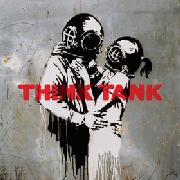
Legacy carries an obscene weight in the music industry, a monolith growing with time and casting its shadow over the uncertain future of any musician’s later efforts. No group knows this better than Blur, and perhaps no group has played as fast and loose with their own legacy as much as the band has over the last 16 years. Blur may be the most frustrating band to be a fan of due to their haphazard handling of their music. After losing their guitarist Graham Coxon after the 13 album cycle to alcoholism and misunderstandings between the band and their manager, the group floundered, turning to African influences and varied instrumentation to replace the soul of Blur. The band quietly faded away after 2003’s Think Tank.
Throughout the later 2000’s, however, the group toyed with their fans. Two reformations came about, but only to play festivals and release 3 promotional singles over the course of 10 years. While some of the band’s greatest moments such as the Glastonbury and London Olympics Hyde Park shows took place during this period, the question on everyone’s tongue was whether or not there would be a new record. Frontman Damon Albarn famously went back and forth on this issue, saying that the group had been working on new material and then later going on record stating that Blur are over. Bassist Alex James directly said that there would be no new record when asked by Jeremy Clarkson during his Top Gear appearance. In truth, even the band didn’t know what the future held even as the new album was being recorded.
During a tour break due to some cancelled shows, the band spent a brief period in Hong Kong, where they booked a small, hot studio in a casual fashion to bang out a few ideas that had been developed while touring. The intention was to casually test the waters, but while on stage in China, Albarn stated to the audience that the band would be recording their new record in Hong Kong. In his typical fashion, however, Albarn later stated that the sessions were scrapped due to the heat. It seemed then, that the Hong Kong sessions would never see the light of day. Graham Coxon, too afraid to leave the material to sit, worked in secret with longtime Blur producer Stephen Street to assemble the demos into something resembling a full album before presenting the work to Damon. While apprehensive, Albarn loved the music so much, he agreed to return to Hong Kong and write vocals for what would be the new record.
When the band announced very suddenly that they would be having a livestreamed press conference in London Chinatown, the aging fanbase went rabid, taking to abandoned web forums and peer-reviewed music sites for the chance that they may finally be able to discuss what they had been waiting over a decade to discuss: the new Blur record.
Typically, when a band ends a long hiatus with a new album, the result is both celebratory and final. The funeral pyre record references past work while adding the element of farewells. Pink Floyd’s The Endless River is a prime example of this pensive songwriting, eschewing all progression in favor of old instrumental ideas. While Pink Floyd had lost their golden goose in Waters, however, Blur had just gotten theirs back in Graham Coxon, whose influences as musician and producer are all over the album.
The Magic Whip is either the beginning of a new Blur or their definitive end. Expectations, then, are quite high for this new record. To follow up 12 years of silence with a brand new record is not only audacious, the record must bridge that gap and create its own legacy. Luckily, the album doesn’t even attempt to ride upon the band’s past success. While the Chinese ice cream cover is perplexing for those who waited over a decade for the return of their favorite band, it’s a bold move that shows Blur’s readiness to produce art rather than a commodity. The central theme isn’t Britannia or Iceland and it’s not Africa. The record is as different from past Blur albums as it could be in spirit, with even the band’s name being written in Chinese. In short, it’s not pandering. So what has Blur given us?
“Lonesome Street” opens the record with unfamiliar police sirens and ambient city sound. Any brief moment of unfamiliarity is dashed by Graham Coxon’s cool guitar sliding in next to us in the audience before the song kicks in. Perhaps the most recognizably Blur song on the record, the opener addresses its theme immediately. “You’ll have to go on the underground to get things done here” Albarn sings, drawing a sharp line between past themes of London Love and the sweltering locale of this new album. Coxon’s vocals also feature prominently, gracing the bridge with a Syd Barrett-esque harmony. The jaunty guitars, whistling and sheer fun of this track reassures us that Blur are still very much alive in these four middle-aged men. The next track, however, veers immediately into Albarn side-project territory, with light fingerpicked acoustics and ambient electronics. The presence of Coxon and the rest of the band can still be felt in the arrangement, but the placement of “New World Towers” is certainly well thought out to ease the listener into any new territory that the band will be covering. In that respect, it’s the most unfamiliar sounding song on the record.
Hints of old Blur records can be picked up along the way, most notably in “Thought I Was A Spaceman”, with its 13-esque electronic distortion outro and repetitive vocal melodies. Coxon’s guitar in “Go Out” also bring to mind the same progressive thinking first seen in the self-titled 1997 release. Despite this, the bulk of the record paves new divisions of the Blur sound. “Ghost Ship” introduces an irresistible funk aspect that melds so well with Albarn’s vocal style and James’ bass abilities. “Ice Cream Man” combines wild synths with calm and somewhat haunting vocal melodies. When the band attempts something new on this record, the results are overwhelmingly positive.
Of course, the band can’t rely purely on music alone to sell its fanbase on their odd new release. The lyrics of each past record discussed something distinct. On 13, Albarn lamented the loss of his longtime partner Justine Frischmann. On Think Tank, the order of the day was the imminent demise of the band. On The Magic Whip, not only do we see plenty of varied discussions on China, overpopulation and Albarn’s latest sociopolitical commentary, we get a tender look into the relationship between him and longtime friend Graham Coxon. “My Terracotta Heart” references this most directly. “I’m lost and don’t know if I’m losing you again” Albarn croons, highlighting the complexity of friendships between two very different personalities. While their past may be mottled and difficult to discuss, Albarn pleads “Cry your eyes out, hold close to me” in closer “Mirrorball”. The poignancy on display in The Magic Whip provides some of the most vulnerable and heartbreaking glimpses we’ve had into Albarn since 13’s “No Distance Left To Run”. The record isn’t all tears, though. In penultimate track “Ong Ong”, we find one of the cheeriest, breeziest songs in the band’s catalogue. A textbook summer tune, “Ong Ong” was referred to as “populist” by Albarn, who irresistibly chants “I wanna be with you”. This track stands as a landmark to what Blur is capable of. As a group, the band has finally managed to bring the fun side of Damon Albarn out once again, shedding his shell of melancholia for the first time since perhaps early Gorillaz work. The track proves that Damon is still capable of writing the polar opposite of Everyday Robots.
So what is the damage to Blur’s legacy done by The Magic Whip? In a sense, it doesn’t even feel like a part of it. After such a long absence filled with side projects, legal degrees and cheese farming, each member feels like a distinct separate entity with their own distinct musical sense that has come back together more learned and experienced to form a collective wholly different than the Blur we once knew. Simply put, The Magic Whip feels like a Damon, Graham, Alex and Dave album. Perhaps this is the only way that ‘the new Blur record’ as a concept could exist. Doubtless, the masses will immediately begin to speculate as to what the future holds for the band, but The Magic Whip is Blur in the most unexpected but genuine permutation they could be. While no record could possibly replicate the life soundtrack that Blur curated for so many people in England and abroad, The Magic Whip is music for a modern moment that the decade crafted through the members of the band and the changing world around them. It’s the best Blur album that ‘the new Blur album’ could be.
Recommended Tracks:
“Ong Ong”
“Ghost Ship”
“Mirrorball”