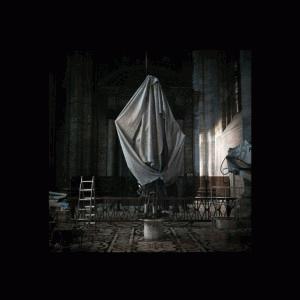
Review Summary: With Virgins, Tim Hecker continues to push sonic boundaries, creating organic electronic atmospheres. This is a detailed, haunting, often beautiful listen: one of the peaks in the artist's discography.
Tim Hecker’s music defies classification. It’s far too dynamic to be called drone, and too organic to be called electronic. It’s ambient in the sense that it focuses on atmosphere, but even that title is too much of a simplification on his work, and implies (due to expectations of this genre) that it’s background music. Hecker has referred to himself as a sound artist and composer, which may be the best way to put it. His music is a composition of sounds that came from live instruments, but are no longer instruments anymore because of the electronic mixing that goes into them. They seem to come from invisible depths of our world rather than a computer.
Listening to his music without visualization is difficult, even if what you see is foreign to reality. This is because there is meticulous detail in his works to the point that we feel like we are inside of his music rather than observing it. When listening to even his most minimal compositions, it’s impossible to peel back all of the layers and see the blank palate where the sound started. The depth is infinite.
There may be no better album in Hecker’s career that exemplifies this than Virgins, his seventh LP released by Kranky Records in 2013. Thus far in his career, each of his albums has been met with high critical acclaim, attracting audiences interested in sonically experimental and abstract music. I’ve been interested in his work since I heard about him around the release of this LP. What caught my attention was the beauty and detail in the textures and atmospheres that he creates, and how much of a personal experience listening to his work is. Each album in his discography has a unique atmosphere, and the progression of his work is evident. His albums have become increasingly detailed, vivid, and dynamic.
Virgins is possibly Hecker’s most distinct work to date, and one of his very best. The tracks here are busier, more layered, and more melodic when compared to his previous work. Tonally, this is his most haunting. The tracks sound grand and intimate at once. We get sounds that feel physical, like they’re made with metal and wooden antiques. There are also big, ethereal sounds that recall cloudy skies and vast landscapes.
The opening track on the album, “Prism,” is one of the album’s most cacophonous and eerie. It begins with a bright and haunting drone that’s totally foreign to anything my ears know. The track starts out with low volume, amplifying as a reversed virginal plays. Cacophony builds with other reversed sounds, like waves of ringing off different objects. The track calms as pieces drift into the distance, and fades right into the next track. This track was so full of detail that I wished it had gone on for longer than its brief 3 minutes so I could take it in more. It’s a heck of a way to start the album off, especially since the song is so different from anything Tim Hecker has created before.
The sounds on each track of the first half of this album seem to clash for their place in the foreground, eventually settling with each other, dancing in a swirl that assembles at a climax in each track. The noises in the swirl independently drift in and out of the foreground, but never lose their place as part of the swirl, even when we can’t hear them anymore. They often come back in the background later or briefly in other tracks (such as the end of “Virginal I,” where we can hear “Prism” and “Black Refraction”). The depth in each track is intricately established, with sounds that get closer and further from the listener, sometimes hiding behind other sounds. At times, they collide with each other, sometimes they dance together. The space on the album is extremely vivid.
A great example of this is the second track, “Virginal I,” which begins with a jumpy, twinkling virginal thats melody avoids sounding at all like a melody. It’s being played almost percussively, and this is how the instrument is used for the entire album. There is a ringing in the background that picks up and overtakes the virginal, sounding like a symphony of swords rubbing against various objects, a recurring sound all over this album. There’s a didgeridoo-like croak that oscillates quietly at times. I love the way that a deep distortion like an overblown amp crashes into the song, but calms and joins the rest of the sounds as a bass layer. The deep sounds get lonely at the back end of the track to a haunting degree, with the swirl from the climax still faint in the background.
“Radiance” is a more bright, traditionally ambient track. It’s tone is like the sun’s rays shining through clouds. Like every track on the album, there is more detail than we can absorb. Even though this track has a clear general sound and is less busy than its surrounding tracks, it has many subtle layers and details placed throughout. It’s a refreshing balance with the noisy and hectic tracks all over this first half, and this compliments the next track, “Live Room.”
“Live Room” is the album’s seven minute centerpiece, and is in my opinion the best track here. It has the bouncy, plunky virginal from “Virginal I,” but what makes this track stand out are the contrasting layers. There is the low, distorted bass that sounds like the shoving of cardboard into a fan, the middle-level virginal, and swelling ambience that sounds, as it does on other tracks, like cloud-obstructed sunshine. The distortion becomes aggressive at the 1:40 mark. The virginal panics in response, and the rays fade away. There’s something beautiful to me about the way this distortion disturbs the song that is impossible to explain, and it’s here that the song reaches levels of sublimity and stays there. The faintly colorful rays come back; the bass continues to seize unbounded by tempo, and the virginal dances to it all. The song becomes grand with increasing sunlight and calming bass. It escalates into what feels like a massive, cloudy sunset of dulled rainbows with a thunderstorm in the mix. This part of the song moves me. The song fades out slowly and perfectly after this climax into its short companion piece, “Live Room Out.”
On this track, a wind instrument plays somberly as we hear “Live Room” quietly in the distance. It eventually disappears, and we get a very quiet duet of winds that sometimes rub against each other to create dissonance. “Live Room” comes back, again very quietly, and is played off by a piano.
“Virginal II” starts with the typical (for this album) skippy, looping rhythm that seems to find its way out of a wave of mist. The track lets it play for a while before bringing in other noises both deep and bright. We hear “Virginal I” come back briefly at around 2:30, as well as “Prism”. The sword-like reverse ringing comes back as well until a looping synth takes the stage. This synth, though more electronic sounding than most of the mixed live instruments, still manages to sound organic to the tone of the track. Virginal II repeats many of the same sonic motifs that are on the first half of the album, such as the swelling and shifting of space, and does so just as well. The ringing comes back once again until the track fades out into nothing for the first time, signaling the end of the album’s first half.
The second half of the album is more minimal, bright and spacious, but still, nothing is totally minimal or monotone. No two seconds on the entire album are identical due to the detail presented— not even in the same section of a song. Something is always changing somewhere, subtle as it may be. The brightness on the second half is not without an eerie quality, just as the darkness on the album is not without its beauty. This balance of sounds both bright and deep, pretty and haunting, is what captivates me about all of Tim Hecker’s work. It’s so tonally ambiguous, which is what makes the listener’s experience so personal. For me, it’s beautiful in all different kinds of ways.
It starts with “Black Refraction,” which is a quiet, looping piano piece. We can hear the keys being pressed, adding to the ambience. This piano begins to be disturbed around a minute in, shifting more and more into disruption. There are reversed sounds and extra keys twinkled around progressively. Towards the end, the song brings in big hits that sound like air being pressed. It might even be the amplified pressing of a piano key. This track is one of the tonal highlights of the album.
“Incense at Abu Ghraib” has a bright and eerie overtone that, for me, recalls an uncomfortably empty desert. A quiet quarter note pulse enters, pounding quietly in the distance, increasing in volume, but still very far away. This two minute track flows seamlessly into the next track, “Amps, Drugs, Harmonium,” which continues many of the sounds including the high, eerie drone and subtle pulsing. This track is composed of looping tones from wind instruments, each swapping turns in the foreground. A piano nicely accompanies these whistles at the back end of the track. These two tracks are fitting to the progression of the album, and feel nicely placed. But they are forgetful when compared to the busier, darker, attention-grabbing tracks from the beginning. They aren’t the ones I tend to revisit when listening to the album in parts, but they’re very brief and fit well into the album as a whole.
This back end of the album feels like it slowly gains momentum, however, and picks up more with “Stigmata I,” which is covered in a quickly pulsing static that feels natural like a humid rain. The hits on this track grab my ears because they are created by sucking the sound away rather than booming over the sounds. “Stigmata II” starts with a pulsing tone that occasionally sizzles, creating its own beat. This fades away, and a calm, oscillating wind enters for the rest of the track. It feels like a really nice ending, possibly the calmest, least haunting point on the album. But it’s not the end, and the end of the track begins a long fade-in to the much harsher, explosive final track, “Stab Variation.”
The title of “Stab Variation” explains itself. It’s a variation of stabs, with each stab being four pulsing beats. Each stab is different from the others: some are muted, some bass-y, others of an undefinable quality. They all sound like they’re being sucked in by a vacuum. The stabbing glitches and is interrupted by some of the bright, glassy tones we’ve heard earlier in the album. It’s ear candy for anyone who appreciates sonic detail. This heavy pulsing is very different from the rest of the album and Hecker’s work in general. It doesn’t fit in with any of the album’s halves and is its own thing, but the darkness, the layers, the detail, and the explosive qualities recall that of the first half. It’s a great return and change of form from them. The cloudy, bright tones slowly take over the track after having interrupted earlier, with the sword-like resonating sounds coming in, this time more slow and drawn out. They, and other brighter tones, play the album off to a sort of sleep.
With Virgins, Tim Hecker continues to push sonic boundaries, creating the sounds to a world we cannot see, or rather, the sounds of our world that we cannot hear. The first half of the album I found to be more exciting than the second because I enjoyed the deeper tones and cacophonous arrangements. Still, the back half is a worthy companion with several high points, and the final track is a fantastic closer. There are emotive atmospheres all over this album, and what they evoke, and what you imagine when listening is entirely personal.
When I listen to this album, I feel something, and I don’t know exactly what it even is. But to me, that’s the most valued experience is one where you know you’re having one but cannot define it. This is because if something is too defined, too concrete, then it escapes feeling. A monster in a horror movie is scariest when not revealed. Even when I’m not getting emotional feedback on the album, I still appreciate all of the intricate layers of sounds I’ve never heard before that create an ambience that I’ve never, and could never imagine.
Does the album mean anything? Such an abstract, experimental work, shouldn’t be reduced it to words, even if it seems that I’m trying to do that with this review. Tim Hecker knows why he makes the music he does, (and won’t give too much away in interviews) but the music’s relationship to his audience is entirely different. This is a personal listening experience that demands the listener to abandon their preconceptions of what they think music is if they’re not familiar with music in this realm. Most music tries to get us to feel a rhythm or a groove, relying on vocals, melodies, and familiar instruments to get us to feel something. Hecker’s work requires a different type of perspective: one where we let the sounds wash over us and take us to sonic landscapes that we’ve never witnessed before. If you look for something familiar to latch onto— a beat, a hook, or a melody, then you’re not listening right. Of course, not everybody is going to enjoy this album, and that’s okay. But if you’re looking for a new listening experience, I highly recommend this dark and beautiful album.
This is headphone music; listen in the best quality available.