Review Summary: A cumulation of every positive aspect about Foetus
After the release of
Love, fans of JG Thirlwell’s
Foetus project were just unsure about what to expect for the future said project. The direction that album took was much different from anything Thirlwell has done in the past, being much more subtle musically and focusing more on atmosphere. Was the next Foetus album going to explore the path created by
Love? Or was it going to go back to nastier tones like those of
Gash or
Flow? Questions like these arose within Thirlwell’s fanbase, and the answer to said questions was something practically no one was expecting:
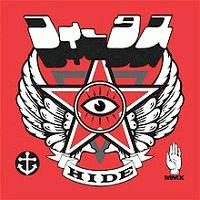
Hide.
Influenced by the George Bush-era of the United States of America,
Hide is a conceptual piece revolving around themes of war, political corruption, and the end of civilized society. The album essentially sounds like a soundtrack to a non-existent film, it certainly has the production for one. The production on
Hide is absolutely phenomenal, it’s incredibly crisp and lush, and sounds like you’re listening to a live opera. Speaking of, the musicianship found on this record is simply outstanding. For the most part, it can be quiet, creating a very tense atmosphere where it feels as if one’s breath could set off an alarm. Other times, it can be straight-up scary; Choirs who sing with absolute bloodlust and buzzing bass lines are present throughout the record. To put it short:
Hide is the best thing Thirlwell has ever done. But, before I get ahead of myself, I need to truly dissect the record in order to get the point across. Three things a great album must have is an intriguing beginning, a great middle section, and a satisfying ending.
The album opens with “Cosmetics”, a song that could only be described as
nightmarish. The haunting echoes of guest singer Abby Fischer’s vocals layer upon one another, creating a bizarre a cappella that is quickly
demolished by intense, bludgeoning bass. The track then turns quiet, for a split second, only to blow up again with a f
ucking bang. Near the end of the track, it goes quiet again, the only sounds are the ominous whispering of
“energy, purity”, eventually building up to one last blast, with the choir practically shrieking
“We are to blame!”. While “Cosmetics” is a rollercoaster of an introduction, “Paper Slippers” is a much more somber and upsetting follow-up song. It’s a piano ballad that describes the end of humanity that includes some of Thirlwells best lyrics.
“Don’t believe a word that you’ve invented to talk to yourself”, he warns, perfectly describing the feeling of pure guilt. What makes this track so beautiful is exactly how densely layered it is. The way the violins screech during Thirlwells cry of
“Men in the paper slippers wait for you/Just for you” is absolutely heart-wrenching, and the use of an industrial backbeat during the latter half of the song perfectly fits in with the rest of the track, illustrating an image of an army marching towards their eventual downfall. “Paper Slippers” is one of Thirlwells greatest achievements as a musician because it perfectly summarizes the album in just five minutes.
The middle portion of the album is also very solid. Remember earlier when I mentioned the quiet parts of the record where also the most intense? Well, “Oilfields” exemplifies this to the max. The slow hum of the cellos create a severely grating sense of fear, and the quiet, near-whispering choir adds a whole level of ominous. Their whispering of
“For a piece of paradise/Use a virgin sacrifice” and Thirlwells moaning of
“We’ll be watching the oilfields burn” does not fail at striking fear into the listener. While “Oilfields” showcases the albums darker, moodier tendencies, “The Ballad of Sisyphus T. Jones” reveals that JG Thirlwell can still keep in touch with his sillier side. This track resembles more of a cheesy western movie, but it doesn’t make it any less fun to listen to. “The Ballad of Sisyphus T. Jones” is one of the more
epic songs on the album, complete with a set of blazing horns, guitars, and even spanish party band section, “The Ballad of Sisyphus T. Jones” is the kind of song that will keep you on the edge of your seat whenever you listen to it.
Now we know that the album has a strong beginning and middle section, but is the ending satisfying enough to keep you from wanted more from it? The answer: A big fat
yes. “O Putrid Sun (For Yuko)” is a very special song because it’s perhaps to only song that has ever ended a Foetus album in positive light, or at least it's the closest thing to one. The track is actually quite pretty, the piano swirls with a real sparkle to it, and soaring string section frosts the throbbing bass in a very complementary way. Even though the song itself is about the end of the world, the way Thirlwell croons
“And now I feel like letting go” makes the song feel extremely relieving more than anything else.
Hide is an epic record that proves that JG Thirlwell has an astonishing ear for music.
Hide showcases Thirlwell combining elements of older Foetus records with elements of different styles of music, such as classical. The lyricism is absolutely great and the musicianship is not to be forgotten, either.
Hide also includes some of Thirlwells best songs he has ever written in his entire career. The album might sound weird, maybe even unlistenable upon first listen, but for every other listen given to it, the record reveals something beautiful about itself that might of not been noticeable before. To summarize,
Hide is an essential listening.