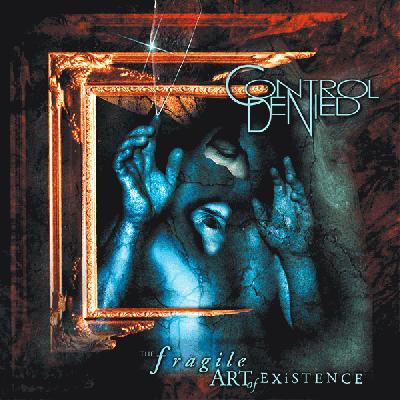
Review Summary: A disappointing and mediocre finale for one of metal's beloved deities.
For years, I believed that progressive music was a genre that couldn’t be tarnished. I had searched far and wide for a bad progressive band, but alas I came up empty handed every time, often finding more excellent acts that made the possibility of a less-than-perfect progressive band seem obsolete. King Crimson, Atheist, Tool, Opeth, Dream Theater, Cynic, Rush, Camel, Anacrusis, Coroner, Voivod, Caravan, Jose Cid, Quarteto 1111; all progressive, and, in my opinion, all magnificent bands. The genre quickly sky rocketed among myself and I finally said it; “that’s it, progressive rock is flawless.” And at the top of the progressive throne sat Chuck Schuldiner, who, despite being several years deceased, was still reigning power in my head as the frontman and guitarist of the band Death, a progressive death metal icon and the releaser of several classic metal albums both in the eyes of myself and the general metal community.
Many people often compare this albums’ sound to The Sound Of Perseverance, but this isn’t entirely true. The Fragile Art Of Existence sounds less like The Sound Of Perseverance but more like The Sound Of Perseverance’s rejected B-Sides with Jack Black on vocals. Most of the songs have questionable structure and sound like rejected The Sound Of riffs stitched together for no rhyme or reason like a Frankenstein monster made of progressive metal. Songs like “Consumed” have me scratching my head, as new riffs suddenly pop out of nowhere and play out for a few seconds before BOOM, another riff pops out of nowhere. It seems as if Chuck had dozens of unrelated riffs stored away in some drawer that he would consult whenever his mind drew blanks during the writing process of the album, only forgetting to write brief bridges to connect unrelated riffs. On top of that, many of the riffs seem recycled. “Expect The Unexpected” draws very similar comparisons to Megadeth’s “Holy Wars…The Punishment Due?” and I often find several similarities between songs on this album and other Death songs. The three-noted “1-4-3, 1-4-5” note progression from “To Forgive Is To Suffer” main riff off of The Sound Of Perseverance is used about three or four times on this album. Of the eight tracks, four of them start with open low E-sting “duhduhduhduh *pause*” on the guitars only. The basic structure for a song on this album is:
0:00 – duh duh duh duh *pause* duh duh duh
0:30 – cool riff ruined by a wailing Jack Black
0:50 – sudden WTF riff change that comes out of nowhere
1:30 – maybe chorus maybe not with cool vocals
1:55 – another sudden WTF riff change, maybe this one is the chorus?
2:20 – solo, backing riff and tempo slow down by a full 50%, mainly comprised of long echoing power chords
Repeat, end song with the chorus right on the very last word of the measure
It is clear that Chuck had a lot of trouble writing the album, as he simply did not know how to write rhythmic or melodic vocals. For years, he had only written death metal vocals, which don’t really break above or below the same octave plane. Now, the vocals were melodic and were to stretch across several octaves, and it’s clear that this was unfamiliar territory to Chuck. Many times during the songs on this album, Aymar just squeals at the highest vocal level he can possibly muster, seemingly trying to emulate Chuck on TSOP but failing miserably. Many moments such as “Expected The Unexpected” and the chorus of “Breaking The Broken” are less sung and more of a monotonous shouting that sounds offputing in a vocal genre like power metal, almost as if Slayer is trying to jam along.
Oh yah, speaking of Tim Aymar…
Alas, the riffs and song structure are not this album’s downfall, oh no. Tim Aymar is, at times, a horrendous vocalist. In tracks like “Expect The Unexpected” and “When The Link Becomes Missing”, Aymar emulates the sounds of a senile grandmother who believes she is an irate pterodactyl in pursuit of a pesky caveman. Whenever he does his high pitched metal shrieks, a Swaziland child dies of HIV. Tim Aymar’s voice sounds suitable for cheap bar venues and that’s where his voice should’ve stayed. I’ve never listened to his work with Pharaoh, but his work here makes it absolutely mindboggling to think that this man got any work on a major studio release. To be fair, Tim Aymar sounds competent and even, gasp, good when he actually sings with is clear voice. “What If…?” turns out to be the best song here because it lacks any of Aymar’s shrieking. Other tracks, such as “When The Link Becomes Missing” and the rather epic title track are tolerable because Tim sings instead of mimicking the much more talented screams of Chuck. What makes the matter worse is that Chuck himself was the original vocalist for the band but backed down in 1998 for unknown reasons. Why? Go listen to the song “Hardly A Day Goes By” with Chuck on vocals; he is an amazing singer and he could’ve made this album much easier to listen to if he were the clean vocalist, evident by the fact that his backing vocals often outshine Aymar’s leads.
In the end, is The Fragile Art Of Existence a bad album? The answer to that is a resounding no, as Chuck still shows his inhuman capabilities on the guitar, and the overall instrumentation is superb all around the board. One often complaint about this album is that Chuck doesn’t use his death metal vocals, though even if Chuck was the main vocalist and this album had the Death label on it, it would only be slightly better, still managing to be the worst Death album.
Pros:
Excellent drumming, bass, and guitars
Crystal clear production quality
“The Fragile Art Of Existence”
“What If…?”
“When The Link Becomes Missing”
Cons:
Abysmal shrieks by Tim Aymar
Repetitive song writing
Unfocused riffs and song structure
Too many WTF moments that come off as typical prog/artsy pretentiousness
“Believe”
“Cut Down”