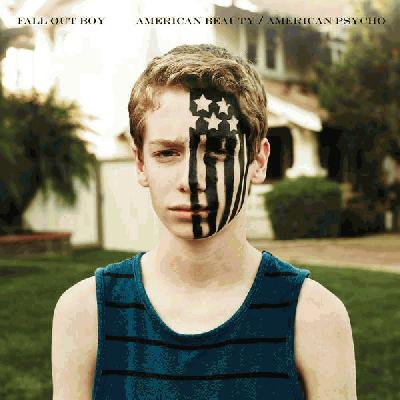
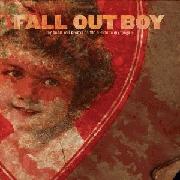
Review Summary: "We can be immortals! Immmmmmmortals!" No, Patrick. You and the boys are still far-flung from real immortality. American Beauty / American Psycho proves it.
Some have argued Chicago’s Fall Out Boy’s dominance on the airwaves -- even after its four-year hiatus -- is due to the quartet’s undeniable knack for crafting a pop tune. While such a claim about the group’s songwriting is beyond reproach, it hardly distinguishes the once-emo, pop-punk giants from the Katy Perrys, One Directions and whatever starlet the industry is pushing in a market oversaturated with acts whose music is qualitatively invariable from one another. Make no mistake, record companies have it down to a science on how churn out a hit and produce the “next big thing” with an efficiency that would make Henry Ford blush.
See, the greater music industry is not in the business of selling music. It hasn’t been for some time. Instead, record companies cater to our psychological profiles and feed our emotional desires, whether they are angst, sex appeal, hedonism or identity politics. The music is the vehicle, the Trojan Horse, by which they appeal to these unconscious desires. All of it, the songs and larger releases, are made to be instantly likeable but completely forgettable at the expense of artistic expression just to make room for the next piece of vapid psychological exploitation.
American Beauty / American Psycho simply is the next link in the long cycle of crafty emotional stimulation to make a quick buck. Sure, it’s catchy, but it’s also hollow. It’s one thing to write a pop hook; it’s another to execute it and make it memorable. Fall Out Boy has consistently botched the art since their rebirth with its sixth LP being the worst offender.
Save Rock and Roll suffered from gross overproduction that diminished the group’s strengths and elevated their flaws, but it had more stylistic cohesion.
American is schizophrenic, resorting to anything and everything in the hopes that some of it sticks as if to exclaim, “See, we’re alternative!”
Perhaps, but it’s poor alternative. The off-color version of the melody of Suzanne Vega’s “Tom’s Diner” as the cornerstone of lead single “Centuries” isn’t cool. Ripping off the riff of Dick Dale’s “Misirlou” on Pulp Fiction-referencing “Uma Thurman” doesn’t come off endearing. The Spaghetti-Western bridge of “Jet Pack Blues” feels like it's been done before. It’s all gimmicky. And
American feels like it’s a haphazard patchwork of gimmicks stitched together after frontmen Patrick Stump and Pete Wentz got inspired after late night binge-watching Quentin Tarantino films to try something else together besides jerking each other off.
The unflattering imitation does not end there either. The chorus on “Centuries” is structurally the same as “Alone Together” on
Save Rock and Roll and “A Headfirst Slide into Cooperstown” off of
Folie a Deux, as one glaring example of lazy songwriting. Moreover,
American also shamelessly recycles the same hackneyed musical tricks of the hit music trade, whether they are a “whoaooooah” or “la la,” hip-hop beat, synth and or various other electronic sound effects. They’re all there, and they all overwhelm to underwhelm.
The melodies, as accessible as they may be, are lessened in the sonic squall of everything else going on – all the unnecessary production and Stump’s unwelcome vocal gymnastics. Joe Trohman’s guitar is periphery at best, and drummer Andy Hurley is left to just keep time. No bass is audible, effectively relegating Wentz to mere lyricist. And his alleged oh, so clever words are easily missed thanks to the stifling overproduction and Stump’s overbearing delivery that frequently either sounds like he just finished chain smoking or was way too close to the recording microphone while croaking into it. Subtlety has never been Stump’s strong suit, and he bellows his lungs out to the whole album’s detriment. “Irresistible” proves very resistible and cuts like the title track, “Jet Black Blues,” “Novocaine” and “Fourth of July,” apart from the needless production theatrics, are forfeit in large part to Stump’s vocals no matter if they’re faux-rapped or sung.
American’s best moments are then unsurprisingly the ones with the most focus and restraint, when less, relatively speaking, is so much more, like with the industrial slickness on “Immortals” or the reserved opening on “Jet Pack Blues.” They also typically occur on the LP’s latter half, as
American’s front unusually has what could be called the fillerish tracks in the aforementioned opener “Irresistible” and ballad “The Kids Aren’t Alright.” Although the album progressively gets better, nothing completely escapes marring because each good idea gets cast aside for a bad one almost immediately. Jarring robotic vocals before the most satisfying and balanced chorus on the album interrupts the promising buildup on “Favorite Record.” Likewise, closer “Twin Skeletons (Hotel in NYC)” is interesting but too short, leaving a craving for more and as such, should have kicked off the whole misadventure to begin with. Alas, the most favorable summary of Fall Out Boy’s effort here is calling it a record of missed opportunities.
More accurately speaking, however, the hopelessly mediocre
American is proof that Fall Out Boy’s apparent intrepid comeback has less to do with the group’s talents than with some record company executives capitalizing on an unmet demand in the hit music market. Namely, now that the backlash against the outfit has subsided, they’re supplying nostalgia for a once-popular band while tailoring the group’s sound to charm the fresh generation of pre-teen and teenage radio listeners who recently gained access to the spending power of their parents’ wallets. That, folks, is the bare truth about a record as thinly veneered as a gilded lily can be.