The story’s been told many times before. As it should be – it’s one of the most important in rock ‘n roll folklore.
Bob Dylan had established a reputation as one of 1966’s best songwriters. The New York folk movement and the protest movement seemed to think they had an investment in him – after all, hadn’t he started out as a performer in Greenwich Village? And wasn’t every student march against the Vietnam War singing ‘Blowin’ in the Wind’ and ‘The Times They Are A-Changing’’?
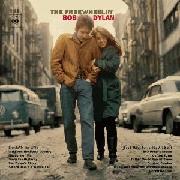
So they were a little perturbed when his 1964 album
Another Side of Bob Dylan was filled with personal songs
not discussing civil rights, freedom of equality, peace or war. However, it was nothing compared to how upset they were when Dylan cast aside his acoustic guitar – the symbol of the virtue, seriousness and credibility in folk – to plug in a Stratocaster and began to create a wild, weird-angled, skittish style of rock ‘n roll with the backing band the Hawks (soon to be American legends in their own right as The Band). Within a year,
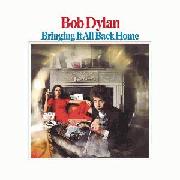
Bringing It All Back Home and
Highway 61 Revisted , two of the greatest rock albums ever, had been recorded.
Accusations of Dylan being a sell-out followed. However, those fans who are outraged didn’t boycott Dylan’s concerts on a long suffering world tour: they flocked. They applauded, pointedly, during his acoustic set, and then got indignant during his electric set. Some liked his new sound, full of wired, bumptious rhythms, tight spirals, unusual arrangements, howling vocals and wonderful lyrics with metaphor, emotion, stories and surrealism (for the decades that followed, interpreting Dylan’s lyrics would be one of the great joys of music).
However, every concert had jeers. Yells. Walk-outs. Accusations. Intimidating, synchronised clapping. Why would they go along to participate in such wanton abuse? And – here is the bigger question – why would Bob Dylan doggedly pursue this path?
“He's against everything - the last stance of someone who really doesn't want to change the world... also I think his poetry is punk. Derivative and old hat.”
Ewan MacColl may have been looking to degrade Dylan by referring to him as “punk” but nowadays the label reads like a compliment. Could it be that Dylan’s decision to go electric and then stand his ground – with the defiance, courage and absolute self-belief required – was the first punk move in popular music?
So here comes Bobby Rotten to the Manchester Free Trade Hall on May 17 1966, he and the Hawks standing together as they have done for the roller coaster ride that the last eight months have been. The Hawks know the drill: Dylan solo for the first half, then they’re on to kick start the trouble as their singer stands like a man walking the plank between them and the tense, tetchy crowd.
In truth, the acoustic set is excruciatingly dull. Dylan takes some of his greatest songs – ‘Visions of Johanna’, ‘Just Like A Woman’, ‘Desolation Row’, ‘It’s All Over Now, Baby Blue’ and ‘Mr Tambourine Man’ is a list that would make any fan drool – and moves through them with his drowsiest vocals and a flat line of chords. However, whether he means it or not, there is something telling about how unsatisfying these seven performances are: all bar ‘Baby Blue’ have additional instruments in their studio recordings. Clearly, the folk standard of one voice, one guitar and one microphone can’t support Dylan’s new songs.
History has been romantic to the point of presumptuous to this Manchurian crowd. Indeed, if you didn’t know the show’s context, you’d call them impatient rather than morally outraged. Applause does, after all, follow every electric song. The synchronised clapping, jeering and name-calling only starts when Dylan is slow moving between songs.
To that end, Dylan can hardly be called an innocent victim. There are times when he seemingly wants the fight. He gives a whimsical blow on his harmonica in his introduction of ‘I Don’t Believe You (She Acts Like We Never Have Met)’, then sneers, “It used to be like that, and now it goes like
this….”
His song list could be construed as a thinly veiled middle-finger to all those roars of disapproval. ‘Tell Me, Momma’, ‘I Don’t Believe You’ and the Eris von Schmidt cover ‘Baby, Let Me Follow You Down’ are biting, exciting and explosively detailed but also explicitly frustrated, lusty and angry. Something always overlooked is that Dylan is at the peak of his vocal powers during the electric set - his nasal, searing howl “Tearing up your MOOOOOUUUUTHH” is as anarchic as Robbie Robertson’s sharp guitar notes or Levon Helm and Rick Danko's bumptious rhythms.
Then there’s his run home: ‘One Too Many Mornings’, an old favourite from his most folk-protest album
The Times They Are A-Changin’ , is fully electrified in a fleshed out, soaring performance. Then it’s on to a sweltering, glowering rendition of the straight-bashing ‘Ballad of a Thin Man’ with the scariest piano riff in rock – Dylan has never leered “Something is happening here, and you don’t know what it is” with greater venom. It’s with these final songs that things
really get tense – the incomprehensible yelling is all the bitterer, the clapping briefer and more begrudging.
So when Keith Butler charges the lines to yell “Judas!”, accusing Dylan of the worst kind of treachery, and the crowd bursts into angry, malevolent cheers, surely the musician has to call it a day. After all, how can he make any supplier make a living if he keeps alienating his customers? Why go through all this terrible physical and mental stress?
Here’s the thing: Bob Dylan may be a genius, but he’s a genius who is entirely dependent on his genius. He felt the need to break new ground and dodge the tag of ‘folk musician’ and ‘protest singer’. He felt he had new styles and inspirations to embrace. He felt he had to run with his instincts or risk losing them. What’s the saying? Your greatest weakness is an excess of your greatest strength.
So Dylan begins strumming his guitar and crows, “I don’t believe you”, like some cowboy who has just kicked down the saloon doors. “You’re a liar!”
Those chords gather momentum, sounding almost triumphant, as he declares to the Hawks, “Play it
***ing loud!”
Levon Helm fires off the opening snare salvo and suddenly ‘Like A Rolling Stone’ – the masterpiece that gleefully derides the Miss Lonely who cannot accept that she has lost control and that things will never, ever be the same – is cascading with total abandon over the audience. In this version, the audience is Miss Lonely and Dylan is the Napoleon in rags. “You’re invisible now, you got no secrets to conceal: HOW DOES IT FEEL?!”
Manchester was effectively the last stand for this Dylan incarnation. The world tour ended, the exhaustion took its toll and then he turned upside down on a motorbike. He wouldn’t fully align his genius for a long, long time and wouldn’t do an album resembling rock ‘n roll until 2006’s
Modern Times. So make no mistake – when Dylan finally calls it a day, people will look to this concert and all its context and say, “There. That’s what made that cat the greatest.”