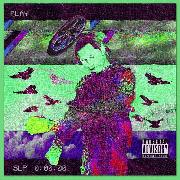
Review Summary: An underground rap gem worthy of unearthing.
Rap is a dangerous game, but it's a game worth playing in terms of getting a positive message sent across the world. While many rappers often brag about guns and car chases, their real passion lies within their community. Most great rap music stems from the bonds that artists have made over the years and, most importantly, the lives that have been taken away from them too early thanks to racism, lies and manipulation within the system. Throughout
Nostalgic 64 lingers a foreboding sense of anger that is aimed towards these type of wrong doings, the most memorable crime as of late being the one involving Treyvon Martin (who went to school with Denzel Curry in Carol City, Florida), and his death at the hands of George Zimmerman. This tragic event not only affected this album's artist, but also left an entire community devastated, firing-up various protests and chants of justice in response. At the shocking age of 19, and only 18 by the time this album was in-production, Denzel Curry steps up to the rap game like a long-time veteran, delivering an energetic and thoroughly-inspired record along the way.
Among the most inspired tracks on the record,
"Dark and Violent" erupts in the midst of the album. Fuelled by fiery rage and immediately bringing to mind a song like
"Thug Luv" - from Bone Thugs-N-Harmony - it features an ominous, unsettling atmosphere which is further powered by the impending threat of gunshots interspersed throughout the melody. Telling various tales of battle-hardened people born-and-raised in the harshest of times, where crime seems like the only resolution, what makes the song extraordinary is the way it suddenly shifts gears during its second half. When it suddenly changes tempo, gets rid of the bullet shots and closes with a great verse from J.K. the Rapper, you'd think that the track would be leading into the next one on the record. But no. Instead, the halfway point shifts gears and leads into a phenomenal guest verse from Nell, after a fantastic interlude - describing an armed robbery - that dramatically leads into the sudden change-up. The song is easily among the best of the bunch, but the remaining numbers retain such a consistent quality therein that unravelling a definitive stand-out is a genuine challenge.
For instance,
"Like Me" is particularly memorable thanks to a soulful guest-spot, courtesy of Steven A. Clark, along with a brilliant guitar-solo that comes out of nowhere to close out the track. Clearly the album is a master at being unexpected, and while some lyrics may be typical of most modern rap at times (often boasting about guns, smoking weed and evading the police), some lyrics are very detailed, even haunting at times, and the relentless rhythmic flow from Denzel make this album a breeze to listen to from beginning-to-end. Speaking of haunting though,
"Mystical Virus Pt. 3: The Scream" opens up with a woman's distorted, disturbing scream repeating in the background before Denzel steps in and raps about the
"fetus of a demon" being incapable of dying. It's a bizarre track, to say the least, and the chorus is genuinely creepy, blustering the lines
"and now that n!@#$ screams like he's Sindel / yelling suicide in his prison cell / running with them demons since the age of 12 / life's never a game / watch him cut his vein". While that song may leave you shaken to the bone, thankfully Curry can switch tones on a dime, as evident on the next track, and make it totally work in relation to the rest of the record.
"Widescreen" starts off with some hazy, hilarious banter between Denzel and his friends as he describes how he thinks that he's about to die after smoking a seemingly laced batch of weed, but then gets the ball rolling with some head-banging beats and a catchy chorus:
"Can you see what I see? / Look at life in 3D". Enough variety with these tracks - such as minor interludes and a variety of guest verses - help to maintain intrigue throughout this record. The constant, subtle shifts in melody, tone and pacing aid in making each track stand on their own amongst a sea of great songs, all while feeling fresh thanks to the sheer energy that is constantly on-display from Denzel and his production team. A track like
"Benz" could have been an easy skip had it not been for the amazing production backing it. For instance, during the track's course, instead of using a word like
"wolf", the team skillfully fill-in that gap with a
dog's bark, which subtly allows the audience to gain a chuckle or two from the cockiness on-display throughout this boastful, extremely entertaining guilty-pleasure. In terms of the lead singles,
"Zone 3" and
"Threatz" equally and expertly use sound effects to their advantage, keeping things fresh and lively; such as when Denzel says
"swerve", during
"Zone 3", and you can actually hear a car in the background
swerving past in response (very subtle, but it helps steer the replay value of this album to an absolute maximum in the process).
Going for the catchiest of beats is what this album gets right 100% of the way. The rhymes here are fast and smooth, while the production compliments them nicely. The record is a trippy, drug-induced dive into Denzel Curry's physique and it's a powerful, energizing ride all-around. Mixing in crucial topics throughout, such as a news report based around the aftermath of Treyvon Martin's murder (set in the midst of
"N64"), the album is a constant adventure from start-to-finish. Profanity-laced and unrelenting, Denzel Curry delivers a gangster-rap masterpiece with
Nostalgic 64, an album that not only honours similar artists of the 90s (most notably 2Pac, Curry's main inspiration), but easily cements itself as a classic of the genre in hindsight thanks to the level of confidence on-display throughout.