Review Summary: A prince is born
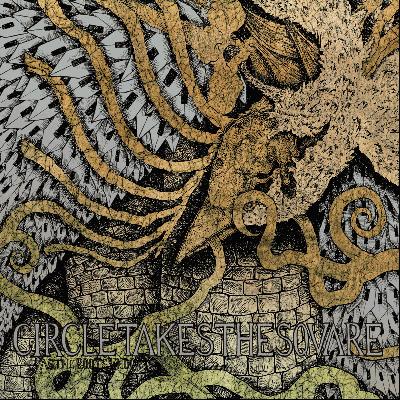
Screamo is a genre of spiralling intensity as it is, so the disarray of noise added by (at the time) four piece Circle Takes the Square pretty much tips the scales in the favour of complete chaos. The dual vocal attack is the principle of their approach, providing a narration so intense that repeated listens are a requirement to prize apart the strands of lyrically dense distortion. This isn’t by any means an easy album to listen to, setting itself apart from its peers by lacking a distinctive melody until quite far into blazing opener ‘Same Shade of Concrete’. There’s moments of calm, quiet even, and the bands implementation of these breaks are as key to
As the Roots Undo’s success as the female/male perspective. This album is so vocally intense that when they vanish, even momentarily, the record feels comparatively empty.
‘Concrete’ has everything you could need from a screamo opus. The dub interlude meshes with the spoken word so excellently that the insanity before feels like a mere blip on a vast radar encompassing so many antitheses that the entire album feels like one gigantic contradiction. The singing, squawking and roaring that coats every inch of this sprawling metropolis. The glossy sheen gives even the raw, pummelling percussion of ‘Crowquill’ a new life as a riff leviathan, bolstered by drew Speziales throaty growls and Kathleen Stubeleks sharp tongue-lashes. Their harmonies are the best part of ‘In the Nervous Light of Sunday’, as both vocalists go completely off the rails with Speziales cracking shrieks and Stubeleks dulcet tones. The climax of this track sees drummer Caleb Collins unveil his best work yet, segueing into a dissonant piano and providing the set piece for ‘Interview at the Ruins’, a track that epitomizes the bizarreness of ‘As The Roots Undo’ better than any other.
It’s here, as well as on ‘Non Objective Portrait of Karma’ that things take a turn for the worse. The first three minutes or so are a bit of a bore, and although things pick up with the arrival of the rollicking guitars lending the album yet another anthemic moment. After this point, things don’t really change all that much. ‘Kill the Switch’ is by far the longest song, cramming almost all of the aforementioned elements into a true epic, while closer ‘A Crater to Cough In’ is possibly the weakest moment here. Relying solely on melancholy to make an impact, even its finer moments are worse than any other song here, but after such a dazzling array of songs it would’ve been nigh on impossible to keep up the previous standard.