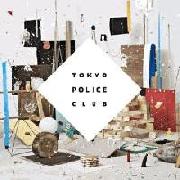
Review Summary: More of the same, and just a little more.
It’s difficult to find a band to compare to Tokyo Police Club. No other acts utilize funky synthesizers with bouncy guitar, unusual beats and youthful vocals quite the same. Not much changes with their third album, except that it is more solid top-to-bottom, and most of the tracks on
Forcefield seemingly try to be more radio-friendly than anything else they’ve done. First single “Hot Tonight” has a chorus that would fit on any pop station in the world if it didn’t know that it was sandwiched between clever, half-whispered verses (whose lyrics still fit the necessary radio trend). You might also find “Beaches” on your local indie/alternative radio station if only its lyrics were more generic to fit a radio audience. As it is, “Beaches” has a fun chorus and a cheesy charm created by the unique delivery of vocalist David Monks. Treading old ground (albeit spanning the full spectrum of what they’ve done before), Tokyo Police Club barely experiment at all in
Forcefield, but when unique style meets improvement through technical development, there’s only one scale to measure on.
Forcefield would feel incomplete if it wasn’t for the three-part opener “Argentina,” which is as experimental as the group gets. While Parts Two and Three have respectable pace changes from standard Tokyo Police Club technique, it's Part One that shows the band at their energetic, lyrical best. Part One is both witty and sappy with Monks proclaiming “When you smile, you smile with all your teeth at once,” before later adding “And when you smile with all your teeth, yeah I’m done.” The instrumentation powers Monks’ voice forward and creates the most flawless union of the two that the band has ever done. Parts Two and Three add to the idea that the group's songwriting is improving, with a fun guitar hook playing over Monks proclaiming "But I was a lover, and I could see it clear." Nostalgic, cheery, and clocking in at nearly nine minutes, “Argentina” in its entirety could be Tokyo Police Club’s best track from an artistic perspective.
In “Tunnel Vision,” Monks sings of not looking past tonight specifically, and it’s no coincidence that all the members of the band might be thirty by the time they finish their next album. With growing up in the back of their minds, the band sounds somehow not older, only more mature. So exists “Toy Guns,” which intentionally or not, is a politically relevant, cleverly-written anthem made more powerful by the recent shooting of a twelve year-old in Cleveland for pulling out a BB gun by a cop. “When every other kid on the block has a shotgun, I never know the difference between the toys and the real ones,” proclaims Monks over a hooky jingle that only Tokyo Police Club could pull off, and it’s scary how close that line is to a real-life tragedy. While “Toy Guns” might not be intentionally political, it remains a reflection on violence in youth, a heavy subject nonetheless.
In
Forcefield is the belief that growing old and focusing on the future is a scary prospect. The members of Tokyo Police Club are all still in their twenties, and they don't want to leave them anytime soon. Monks claims that the name Forcefield came to be when the band decided to shut out everything else and make the music they wanted to. Thanks to this method, the band haven’t sacrificed any of their youthful sound to attain maturity, and in the safety of their forcefield, it seems no one can make them. Tokyo Police Club remain on the verge of releasing something incredible but are too scared to travel far out of their comfort zone to create it. However, with the track-by-track improvement made in
Forcefield, the writing prowess that scripted "Argentina," and the eventual realization that their twenties are fading, their tunnel vision could give way to something amazing.