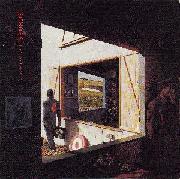
Review Summary: Life is but a dream, drifting down the endless stream.
Perhaps no music announcement this year was more unexpected and shocking than the news of Pink Floyd releasing their first (and likely last) album in 20 years. I remember being in Cardiff when it happened, that same night heading to a nearby pub only to find half the patrons there throwing the band's name around like dynamite. So right off the bat, expectations are immediately high. For one of the most undeniably influential bands of the 20th century, this could be either really great, of really disastrous, right? Seeing as one member is dead, and another doesn't seem to have any interest in being associated with Floyd as a band altogether anymore, you'd think it's just Dave and Nick, and two other random guys. Turns out that isn't the case; it's the completion of a junked follow-up to their 1994 opus
The Division Bell, originally titled
The Big Spliff, with original recordings from the 1993 sessions by Richard Wright being used, and the album being completed for Richard. That seems like just as good a reason as any for a new release, but is it necessary? As good as it is to have Floyd back, and as good as this album is, I'm still asking myself that question.
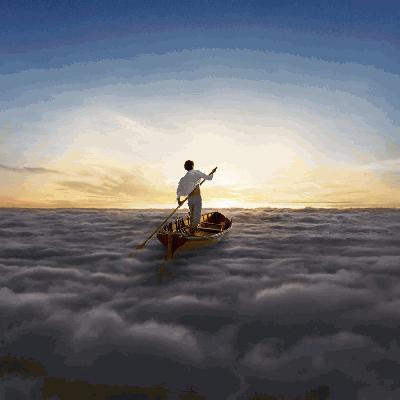
The Endless River can be considered both a return to Floyd's signature sound and a new direction. Of all the tracks on the album, only one has lyrics, and while that may shock you and put you off, the music itself does a lot of the talking, as always. Much of the album is focused on the band's more ambient side, though the album does have its outbursts of upbeat. The album is divided into "sides", with only one real "song" ("Louder than Words"). The best parts from the album come mostly from sides 1, 2, and 4- where the band focus on the ethereal and ambient sounds that have made them who they are and take it in a newer direction. Which is ultimately the biggest flaw with this album: the shout-outs to the past and the more "retro" bits are the worst bits. Though the two tracks named "ALLONS-Y" are thrillingly nostalgic and reminiscent of
The Wall, they seem thrown in there to remind us that we're listening to Pink Floyd, and it feels rather gratuitous. In fact, I can safely say that most of the "filler" comes from Side 3. Only "Talkin' Hawkin'" seems to really stand out, as its Mars Volta-esque bass melody draws the movement to a conclusion more satisfying to what came before it. But all is forgiven when you consider the material surrounding Side 3 are the true standouts; "Anisina" is a slow, jaunty piano-dominant piece that shows just how keen Floyd's ear for a truly pretty melody really is, "Sum" is a truly intense build-up track that is just as subtle as it is thunderous, and "Calling" shows Floyd's more serious side, with a refreshing modern twist.
The final track on the album is another flaw; "Louder Than Words" is a song that sounds stuck in the 90s. And while it's lyrics are a beautiful reminder of what it's like to be in a band (the exhaustively recycled "bitch/fight/diss/but this thing we do, man." line in particular), its arrangement is problematic as its chorus is distractingly dissonant to the verses, and in general the song itself just sounds half finished. And as mentioned, seeing as the songs before it did a beautiful job at saying lots without any words at all, it feels a little gratuitous to have a song with lyrics. But at the end of the day, the closing sentiment heard on the album couldn't be truer: "This thing we do, it's louder than words." And the song notwithstanding, this album is a beautiful reminder of Floyd's amazing career has brought us over the course of many decades. And thankfully, this album's highs are enough to make up for its rare, but inevitable lows. If you don't expect
The Division Bell redux, you'll enjoy this album greatly, and find many things about it to label a modern classic. While it may not be the ideal end to Floyd's career, it ultimately is a good way to cap off half a century of amazing music.