Review Summary: Emily Dickinson on Williamsburg streets.
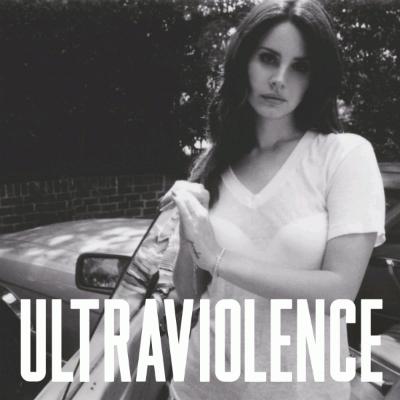
It’s rare to find a musician as mainstream as Lana Del Rey whose music is as anti-obstreperous as it is. In a musical climate that favors sound and excess over pure musicality more each year, the fact that Del Rey’s music is as global and popular as it is makes for something remarkable. Her trademark sound is quiet, reserved, and morose in comparison to her contemporaries, and is unique to her and her alone. Now, two years after her wildly popular sophomore LP Paradise, she returns with Ultraviolence, an excursion in minimalism, evocation, and ambience that is her best work to date. Continuing her previous style of recumbent dreamy pop music, Ultraviolence ditches the previous mediocre attempts at incorporating hip hop and “streetness” into her sound, and is fully devoted to a sullen and somber sound that suits her voice and style.
Every track on Ultraviolence has this same hazy and blurred sound to it, which evokes images of sun stained old footage recorded in 1960’s Newport. There are elements of 50’s pop standards, jazz, and indie rock that meld each track into a sometimes stunning array of near grim trance. Previous records had moments like this, in spurts and flickers, but the entirety of Ultraviolence is just that. “Cruel World” and “Shades of Cool” are standout tracks, with heavy focus on ambience and a sense of sadness, mystery, and mood that pop music very rarely delivers, if not ever on this sort of level. “Shades of Cool” has an early James Bond film sound to it, with this guitar flanger led riff I feel would lead to the famous openings of the films. To offset mundanity, elements of symphonic instrumentation are added too, on songs such as the title track “Ultraviolence” and “Old Money”, which melds lush minimalism and striking orchestration to create something extremely satisfying in structure and sound.
Lyrically, the themes explored on Ultraviolence can be seen as shallow or hollow in topic, but for an artist such as Lana Del Rey, they seem to come from some sort of personal standpoint that lends greatly to the cause of authentication rather than just parlaying. “Old Money” makes obvious references to her affluent upbringing in New York City, with lines such as “Where have you been, Where did you go?, Those summer nights seem long ago, and so is the girl you used to call, the queen of New York City.” On the contrary, a track such as “***ed My Way To The Top” is more blunt in the expression of the not so secret dark side of the music industry, a game Lana Del Rey played and seems to have enjoyed. However, as a lyricist she has certainly moved further away from the fantastical fake image of fugitive gangster to a more believable one, that encompasses heartbreak, desire, and lust. As a result, the songs feel believable and contrite rather than bluffed and concocted.
Ultraviolence is an acquired taste, one that comes without previous preference. If you are not a fan of Lana Del Rey, you will certainly not enjoy this LP as much as I did. If you’re willing to see an artist in progression, from feigning style to producing music that suits them and is refreshing, than Ultraviolence is for you. She delivers her best vocal performance to date on this LP, with her vocals far surpassing anything she had previously done, and the instrumentation laying deeply rooted in a somber indie rock haze fest you are bound to not find anywhere else. Pop music is a very tricky label, that comes with many preconceived notions. Lana Del Rey and her music break many of these, and in style nonetheless.