Nick Drake totally refused to play the game. Live performances were short and rare with little crowd banter, he left no film footage of himself, performing or otherwise, and interviews and promotion of his records were almost completely out of the question. In an age when radio play and label promotion were vital to commercial success, when stories of executives bribing radio promoters with drugs, cash, and TVs Ã* la Kiss were common, this unwillingness to cooperate was damning. Whether Drake’s behavior is attributable to his depression or to an ideological position is unclear. The point is, Nick Drake stacked the deck against himself. He set himself up to fail.
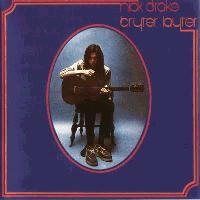
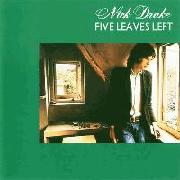
Listening to Bryter Layter wouldn’t clue you in on any of that. Bryter Layter is, by far, Drake’s most commercial record (absolutely not a bad thing), and is often characterized as a direct response to the lukewarm commercial and critical reception of its predecessor, Five Leaves Left. And it certainly feels that way. While Five Leaves Left was criticized by NME for having “not nearly enough variety to make it entertaining”, Bryter Layter progresses with a narrative familiar to anyone familiar with AOR: begin with an instrumental overture called “Introduction”, proceed into a catchy, rock-ish track (“Hazey Jane II”, a song that honestly wouldn’t feel too out of place on a Nilsson record), and then fill out the rest of the record with plenty of dynamic variation, lavish production, and an instrumental interlude here and there.
Bryter Layter’s production is certainly its most immediately striking feature, particularly for those fans who came to Nick Drake via Pink Moon. Not at all a pared down record, it features choral and string accompaniments, jazzy piano (check out the totally lovely piano line on “One of These Things First”) and saxophone, and, most importantly, plenty of drums. Indeed, it is the drums that spring most immediately to mind when I think about Bryter Layter: the rollicking double time of “Hazey Jane II”, the brushed cymbals of “At the Chime of a City Clock”, the jazzy snare clicks of “Poor Boy”. This is Nick Drake at his most polished and pop-friendly. But please, don’t think that he’s succumbed to the peril of overproduction, hiding himself behind a wall of sound. Like Five Leaves Left and Pink Moon, Nick Drake’s voice and beautiful guitar work are at the center of Bryter Layter, albeit augmented by new instruments and influences.
Mirroring the significantly more cosmopolitan production, the lyrical content of Bryter Layter is far more urban and character-oriented than Five Leaves Left or Pink Moon. While Five Leaves Left used a “river man” and an isolated “man in a shed” as referents, Bryter Layter evokes city clocks, signposts, and Hazey Jane, a girl worried about “what will happen in the morning when the world gets so crowded that [she] can’t look out the window in the morning.” It’s at best an ambivalent portrait of the city; for every lovely streetcar by the bay, there is a poor boy.
It’s hard to resist the temptation to hear Bryter Layter, particularly the miserable parts, as autobiographical, to cast Drake as the “poor boy” who feels so constricted by the city and machinations of an industry whose practices he wanted no part of. Given his biography, it’s likely a perfectly viable interpretation, though to me it feels somehow unsatisfying. Perhaps the point is moot. Regardless of lyrical meaning, Bryter Layter is a thoughtful and deep folk-pop album, one that displays Nick Drake’s unexpected talent for catchy and eminently re-listenable songcraft. An essential addition to the catalog of one of folk’s essential stars.