|
| |
|
|
|
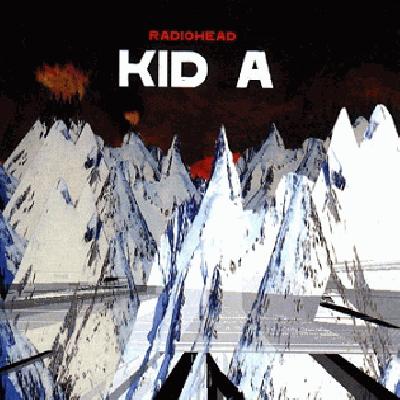
Review Summary: Disjointed, cacophonous blends of sound somehow come out sounding beautiful. Kid A is a somewhat polarizing album. Upon its release in the year 2000, people were caught off guard by the electonics after expecting a more rock-oriented follow up to the commonly-regarded masterpiece of OK Computer; some of them embraced the sound as daringly artistic and others rejected it as electronic noodling and selling out the core of the bands sound in order to be seen as different. Over time, however, the album has become more warmly regarded as something of a classic, with some even saying it rivals its predecessor. Meanwhile, Radiohead have continued to mix heavy electronics into their sound, with mixed results over subsequent releases, and Thom Yorke has embodied this change over time by growing a beard and long hair. I'm pretty sure that's why he did that....absolutely.
Luckily, I missed out on the release of OK Computer and Kid A, and all of the bands back catalogue for that matter, until within the past year. I knew nothing of the mythos of OK Computer being considered the 90's equivalent of Dark Side of the Moon, or The Bends exemplifying the band's particular brand of rock, or of the tantalizingly controversial Kid A. I was a fan of Jeff Buckley, and was just getting immersed into the vast world of electronic music via one Aphex Twin, and heard Radiohead's Kid A was strongly influenced by the latter while the band was influenced initially by the former in the 90's, and like the foolish, naive person I am, dove straight into the album that has become what it is today.
The first thing worth saying is that this album is more of a grower. Listening to it once is fine and dandy, but there's a high chance of missing the subtlety in the songs, and hence not getting as much out of it. From the opening bars of the song Everything in its Right Place, we're brought into this soundscape that the band constructed almost exclusively with computers. The lyrics are less fleshed out and more like sketches, as though whenever Thom felt a particular emotion he jotted down what was on his mind and cobbled it into the songs. This gives a very disjointed feel, which paints the picture of the feeling behind the music more accurately than any passage of pretty poetry could.
It should be said that Radiohead doing electronic is not like U2 attempting hip-hop. The band are very skilled at it, as much as they are with their regular instruments, and the electronics are a wonder to listen to, comparable to the best electronic artists I've heard. The variety of styles used (shout-out to Treefingers, inserting a drone piece was nothing if not bold) is impressively well-handled, and it only adds to the great atmosphere of the whole album. That said, it wasn't particularly out of line with the band's past releases, or at least not as much as the negative press made it out to be. Radiohead's production was quite electronic-heavy going back to The Bends, with odd effects frequently being employed to add to the core of the band's sound marked by typical rock instruments. Kid A can be seen as something of a reversal in which the rock instruments are supplemental to the electronics, which wasn't nearly as out of place as, say, Jeff Mangum doing a Bulgarian folk album for his own amusement.
As much as the atmosphere contributes to the album, I'd like to give a special mention to the title track, How to Disappear Completely (And Never Be Found), and Optimistic. These songs all stand on their own and are among the band's best songs, with the previous two being in this one's humble opinion among the most beautiful songs ever recorded. How to Disappear Completely may be the single most profound description of dealing with stress while depressed in rock, and the biting sarcasm and irony of Optimistic clash deliciously with the absurd up-beatness of the track; as much as the whole album succeeds, it simply doesn't surpass these songs.
The album is tremendous, no doubt. But it's not perfect. Not by a lot, actually. The aforementioned lack of cohesiveness and disjointedness works at times, but sometimes leaves you wishing for tighter songwriting. The sonic experimentation may sound good, or even great, but the songs under them are a little bare at times. When stretched to the length of a whole song, it starts to drag a little and become hard to listen to without your hand itching for the skip key. The National Anthem was a great idea for a song, and the band nearly pulled it off, but I'm not going to pretend it didn't start to lose it's grip after a couple of minutes, and tracks like In Limbo and Motion Picture Soundtrack just didn't have the same power as the others. In addition, Thom Yorke is something of a one-trick pony as a singer, so enjoyment of his singing depends strongly on how much one likes his voice. But overall, while I understand the polarization of the music, it never particularly bothered nor influenced me, and I loved the album anyway. Highly recommended for anyone who likes electronic music, or experimental rock, but perhaps needs a bit of buffering for people who aren't used to the general style.
| other reviews of this album |
Med57 EMERITUS (5)
...
Knott- EMERITUS (5)
This is really happening. This is really happening....
thebhoy (5)
Everything In Its Right Place: Looking at Kid A at the End of the Decade...
Electric City (5)
...
IronGiant (5)
I'm lost at sea...
fluid in its most purist form. always drenched in an undeniable regal divinity. (4.5)
The soundtrack to an era...
barcafan21 (4)
Radiohead gives the middle finger to commercialism, producing a mostly brilliant, albeit c...
Wildcatforever (5)
...
fershizzle (5)
Kid A is a dark, paranoid and disturbing album, plucked from the annals of Thom Yorke’s ...
hastapura (5)
Kid A is a strange album, certainly unprecedented in Radiohead's discography. But if you c...
HolidayKirk (5)
For Tomorrow: A Guide to Contemporary British Music, 1988-2013 (Part 49)...
ednights (4.5)
At the least their most important album...
Nick Mongiardo (5)
I'm not here......
avonbarksdale221 (5)
I will see you in the next life....
jtswope (5)
Kid A marks a revolutionary phase in the band's career, implementing electronic soundscape...
Killtacular (4)
...
Zettel (2.5)
A turning point in Radiohead's career, "Kid A" was more shocking than a solid piece of mus...
DarthMann (5)
'Cut the kids in half.'...
tribestros (5)
Cold, harsh, and bitter sometimes makes an amazing album....
AndrewKaster (5)
This is not the band that recorded "Creep" almost a decade ago. Guitars are child's play, ...
RavenRock (5)
I think you're craaaaazyyyyyyyy..... mayyyyyybeeeeeeee.......
CaliggyJack (4.5)
TyHoEuREj IusS A TtRneeUTdH OtoUT TloHEoRkE...
Herbie Chrost (2.5)
"We're not scaremongering, this is really happening"...
pizzamachine (2)
Barely music....
ocelot-05 (5)
...
SucksxAtxReviewing (4.5)
Weird noises that just make sense...
ValenDreth (4.5)
Radiohead enrich our lives with dazzling soundscapes. The high priest clowns of rock pull ...
JefferyBigglestein2 (2)
Mid....
ferociouslettuce (2)
Underwhelming...
crandynewman (1)
Have you ever had a splitting migraine before, that's this album....
doctorjimmy (4.5)
The best Radiohead album so far...
shauryapatel (5)
WHAT IS THIS REALLY RADIOHEAD! Well ya it is and they sound better than ever...
|
Album Rating: 4.5
nice
| | | Album Rating: 4.5
You sir, deserve respect for 2 things. Your name and the fact you gave this the same rating as me
| | | Album Rating: 5.0
Nice review dude, even though it's not a 5 I pos'd.
"The first thing worth saying is that this album is more of a grower. Listening to it once is fine and dandy, but there's a high chance of missing the subtlety in the songs, and hence not getting as much out of it."
I like your reasoning here, but personally I disagree. For me, this was the quickest 5 I've ever given an album in my life.
| | | Album Rating: 5.0
Also the mere fact that you mentioned Jeff Mangum in a Radiohead review is pos-worthy.
| | | Album Rating: 4.5
Thanks Judio, and it's cool if you loved it after one go, it's just for me I guess it took maybe 2 or 3 before I really loved the whole thing.
Apparently it's a thing, the Bulgarian folk-music/Jeff Mangum thing. I read in an interview somewhere that he recorded a bunch of those songs just for him with no plans for an actual release.
| | | Album Rating: 4.5
Nice work, man! This is my fave Radiohead album along with Ok Computer... I love how much the band experimented with their sound here. Plus, the whole vibe is so depressing and yet so mesmerizing. Great stuff
| | | Album Rating: 5.0
Great review man. It's funny, your first couple of lines I actually said in my review. Not word for word but it was said hmmm.
Jk jk ;) pos
| | | Album Rating: 5.0
@Mike: Understandable. Although for me OK Computer was a huge grower, took a few months before I could
actually get into it.
And now I really want to hear what those sounded like. I'd pay way too much to get my hands on some
recordings of Jeff belting out some sweet Bulgarian folk tunes.
| | | Album Rating: 5.0
"Great review man. It's funny, your first couple of lines I actually said in my review. Not word for
word but it was said hmmm."
Dammit mike192, stop plagiarizing Mongi's masterpiece!
| | | Album Rating: 4.5
Haha thanks Mongi123, and meaning no offence but I didn't read any other reviews of the album before writing mine :0
| | | Album Rating: 5.0
Lol I'm just kidding man, this was great work. I fucking love this album.
| | | Album Rating: 3.5
It's very possible you both read a similar professional review since there are many of those. Ideas
stick to the brain.
| | |
damn did we need another radiohead review
| | | Album Rating: 4.5
Judio, OK Computer was a huge grower for me as well. Actually that took like a year of sporadic listening before it 'clicked' or whatever, and it hit me like a ton of bricks when it did. Oddly enough, I loved The Bends after one listen.
| | | Album Rating: 5.0
How To Disappear Completely is a masterful song. Good review.
| | | Album Rating: 5.0
@friday oh boy, there are many. Oddly enough I haven't read a lot of these either haha
| | | Album Rating: 5.0
I know this is blasphemous but I still have to check The Bends.
| | |
what are you reviewing next, mike? master of puppets? sweet, looking forward to it :D
| | | Album Rating: 4.5
The Bends is super solid, very easy to enjoy. It lacks the depth lyrically of their future stuff, but musically is just as good and if anything the hooks are even better.
How to Disappear Completely and the title track are among my favorite songs ever. No idea why they work so well for me, but that's the way the cookie crumbles
| | | Album Rating: 4.5
I was actually thinking of reviewing Master of Puppets so there would be a staff review for it
| | | |
|
| |