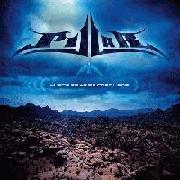
Review Summary: Only worth a listen for those that really, really love Pillar's game.
It seems that in the world of radio-ready hard rock, no musical growth goes unpunished. See: Pillar's
The Reckoning, which took the band in a direction that, while not always successful its achievement, was at least reasonably ambitious in its aim. Fans apparently did not take kindly to Pillar's unusual blend of southern rock, punk, and powerpop, and thus Pillar followed the record by doing the worst thing possible: by listening to them.
The problem is that the group clearly went straight back to
Where Do We Go From Here? for inspiration, not realizing that only one such album was as far as they needed to go. There's room in every accomplished rock band's discography for an unabashed, straightforward rocker, but in Pillar's case, there is no room for two (or three, but who's counting?). The result is an album that ticks all the boxes for a
WDWGFH Part Deux without even rising to the occasion with equivalent musicality or lyricism.
The sole redeeming quality here, as is true with
WDWGFH, is the graceful chemistry between guitarist Noah Henson and drummer Lester Estelle Jr. This is most evident in the opening title track, which contains some impressively well-constructed riffs and beats that carry the song capably. It's still baseball-walkout fodder, but at least it's
good baseball-walkout fodder, and the same can be said of "State of Emergency," where Estelle truly shines amid what could have been a painfully average post-grunge rocker.
There is little positive left to say of the rest of
For The Love Of The Game, however. Straight-to-pep-rally numbers "Reckless Youth" and "Throwdown" have Beckley and Co. sounding like a bunch of angsty varsity football players that didn't get the memo that adulthood came long ago, and "Turn It Up" is a nonsensical party-rocker incorporating the names of a bunch of Christian contemporary albums in some loose and meaningless narrative. "Smiling Down" is the obligatory ballad, and "Fading Away" is the equally obligatory duet with a very average female vocalist. The rest of what is on offer is largely forgettable, but at least "Forever Starts Now" channels some of
The Reckoning's energy with modest success to close the album.
The album cover depicts an abandoned, desolate Coliseum, and I can hardly think of a more fitting image: while Pillar might have been on top of their (admittedly derivative) game with
Where Do We Go From Here,
For The Love Of The Game shows a band whose inspiration and creativity has long since dried up. For the listener who thinks "Frontline" is the end-all and be-all of rock and roll,
FTLOTG should have a fair amount of appeal, but for everyone else, it's nothing more than an unfortunate reminder that Pillar needs a new game to play.