Review Summary: “They mad cuz they can’t stop me, cuz I said ‘fuck swag, I got moxie.'”
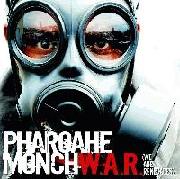
Pharoahe Monch is a veteran emcee from Queens, New York who has been active since 1987. Best known by his feature in the hit 2001 song “Oh No” featuring Nate Dogg and Mos Def, Monch still is widely considered one of the best underground artists in hip hop history. On the recent track “Rap God” Eminem made a reference to Pharoahe Monch being king of underground hip hop, and it is no secret that his first three albums are underground gold that display lyrical content and craftiness at its finest. Yet in recent years Monch’s notoriety has fallen and so has his critical acclaim. His last album
W.A.R. alienated much of his fan base by being so politically charged and by featuring less emphasis on the sound of the music.
In
P.T.S.D. Pharoahe relates dealing with the tragedies in his past to a common disorder experienced by soldiers (especially US troops in Iraq and Afghanistan) after returning from war. He does so by experimenting with higher tech sound equipment and effortlessly blending in his unrelenting passion for both substantial content and witty lyricism. His style on
P.T.S.D. is somewhat reminiscent of Brooklyn emcee El-P, or even to Del the Funky Homosapien on
Deltron 3030. It's science fiction with references to how spectacularly deceptive and brutal real life is, told in an unapologetic braggadocio battle-rap tone. While the production falls short of the aforementioned albums, the uniqueness of the album lies in its creativity and craft. One of the best examples is the track
Damage , where Pharoahe takes the perspective of a murderous psychopath:
“Fuck a stray bullet, I take aim when the gun draws
For ever lasting fame I will maim those who change the gun laws”
The quote above is a good demonstration of Pharoahe’s biggest strength: he is able to mix complex rhyme schemes and flows with well-thought and deep messages. Perhaps the wittiest concept in the album is the track “The Jungle”, where Pharohe likens the hood to a jungle and different persona archetypes to animals:
“Just then I lost the little monkey's attention
As he stared into the distance focusing and squinting at a
Beautiful gazelle that was grazing in the grass with
Muscular legs and a rhinoceros ass”
On “D.R.E.A.M.” Pharaoh creates a tribute song to the Wu-Tang Clan’s classic song “C.R.E.A.M.”. The track is overwhelmed by Pharoah's witty word plays - creating different acronyms out of DREAM and relating them to Wu-Tang lyrics - that are still not to be outdone by the stellar introspective guest verse from Talib Kweli. While the production isn’t the forte of the album, it is nevertheless solid and occasionally brilliant. “D.R.E.A.M.” is a perfect example of successful production, using a Buddy Miles sample and a simple but catchy keyboard sequence to create a soulful atmosphere.
By referencing the theme of the mental trauma of dealing with the unbelievable harshness and deception of reality, Pharoahe Monch is able to turn battle raps into politically charged messages through sheer wit. The result is a much less offensive and endurable product for the listener than his previous album
W.A.R.. This album combines the perfect balance of somberness and optimism, which takes the listener on an emotional journey before bringing them back refreshed by the euphoric effect in the end of the album. It is highly recommended to anyone who greatly enjoys lyricism in music, but also to anyone dealing with a troubled past.