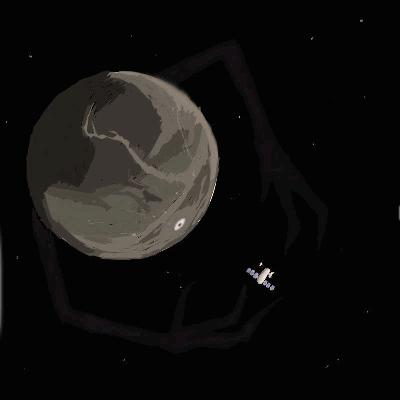
Review Summary: Spacey, ethereal keys and abrupt static help to give this release a paranoid and delightfully off-kilter feel; A Slow Descent build a dense look at mounting madness in the face of isolation.
Generally, I find that there are two distinct types of music that I am drawn to. One happens to be the music that I listen to in the car, blasting it so loud that my speakers are almost pleading for a break. This type is, for the most part, the music that has immediacy to it; one that employs catchy choruses and discernible groove. The other type of music is a bit more personal, the kind that I selfishly listen to in my headphones while my other half is sleeping beside me. Ambient music paints a personal picture in my mind, going from an Impressionist lull to a stark, Jackson Pollack-like smear before it becomes white noise fading into the background. It happens to be one of the reasons that I am drawn to the genre in general, and the unique thing that I found in A Slow Descent's first LP
On Ganymede was that it told a story that allowed room for interpretation while still sticking with a similar sound throughout.
The first thing that comes to mind when hearing
On Ganymede is the interesting contrasts that come up fairly often; Sputnik user and sole member Judio is not content to simply let the songs drift in and out of the listener's mind. Spacey, ethereal keys and abrupt static help to give this release a paranoid and delightfully off-kilter feel as it progresses. Even the more palatable arrangements give out an undeniably eerie feeling, and the somewhat lesser production value is actually something that helps to keep it an obtuse and interesting listen. The unnerving and incoherent monologue that begins first song "Ganymede I...Distress Signal" has certainly been used before, but the overarching cinematic sound and twiddling electronics that are lower in the mix show some serious dynamism until an abstract distortion takes center stage to end the song. It is fairly indicative of the entire album, as seemingly random instruments come storming in at just the right time when songs are succumbing to a lull. While it sometimes seems a little too forced, there are many more times when it fits the abstract and lofty storyline. Penultimate track "III...Terrible, Terrible" demonstrates this perfectly, as an undulating melody resonates throughout the song, sometimes through electronics and other times a piano. As it trades back and forth, a strong feeling of dread is palpable throughout the entire track.
On Ganymede is a monolithic and demanding listen, which means that its positives are also what others may not like about it. The sameness in tonality throughout the album could put some people off, while the abrupt changes that pop up in the songs could be too experimental for a casual listener of the genre. The strength of the release shines through on the last track "IV...Float Back Home", which boasts a cautiously optimistic feel to it that is absent throughout much of
On Ganymede. It is truly the only way for it to end, as too bright and airy of a song would have been out of place on such a content-heavy ambient release. As the warm synth-like line from the last track on here envelopes me, I close my eyes and imagine what it would be like to trapped somewhere far from home. It's not that hard to imagine, and I suppose that's why it was easy for me to connect with the spacey sounds present on
On Ganymede.