Decyfer Down, simply put, came and went.
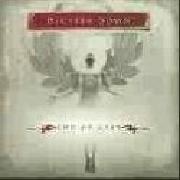
End of Grey and its successor,
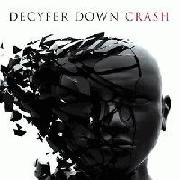
Crash, garnered the group wide appeal among Christian rock fans and even gained them some ground in the mainstream. Part of their clout, I would argue, comes from the well-documented vocalist change between the two records, because clearly the band could not keep the momentum going despite the fair amount of success
Crash (seemed to have) enjoyed. Surprisingly, four years later, the band returns from seemingly nowhere, and it should come as no surprise that the T.J. Harris-fronted Decyfer Down has produced a solid, if generic, alt-rock opus in the form of
Scarecrow.
Firstly, I have some good news - Harris no longer sounds like a merely acceptable replacement for original frontman Caleb Oliver, but instead the instrumentation has taken a more relaxed approach to allow the nuances in his voice shine. And shine he does - Harris' has an impossibly massive range that gives him the freedom to sing a loud, sharp tenor, a twangy and gritty baritone, and a soft, soulful bass. It would hardly be unfair to compare his vocal prowess to that of the oft-compared Chris Cornell, but Harris has a more laid-back, "country" tone to his voice than Cornell's grunge-hardened pipes. Every song showcases his ability to adapt to virtually any range, at any volume, and still project strongly, but swinging Southern rockers "Bleeding Lies," "Scarecrow," and "The River" highlight this.
Secondly, I have some bad news - The rest of the band really play it safe backing Harris up. There is certainly no shortage of tasty licks to be had from the guitars, but a quick listen to
End of Grey makes it apparent that the rest of these guys could surely write some more intricacies into their swinging Southern rhythms, even at the risk of the album sounding like a DecembeRadio project. Furthermore, I have undoubtedly heard the key motifs of "Worst Enemy" and "Fight to Win" on several other albums, and while they probably do not warrant a skip (the latter actually uses some surprisingly delicate chords in the pre-chorus and bridge despite its heaviness), the listener will feel a bit over-familiar, even at first listen. “Westboro” and “The River” showcase some well-phrased and tastefully-built guitar solos; unfortunately, I could only wish for more of this from the rest of the album. "Scarecrow" effectively apes the better sounds of Maylene and the Sons of Disaster, but it starts to unravel in the bridge, when a repetitive riff reminds the listener that he is not, in fact, listening to Maylene and the Sons of Disaster, and who is he to expect that level of musical maturity? There is nothing really
wrong with the music here – it is actually really solid – but I sense there is a far deeper talent pool among Decyfer Down’s musicians that was not fully explored.
Thirdly, I have some mixed news – the lyrics are all over the place. Calling Westboro Baptist Church out by name was a good move, giving the album a bit of a punk-ish flair, but the lines “Just go back to Westboro, baby / The devil said you can stay / In hell it’s just the same” seem antithetical (hypocritical?) to the message the rest of the album attempts to convey. “Scarecrow, ” however, revisits a similar topic to greater effect: “Hey, you, mister holy one, don’t let no dirty soul get through that door / Stand tall while the wicked crawl and drag their dirty sins across your floor / And I see right through / The emptiness in you.” Other songs use only the most basic, workable lyrics to convey their message, such as “Bleeding Lies” (“Can you tell me why / truth cuts like a knife / and it feels like I’m bleeding these lies”), and “Fight to Win” (“We fight / To win / We will find a way / We stand / To live / We will find a way”). There is little here that comes off as poorly written or silly (which is, frankly, amazing, since this is a band that opened their previous album with a colossal face-palm of a lyric: “Feel the pressure, let it go / Feel the pressure, let it go!”), but the lines that feel truly inspired are few and far between. It must be said, however, that Harris still manages to redeem every last line in this project by making them all sound equally passionate and subtly nuanced.
What
Scarecrow is, then, is an album that builds upon its predecessors in meaningful ways by focusing itself on T.J. Harris’ strengths and by minimizing its weaknesses in lyrical work. Unfortunately, the guitar work itself has not really progressed, and as a whole the instrument work implies that there is a significant amount of untapped potential for this group. I highly doubt anyone will be ranking this highly among his favorite albums of 2013, but this is neither an intellectually offensive nor wholly uninteresting project. Because of this, I hope that I am not expecting too much when I look forward to a stronger, more powerful offering in Decyfer Down’s future.