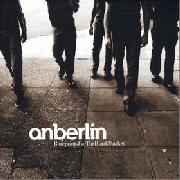
Review Summary: I'm never letting go.
Chapter III: The Correlation of Emotion and Heartbreak
I’ll always remember the first time that the opening notes of “Début” graced my ears. It was the summer of 2012, and I decided that I needed to unwind by listening to some music. Now,
Cities wasn’t my introduction to Anberlin; I spun the
New Surrender version of “Feel Good Drag” at least two hundred times before deciding to delve deeper into their discography. The sheer passion and energy of the song is what made me decide that they were a band worth checking out – I wouldn’t give just any band with one popular radio hit the full album treatment, but immediately I knew that Anberlin were different.
Cities only reaffirmed that.
The main foundation of Anberlin’s music has always been their emotion. Even on slower ballads, they were able to convey the same amount of passion that they did on high-energy rockers.
Never Take Friendship Personal saw the band expand their palate and experiment with lengthy closers aside subdued midtempo crooners. They started to abandon some of their pop-punk influences that were prevalent on their freshman effort, maturing in not only sound but lyricism also. Remember the youthful innocence of
Blueprints For the Black Market? I sure don’t, as most of it has been gone and replaced by heartbreak and despondency. On tracks like “Reclusion”, the melancholic lyrical matter is hidden behind the upbeat, riff-driven instrumentation, adding layers of depth to the song. You would think Christian would cry “You’re suffocating me, so very hard to breathe / My mask is growing heavy but I’ve forgotten who’s beneath” over a more vicious setting, yet the dissonance provides a different outlook. Masking the lyrics behind such a disparate sound could be a metaphor for Christian burying his feelings and presenting himself as elated, when in reality, he couldn’t have been more crestfallen.
If
Never Take Friendship Personal showed Anberlin trying new things, then
Cities has them refining their talents into perfection. “(The Symphony of) Blasé” may have been a great ballad, but “The Unwinding Cable Car” takes everything that made it such an excellent track and adds more depth and passion to it. Stephen Christian’s inspired vocals intensify the emotional lyrical content, adding layers of relatability and sympathy for the subject of the song. The acoustic guitarwork is nothing short of spectacular, as each note is strummed flawlessly. Additionally, the sound that Anberlin were known for on
Blueprints is still intact – the uptempo, feel-good sound of “Godspeed” and “A Whisper & A Clamor” provide some of the album’s early highlights. With their powerful riffs, chilling vocals and flawless solos, these tracks exemplify everything that made Anberlin’s best tracks
so good
As a romantically inexperienced teenager,
Cities changed my perceptions of love and heartbreak. In Christian’s eyes, love is futilely inquiring “Is anybody out there?” and falsely proclaiming that “things are gonna change now for the better”. Forget moving on – why move on when the images can scar you mind and her words can be the noose for your hanging? If I had known the rejection would have been so severe, I never would have bothered asking her anyway. Months of hope and nervousness crushed by a word – the word that drove me to give up trying. Even though I swore never to fall in love again, what if I can’t help it? The experience comes with its pros and cons, and frankly, if
Cities shows the ugly side of relationships, do the good parts even exist? I never want to experience “Dismantle. Repair” or “Hello Alone”, even it may be inevitable.
In fact,
Cities scares me. I would much prefer to live behind the youthful vivaciousness of
Blueprints For the Black Market, and maybe dipping my toe into
Never Take Friendship Personal could be enough for me to handle. There is little happiness in
Cities, but when it occurs the moment must be cherished. What starts as a simple combination of a bass line and chime soon evolves into a grandeur spectacle with guitars, drum rolls, stomps and one of Christian’s most emotional vocal performances ever. It’s impossible not to be moved as he declares, “I want to be your last first kiss, that you’ll ever have” – the pure emotion dripping from his voice sells the feeling of bliss and endearment, feelings of happiness in a relationship. “Inevitable” is an anthem for the highest points in a relationship, moments that you wish could just last forever and ever. If anything, I want to base my life around the principles of “Inevitable” instead of, say, “There Is No Mathematics to Love and Loss”.
Even though
Cities has had a great personal impact on me, the power of the album transcends its connection with my life. The pensive lyrics crafted by Christian are filled with honesty – every single word that comes out from his mouth is sincere. A song like “Adelaide” may be among the album’s weakest tracks, but that’s compared to masterpieces like “Godspeed” and “The Unwinding Cable Car”. On its own, “Adelaide” is a chirpy, feel-good anthem best listened to driving around with the top down, shouting “Adelaide, you need to quit, quit making a scene” at the top of your lungs. The synth-driven “Mathematics” works extremely well coming after the acoustic “Cable Car”, while “Hello Alone”, often written down as the album’s worst song, still leaves a strong emotional mark on me. The hopelessness in Christian’s vocals is what sells his despair, making the song more than inferior.
It’d be criminal not to mention “(*Fin)”, because that’s the track that struck me the most upon first listen. Although many of
Cities’ tracks deal with broken hearts, some manage to go outside that box, and the eight-minute long epic closer does exactly that. Now, while Anberlin don’t like to be referred to as a “Christian” band, Stephen Christian has inserted some elements of his faith into his music. The song builds up intensely, as his expressive vocals paint a picture of his dissatisfaction with religion at a young age. From there, Christian illustrates stories that lead to his estrangement with Christianity. All the passion that oozes from his voice leads to a climactic ending featuring a children’s choir that repeats the phrase “Patron saint, are we all lost like you?”. The vocal harmonies are simply beautiful, and four minutes worth of progression is released in a culminating explosion of sound as the drums pick up and the riffs are amplified. “(*Fin)” is Anberlin at their most progressive, which shows a great sense of maturity in a band that was singing upbeat, three-minute summer anthems four years ago. As the song plays out its final notes, Christian softly cries out one final verse over the quiet pounding of drums and guitar strum. As the instruments start to mute, I’m left speechless, with only one thing in my mind.
This is not my heaven. This is my hell.