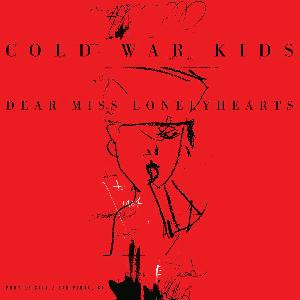
Review Summary: In spite of its insipid final moments, “Dear Miss Lonelyhearts” is the top-notch record that should have followed Cold War Kids’ impressive 2006 debut.
When Cold War Kids’ first album, “Robbers and Cowards,” was released back in 2006, it was met with a flurry of excitement from critics and fans alike. With the album’s eclectic mixture of soul, blues, and rock, the band seemed poised to ascend to great heights.
It never happened. “Robbers and Cowards” was followed up by the inaccessible, albeit genuine, “Loyalty to Loyalty” in 2008. The band’s next release, “Mine Is Yours” (2011), was even worse, losing the earnestness that made Cold War Kids so appealing. In its place was a generic, made-for-radio sound in an apparent reaction to the criticisms of their previous record. However, with the release of its new album, it appears the Southern Californian rock band has finally found its niche. It may have taken Cold War Kids seven years, but “Dear Miss Lonelyhearts” is the album that finally realizes the potential of their past LPs.
The 36-minute release wastes no time, starting off with the frenetic “Miracle Mile.” Driven by an upbeat piano rhythm, “Miracle Mile” is both catchy and classy. It shows off what Cold War Kids can do when firing on all cylinders and sets the stage for the rest of the band’s best album to date.
Synths, deep bass lines, and cutting drum beats dominate most of the album, providing the perfect backing for lead singer Nathan Willett’s uniquely androgynous voice. Willett is in top form on Lonelyhearts, as he delivers soulful vocals, reminding everyone why the band received so much hype in the first place. This is especially evident on the powerful track “Loner Phase,” a song that reels in the listener with bouncy synths and weighty guitars before Willett’s haunting voice gracefully takes command.
Perhaps even more striking than the songs Willett drives are the songs he doesn’t -- revealing Cold War Kids has developed the ability to create innovative music without overreliance on its talented lead singer. A perfect example is the stirring “Fear and Trembling,” a laid-back affair with instrumentation reminiscent of Springsteen, as saxophone and organ are layered into Cold War Kids’ indie rock sound.
The most impressive results come when both elements of Cold War Kids’ sound flow together as they do on “Tuxedos” and “Water and Power.” The former effortlessly weaves intricate guitar riffs with Willett’s high-pitched voice, while the latter employs a rolling drumbeat to punctuate the singer’s emotional contributions.
The only missteps on the album come in its final 10 minutes. Down-tempo and out of place, the title track and the closer, “Bitter Poem,” bleed into one another. This bland ending to an otherwise phenomenal record is an unnecessary attempt to balance out the upbeat nature of the record. Excluding these final tracks, Cold War Kids has finally released a worthy follow-up to its debut, one that both fans and critics can enjoy.
3.9/5