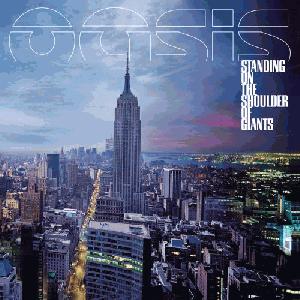
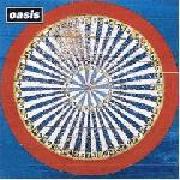
Review Summary: Standing on the Shoulder of Midgets
There is clearly something wrong at a superficial level with Oasis’ 4th album and the start of the second phase of their career. Bonehead and Guigsy had gone; the original Oasis logo had also departed; and for the most part so had the classic Oasis sound. ‘***in’ in the Bushes’ opens – which doesn’t even sound like an Oasis song from its title alone. Big beat drums and an audio sample make way for killer riff and little else, and it suddenly dawns upon the world that Oasis are not the same band they were pre-Be Here Now. How could they be after that behemoth disappointment? It was a new decade, and a new start, but in retrospect not the kind of fresh leaf turn that worked well for a band that have always been defined by the sound of their instantly adored debut.
Noel Gallagher has always been wry and self-aware, and it wasn’t long after the release of Be Here Now that he, like most critics and fans, disregarded the album as an overblown, coked-up mess. As such, Standing on the Shoulder of Giants, being the difficult follow-up to such a derided predecessor, screams of a conscious shaking up of the band’s sound, and it is successful to an extent – it is at least a great deal more refreshing and focused than Be Here Now. There is an obvious flourish of experimentation, with dashes of electronica, dance-inflected drums and vague eastern-sounding touches on certain tracks.
‘Go Let It Out’ was contemporaneously the best single Oasis released since the Morning Glory days – a refreshingly simple structure confidently delivered by a ragged voiced Liam. The tune shakes along on a wave of propulsive drums interlaced by a trippy mist of guitar and electronica, infectiously lodging itself into the mind like all the best earworms do. The track has been described by Noel as the closest the group came to sounding like modern day Beatles, but not for want of its follow-up, ‘Who Feels Love?’. Hints of Indian drone music and eastern percussion mix with heavily enhanced Beatle-esque vocals, but the song lacks a strong riff despite its lush charms. Much of the album does sadly – there’s nothing wrong with a little change and experimentation but the key pleasure of Oasis lies in the massive walls of guitar sound and the cocksure attitude, and SOTSOG just doesn’t have enough of such qualities.
‘Put Your Money Where Yer Mouth Is’ tries hard but ends up limping along like a loud, clumsy oaf - the electronic blips, indistinct lead riff and weak lyrics make for a poor track. ‘I Can See A Liar’ falls flat in much the same way – neither Liam’s voice nor Noel’s riffs/lyrics are as strong they used to be and the song fails to capture the excitement of early Oasis like it hopes to. Back to shaking things up again with Liam’s first composition – the lame lamb, ‘Little James’. Liam’s spirited vocal performance unfortunately fails to make up for the meandering melody and flimsy lyrics on his debut songwriting flop. In complete reverse, ‘Gas Panic!’ follows as a much more dynamic and interesting number. There’s a suitably paranoid air to the melody and lyrics, and the shrieking guitars and wall of drums ‘n’ electronica it swirls into create a vast sonic cauldron that is the most exciting noise the group had conjured for years. Unfortunately the exhilarating rush of Gas Panic! is not emulated for the remainder of the record. Noel sounds weary but unintentionally so on the bland ‘Where Did It All Go Wrong?’; single ‘Sunday Morning Call’ is marginally better but floats around without much to say or hear of interest, and ‘Roll It Over’ closes the album on a lazy, laborious slow rock crawl.
Standing on the Shoulder of Giants is a mixed-up, confused release. It is refreshing and focused in one sense – the songs generally don’t suffer the overblown madness of Be Here Now and when Noel’s experimentation works it does do so rather satisfyingly – particularly on ‘Go Let It Out’ and ‘Gas Panic!’; less so but still enjoyably on ‘Who Feels Love?’ and ‘***in’ in the Bushes’. But there is still a sense of scrapping the bottom of the barrel, with too many malingering, unexciting tracks and the worrying realisation that Noel must have been stuck for inspiration letting Liam’s awful ‘Little James’ feature in the middle of the 10 track set. Or maybe there was still a quality control issue? It certainly appears as such when the dynamite ‘Let’s All Make Believe’ was relegated to b-side status despite the fact it would probably be the strongest track on the album were it actually selected to feature.
Despite the experimentation some things would never change. Noel was still misguided and left some of his best songs as mere b-sides; the album was as uneven as a seesaw – a factor which would become the norm for 00’s Oasis records; and in the end, the band prove they are ultimately defined by their early sound, which remains to be topped. That the remainder of their discography departed from the experimental sounds of this outing and begun trying to emulate the sound of the glory days reveals that SOTSOG is a disappointing album in hindsight. It does have a few minor flashes of glory, and the good news is that surely but slowly – like the aging but indestructible rock n roll tank Oasis are – they eventually crawled back up to a level of genuine quality with subsequent releases.