Review Summary: Music for the Stage, heard after the fact
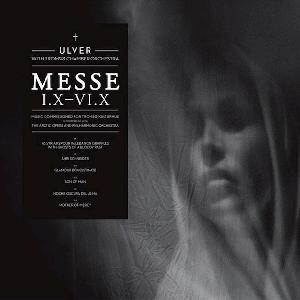
Ulver’s Messe I.X-VI.X is a collaboration with Arctic Opera and Philharmonic Orchestra that takes on a cinematic execution with some Gothic and ambient excursions. A commissioned work, the music was written by Ulver with the purpose to be performed on stage. Due to this, something is lost in hearing it for the first time via recording. The material seems as though it would be a more fully engaging and personal experience performed in person as opposed to a detached recording lacking much of the context in how it was presented.
This isn’t to say that the work here is lacking. “Shri Schneider” whose initial creeping ambiance and weeping strings brought to mind the work of Christian Henson for The Black Death. “Glamour box (ostinati)”’s continuous build is reminiscent of Two Steps from Hell’s ubiquitous trailer bait being layered over a repetitive electronic melody. In much the same way as film scores are constructed, the ambiance and orchestrations of each track grow and dissipate and plateau and explode as if in reaction to interactions between characters on screen. Given Ulver’s history of participation in film scores, this would seem to be the intention.
And it is this aspect that is the source of the biggest potential drawback of the record. The periods of quiet mounting tension and surges of emotions could come across as overblown. Even at its most subdued, the record doesn’t stay subtle for very long. The explosive “Son of Man”, which is the biggest standout on the record, at time teeters on being an overly melodramatic ballad about Jesus. The track is undeniably attention seizing, but could be too on the nose for those who prefer more subdued expressions. In fact, it wouldn’t be surprising in the least if “Son of Man” became trailer bait in much the same way as Two Step from Hell’s productions and Sigur Rós’ most well known works have in recent years.
The closer, “Mother of Mercy” is also a mixed bag as while it brings the melancholic tale to a relatively positive conclusion, the percussion that comes in at the 1 minute mark in combination with Kristoffer Rygg’s delivery causes the track to momentarily morph into a bad pop ballad. The weakest link in the performance, “Glamour box (ostinati)” doesn’t really leave an impression until the thunderous climax. This booming lead in to “Son of Man” is a gorgeous precursor for what is to follow.
This performance is utterly glorious in every sense of the world. The minimalistic, quiet sections draw in the listener with patient diligence and the enthusiastic payoffs are almost guaranteed to bring a smile to even the most unwilling listener’s face. Simply expect some moments to seem empty.