Review Summary: It may not be anything particularly new, but Arrows... certainly isn't the uninspired and wincingly forced 'return to roots' album it seemed it would be either.
This year, Eminem will be releasing his 'Marshall Mathers LP 2.'
What Eminem has accomplished here is a cringe-worthily unintentional parody of a timeless story in the music industry. Every band and every artist's discography has a peak – an album or a string of albums that sit above the rest in terms of commercial and/or critical success. And, unfortunately or not, every artist's discography has an end too. Some choose to end on a high note, and others like to divulge in much longer explorations of their own musical palette, even when continued ventures seem utterly pointless. For example, Tool have four albums; Bob Dylan has nearly three dozen. This is not necessarily bad unless the artist refuses to accept the passing of their own prime, and stubbornly spews out album after album of repetitive drivel. The final nail in this all-too familiar coffin is the infamous 'return to roots album;' in one last attempted grasp at the limelight, our ever-fading musician makes an uninspired and tasteless attempt to, usually quite literally, copy-paste their old and more successful musical styles, regardless of whether or not it's the direction they want to take. Invariably, these imitation albums are terrible. It's too early to make any sort of assumption about Eminem's next album – for all we know, it could be the exception that proves the rule – but the expectation of a cash-grabbing copycat release is almost unbearably present.
The same could have been said about Matthew Good's
Arrows of Desire a month or two ago. One-time foreman of the hugely successful Canadian act Matthew Good Band, it's safe to say Good's career has come down a notch since his late '90s heyday. That's not to say the man's ever made his own musical endeavors easy, either; Good has been successful, outspoken and controversial enough in his home country to safely ensure that at least half of the Canadian population has had more than enough Matthew Good for their lifetime, while the man intentionally made himself totally scarce elsewhere in the world. It's one thing to be topping the charts only in your home country, but Good's last few albums (although garnishing plenty of critical acclaim) haven't been hitting any charts, anywhere. So when he announced this year that he had magically rediscovered his old 90's tastes and was releasing a 'fun rock album' (read: Matthew Good Band album), it was difficult not to wince at the sound of nails screwing into wood.
So what makes
Arrows of Desire so alluring is the complete reversal it boasts of all these pessimistic expectations. Upon closer inspection, we find Good, as a suffer of bipolar disorder, never really liked the limelight much anyway, and is more in his element than ever when the (Canadian, anyway) crowds aren't staring his way all the time. And what separates Good from his peers is that when he says he's rediscovered some of the colors in his teenage musical palette, he means it;
Arrows of Desire is closer to tasteful retrospective than shabby, copycat cash-grab. The album certainly doesn't sound much like the success-riddled tunes of Good's old band, but it puts a spring in the metaphorical step of his music that hasn't been seen for a long, long time.
Most of
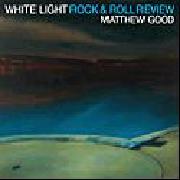
Arrows' chunky 40-odd minute duration consists of anthemic rock music of various descriptions. Setting the scene for the rest of the release are the energetic title track and album highlight “Via Dolorosa,” easily the most compact and immaculate rock song Good has put out since White Light's The Who homages. “Via Dolorosa” opens with pristinely-produced, dynamic guitar work and launches into a mighty, infectious and 100% Matthew Good chorus of “Wait 'til I get my head on/Wait 'til I get my head on straight.”
Arrows doesn't let up on the direct and hard-hitting approach either – opening single “Had it Coming” offers a refreshingly snappy and quirky burst of energy, joyfully ditching the usual angst and anger of Good's music. “So Close” boasts a climactic melody line to sit up with the memorable outros of tracks like “Failing the Rorschach Test” and “Everything is Automatic,” without really sounding like either of them at all. The album knocks the tempo down a notch after this but keeps the lovable choruses rolling, with the retrospective, singalong anthem “Hey, Hell, Heaven” providing yet another highlight before the album soars out of view with the stunning “Letters from Wartime.”
Although
Arrows slumps a little in it's repetitiveness, particularly in it's middle section, it's clear Good hasn't lost his ability to write flat-out enjoyable rock music. It is not a tasteless, forced attempt to replicate times gone by, nor is this the sound of a contended forty-something-year-old trying to act like an angry twenty-year-old man. This is Matthew Good exploring his own songwriting further and paying respectful homage to the musicians that made his discography the way it is today; pretty damned excellent.