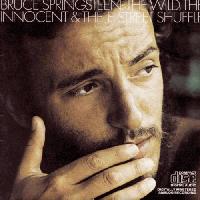
Review Summary: The true masterpiece of the Jersey rocker and songwriter.
Everyone has his own year zero: for the Romans it was 753 B.C., the foundation of Rome, for the ancient Greeks was 776 B.C., the year of the very first Olympic game and for the Christians, but also for many other people, is 0 AD.
Well, you will soon discover that - and eventually understand why - my year zero is 1973: a very important year for many rock artists and a year of great albums, one of these is the indubitably non-popular "The Wild, the Innocent and the E Street Shuffle", whose name doesn't help much in impressing this masterpiece in people's mind, to be honest.
The second try that Bruce Springsteen gives to make his breakthrough in rock'n'roll world is not the luckiest, but is surely the most complete artwork he's ever done in his brilliant career. Many music genres, from folk to blues, and instruments are involved, creating a really unique sound, which no one would ever be able to reproduce again in music history, not even the Boss himself.
The "E Street Shuffle" starts with a confusing sound played by a wind band, which eventually turns into a clear theme, but this ends pretty soon and the strumming of the acoustic guitar takes the lead. What makes this song so special is the lyrics: not for being meaningful but for being a lot and sung quite fast, telling a story just as the Boss' rough voice of the Early Days can. As a result, the ballad is very nice and entertaining. Amazing is the simple but immensely powerful outro.
Pretty famous is the second track, often played during his never ending concerts, sometimes simply known as "Sandy", even if the full title is "Fourth of July, Asbury Park (Sandy)". It's a soft, almost whispered, romantic song accompanied by the accordion played by the former organist Danny Federici. The lyrics in this case is really deep and once again Bruce turns into a story-teller and succeeds in transmitting his emotions.
"Kitty's Back" could be musically speaking the best of the whole album: the guitar solo at the beginning is the proof that Bruce Springsteen's ability at his instrument is concrete.
The song tells the story of Catlong, who's longing for Kitty's return, and his lament is split into two parts, indeed in the middle the wind band blowing, a guitar and an organ solo can be heard, incredibly great is the same portion of the song included in "Live in Hammersmith Odeon, '75", which lasts nearly 10 minutes.
More folky is "Wild Billy's Circus Story", whose title explains perfectly the topic of the song and the accordion is again the centre of the musical arrangement.
The piano solo in the intro of "Incident On The 57th Street" is joined by Springsteen's weeping guitar and the love story between Spanish Johnny and Puerto Rican Jane is soon told. The chorus is soft and tender: "Good night it's all right, Jane / I'll meet you tomorrow night on lovers' lane / we may find it out on the streets tonight baby / or we may walk until the morning light, maybe. The crying guitar and the piano close the song as brilliantly as they did in the intro, leaving a soft feeling of sadness in the air which is soon torn apart by the cheerful "Rosalita (Come Out Tonight)", an endless monologue made by the main character to convince Rosie not to listen to her repressive parents, but to run away with him and reach California where "there's a little cafe, where they play guitars all night and all day". During this song Clarence Clemons plays his saxophone almost constantly, being the very heart of the melody.
The last one, "New York City Serenade", is the real masterpiece of the album: the 10-minute-long song has almost never been played during the concerts due to its complexity. The intro is an amazing piano solo, midway between classical music and blues, and the acoustic guitar introduces the Boss' voice, the lyrics is not that meaningful but is extremely powerful in telling the story of the Big Apple nightlife. "Listen to your junk man", but also "watch out for your junk man" are the two advices in the last verse, ending into a final crescendo where "He's singing!" is repeated. The saxophone after the shoutings relaxes the atmosphere, frees the souls and the sound of a bunch of violins concludes the album.
If you've read the review till here, I really want to thank you for your attention.
This album is to be recommended to all Bruce Springsteen's fans but also to those who love folk and heartland rock music, you won't be disappointed!
5/5