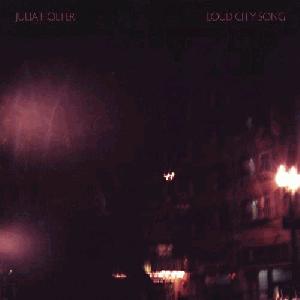
Review Summary: Holter creates a fantasy world full of detail and wonder - if only it was just as immersive.
The best fantasy literature has always been distinguished not by riveting plots or complex characters, but by the beautiful, exhilarating worlds it explores. That’s why Lord of the Rings made for successful movies: viewers were entranced by the majestic world of Middle-Earth more than by the task of chucking a piece of jewelry in a volcano. As musical fantasy, the same observation can be made of Julia Holter’s
Loud City Song, an album of dreamy and expansive chamber pop – that is, if the chamber in question is a book-ridden bedroom.
The album opener is, aptly enough, "World" and serves to transport the listener to Holter’s imagination. The measured pace of the album is introduced by Holter’s small pauses at the end of singing each line and instruments which fade into silence only to re-emerge from it. While the world of Loud City Song is that of the city, it is more 19th century Paris than 21st century New York.
The greatest virtue of
Loud City Song is how clearly realized its musical world is. The album is rich with ambient-building touches such as the cymbal clatter opening "Maxim’s I". The general sound of the album combines dream-pop synths and organs with orchestral backing of horns and strings. The orchestral instrumentation, far from one dimensional, is able to reimagine its sound between songs. For example the blaring, threatening brass of "Horns Surrounding Me" and jarring violins of "Maxim’s II" become a lovely saxophone solo and plucked strings on "This Is a True Heart". Holter’s vocals are just as dextrous, ranging from childish glee to a sinister whisper. Without limiting her palette in a bid for focus as others might, she is able to effortlessly achieve cohesion.
Recurrence seems to be the central theme, and not just in the instrumentation. "Hello Stranger" is about meeting again an old acquaintance, while the song pair "Maxim’s I & II" repeat the same verses with constant variation culminating in an implosion of deranged saxophone and violin. Elsewhere lyrical symbols – trees, hats, and more – reappear throughout the album. This sums up not to repetitiveness, but familiarity.
Yet for all of its detail and subtle variation Holter’s world is regrettably insular, like a guided tour which leaves one with a nagging feeling that despite becoming thoroughly familiar with the landmarks, the true beating heart of the city has escaped them. The one exception is the vibrant penultimate track "This Is a True Heart". Instead the closer "City Appearing" seems to crystallise this fault. Beginning slowly reminiscent of "World", the track builds up to an unfortunately lacklustre climax of ghostly strings. That the end fails to signify more serves as a reminder that throughout the journey the listener is still an outsider in this world. That this is as much of a fault as it is testifies to how much Loud City Song has made you wish you could be a part of it. Instead, you turn on the album again and start your journey into Holter’s fantasy world all over. While you’re still a stranger the world welcomes you, so glad you’re there again.